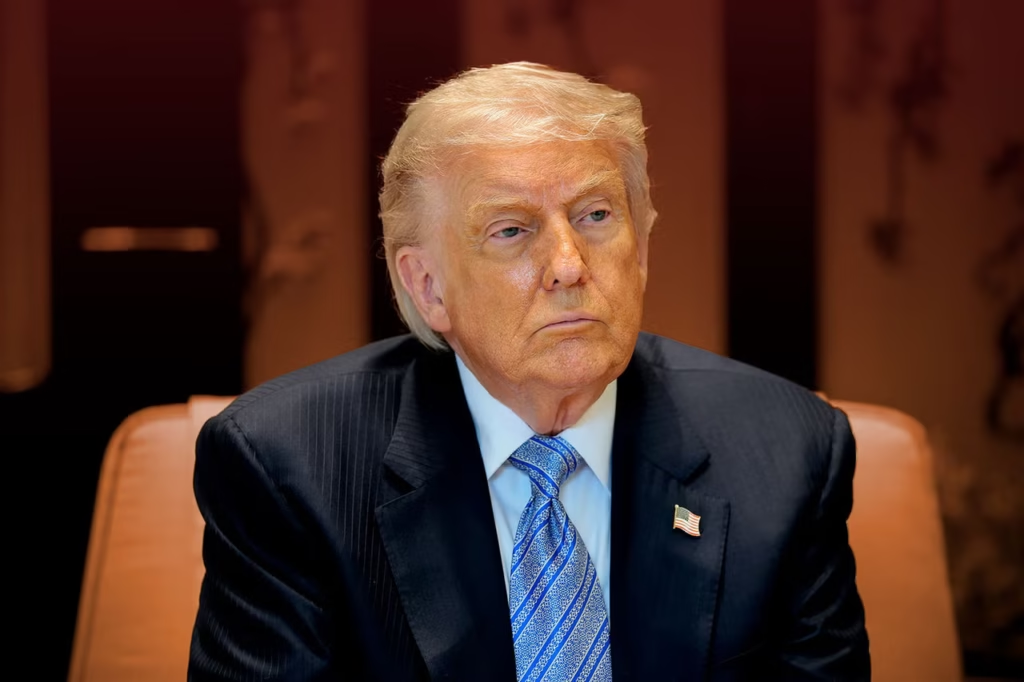
The Senate confirmed Todd Blanche as the United States Attorney General at 50-49 in an overnight vote early Saturday — the closest confirmation margin for an attorney general in recent American history. Two Republican senators broke ranks to oppose him: Susan Collins (Maine) and Lisa Murkowski (Alaska). With Mitch McConnell absent due to hospitalization, the vote fell to Louisiana Senator Bill Cassidy, who announced his support Friday with visible, explicit reluctance: “I will be criticized for this vote.” Blanche’s confirmation came after he walked back key elements of the IRS settlement he had negotiated for Trump personally — and over the explicit, documented concerns of two members of his own party who found his tenure at the DOJ disqualifying.
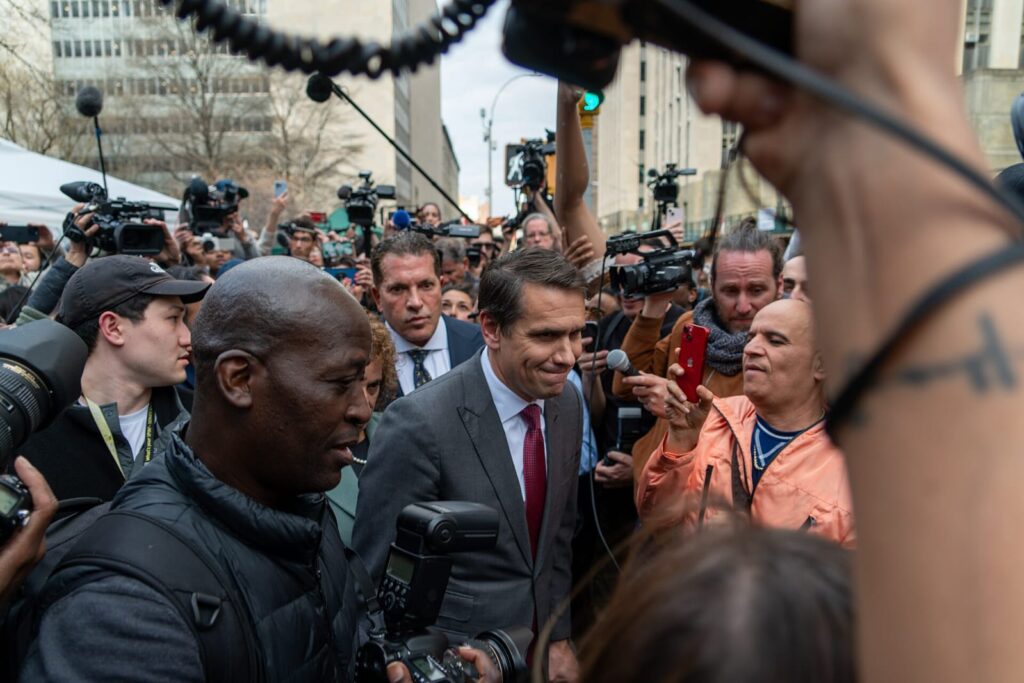
2-MINUTE CONTEXT — HOW WE GOT HERE
Todd Blanche is Trump’s personal defense attorney turned acting Attorney General. He defended Trump through multiple criminal trials before being appointed to the nation’s top law enforcement position. The structural conflict of interest — a president’s personal lawyer leading the department responsible for overseeing that president’s legal exposure — was noted by critics throughout his tenure.
His path to confirmation was not smooth. Senators Collins and Murkowski threatened to block him. He made a specific, written commitment to abandon key elements of the IRS settlement he had negotiated for Trump — the provision that generated Cornyn and Tillis’s earlier opposition. He secured those two votes. But Collins and Murkowski were not satisfied by what Blanche offered, and voted no.
McConnell’s hospitalization created the arithmetic crisis. Without his vote, the margin became 50-50 if Cassidy voted no, which would have resulted in defeat under Senate rules requiring a majority for confirmation. Cassidy became the deciding vote — and he agonized over it publicly, in real time, in a way that is genuinely unusual in the performance-managed world of senatorial announcement.
WHAT COLLINS ACTUALLY SAID
“The Department of Justice has become increasingly political. I am deeply troubled by many of the actions Todd Blanche has taken as Acting AG, including the handling of the Epstein files, the sweeping immunity protections granted to the President, his family, and their businesses, the statements he made to anti-abortion groups, and the DOJ’s repeated targeting of individuals ranging from former administration staff to sitting U.S. Senators.”
— Sen. Susan Collins — floor statement before the confirmation vote
Collins’s statement is extraordinary in its specificity. She is not offering a vague concern about “independence.” She is itemizing: the Epstein files; presidential immunity protections; statements to anti-abortion groups; and the targeting of sitting senators. The last item — the DOJ targeting sitting senators — is a claim with significant implications: if the DOJ under Blanche has been conducting investigations or actions targeting members of Congress who are not the president’s allies, that is a direct separation-of-powers concern. Collins does not specify which senators. The allegation stands on the record.
WHAT MURKOWSKI ACTUALLY SAID
“I was not convinced that Mr. Blanche would check the worst impulses of this administration. The Attorney General must be the chief law enforcement officer of the United States, not the President’s personal attorney.”
— Sen. Lisa Murkowski — written statement on her confirmation vote
Murkowski’s framing is the institutional argument: the Attorney General’s job is to the law and the Constitution, not to the president who appointed them. Her phrase “the President’s personal attorney” is a direct reference to Blanche’s pre-appointment role defending Trump. She is arguing that the specific background Blanche brings — loyalty to Trump as a client — is disqualifying for the role of the nation’s top law enforcement officer.
CASSIDY’S MOMENT — AND WHAT IT REVEALS
Bill Cassidy’s confirmation of his vote for Blanche is one of the more candid public performances of a senator reasoning through a conflicted vote in recent memory. Cassidy acknowledged he had specific concerns about Blanche’s involvement in settling Trump’s personal IRS lawsuit. He acknowledged the Collins and Murkowski critiques as serious. He then explained his decision: he “ultimately trusted Blanche to give the president candid legal advice.”
“I will be criticized for this vote.”
— Sen. Bill Cassidy — before announcing his support for Blanche’s confirmation
The statement is not defensive. It is not spin. It is a senator saying, out loud, that he knows the public assessment of his decision will be negative — and then making the decision anyway. Whether that represents courage (voting against the political tide for principle) or calculation (providing the administration its victory while preserving some distance through public candor) depends on how Blanche’s tenure actually unfolds.
| 🔍 ONYX REALITY CHECK VERDICT: TRUE WHY? The 50-49 confirmation is documented. Collins and Murkowski’s opposition is documented with their specific stated reasons. Cassidy’s “I will be criticized” statement is on the record. McConnell’s absence due to hospitalization is documented. The IRS settlement context (Blanche’s walk-back) is from prior ONYX August 5 coverage. All characterizations of what each senator said are from their documented public statements, not editorial interpretation. |
WHY THIS MATTERS
A 50-49 confirmation with the deciding senator predicting criticism is not a vote of confidence. It is a vote of necessity. The United States now has an Attorney General who: was confirmed by the narrowest possible margin; was explicitly opposed by two members of his own party on substantive grounds; had to abandon a personal financial benefit for his president to get three of those 50 votes; and whose confirmation required the physical incapacitation of a former Majority Leader to become arithmetically possible.
The Collins statement has a specific implication that will not disappear with the confirmation vote: she alleged the DOJ has been “repeatedly targeting individuals ranging from former administration staff to sitting U.S. Senators.” This is now a public record claim. If there are sitting senators who believe they have been targeted by the DOJ under Blanche, Collins’s statement has validated their concern publicly — and created a formal basis for investigation or oversight.
Murkowski’s institutional argument — that an attorney general who was his president’s personal defense attorney cannot be the “chief law enforcement officer” rather than “the President’s personal attorney” — will be the recurring critique every time a DOJ decision under Blanche has any connection to Trump’s personal legal interests.
Blanche now leads the Department of Justice with confirmed, documented opposition from within his own party, a written commitment to abandon a specific presidential benefit, and the specific allegation — on the Senate floor from a Republican colleague — that the DOJ has been targeting sitting senators. His tenure begins damaged in ways that have no precedent in the modern era of AG confirmations.
POLITICAL IMPACT
| WHO BENEFITS | WHO FACES NEW QUESTIONS |
| Trump — gets a confirmed, loyal AG at a critical moment | Blanche — confirmed but with the weakest mandate of any modern AG |
| Cassidy — preserved his relationship with Trump at a political cost he acknowledged publicly | Collins and Murkowski — further distanced from the Trump coalition; may face primary pressure |
| DOJ institutional reputation — a Senate-confirmed AG has more legitimacy than an acting one | McConnell — his absence was the decisive arithmetic factor; his future role and health matter |
| Republican moderates — have two documented allies willing to cross the line on this issue | Senate Republicans broadly — the two-member moderate bloc can veto future nominees if they choose |
WHAT HAPPENS NEXT
▸ Collins’s “targeting sitting senators” allegation will be the subject of immediate oversight requests — watch for bipartisan demand for DOJ to explain this claim
▸ Blanche will now have to demonstrate independence from Trump in specific, visible ways to maintain any credibility with the 49 senators who opposed him
▸ McConnell’s return from hospitalization and its timing will be watched — he remains a significant Senate actor whose absence was the margin
▸ Any future DOJ action against Democrats, former officials, or — specifically — senators will be scrutinized through the Collins “targeting” lens
▸ The IRS settlement commitment Blanche made in writing will be monitored for compliance — Democrats will watch for any deviation
| CONFIDENCE: HIGH | All confirmation vote specifics are documented. Collins and Murkowski quotes are from their official Senate floor statements. Cassidy “I will be criticized” quote is on the record. Context (McConnell hospitalization, IRS walkback) is from documented reporting. |
| ⚖️ BIAS CHECK — WHO IS SAYING WHAT | |
| Collins | Institutional argument; rule-of-law framing; specific documented concerns; not a reflex partisan vote |
| Murkowski | Coalition-management argument as well as institutional; “worst impulses” language is pointed but measured |
| Cassidy | Conflict acknowledged publicly; trust argument; politically costly but not evasive about the cost |
| Trump / White House | Framing as Senate confirmation of their nominee; not engaging with the specific Collins allegations |
| Democrats | Will use Collins’s “targeting senators” allegation aggressively; oversight requests already being drafted |
| Conservative Media | Framing Collins and Murkowski as obstructionists; celebrating Cassidy; ignoring the specific Collins allegations |
| Mainstream Legal Community | Noting this is the most difficult AG confirmation in recent decades; watching for specific DOJ independence tests |
📅 NEWS EVOLUTION
2025–2026: Blanche serves as Acting AG; confirms Trump personal defense attorney background; structural conflict noted from day one
Aug 2, 2026: Cornyn and Tillis threaten to block unless IRS deal provisions are walked back
Aug 4, 2026: Blanche makes written commitment abandoning key IRS settlement provisions; Cornyn and Tillis announce support
Aug 5–8, 2026: Collins and Murkowski indicate continued opposition; vote hangs on Cassidy; McConnell hospitalization confirmed
Aug 8, 2026: Cassidy announces support; “I will be criticized for this vote”
Aug 9, 2026 (overnight): Senate confirms Blanche 50-49; immediately adjourns for 5-week recess
SOURCES
▸ Senate confirmation vote — 50-49, official Senate record
▸ Sen. Susan Collins — floor statement, full text on record
▸ Sen. Lisa Murkowski — written statement, full text on record
▸ Sen. Bill Cassidy — “I will be criticized” quote, pre-vote announcement
▸ McConnell hospitalization — documented from prior reporting
▸ IRS settlement walkback — ONYX August 5 coverage
QUESTIONS YOU MAY STILL HAVE
Q: What does Collins mean by “targeting sitting US Senators”?
A: Collins did not identify the specific senators. The allegation is that DOJ under Blanche has conducted investigations or taken actions against members of the Senate who are not Trump allies. This is a significant claim that Collins has put on the Senate floor record. What she is specifically referring to — and whether there is documented evidence — is a question for oversight investigation.
Q: Can a confirmed AG be removed?
A: An AG serves at the pleasure of the president and can be dismissed at any time. Senate confirmation does not create job security — it creates constitutional legitimacy for the role. Trump could dismiss Blanche at any point, though doing so would require a new confirmation process.
Q: Why does McConnell’s hospitalization matter?
A: The Senate is 51-49 Republican. If McConnell is absent and two Republicans vote against, the result is 49-49 — a tie. Under Senate rules, a tie vote means the nominee fails (unlike the Supreme Court, where the VP can break ties). McConnell’s absence meant the Republicans had only 50 possible votes. With Collins and Murkowski voting no, the count was 48. Cassidy’s yes made it 49-49 — wait, that’s wrong: 50 Republicans – 2 opponents = 48 + Cassidy = 49. Adding Democrats: 49-49. Without any Republican, it would have been 48-49 against. Cassidy was the 50th Republican vote, making it 50-49.