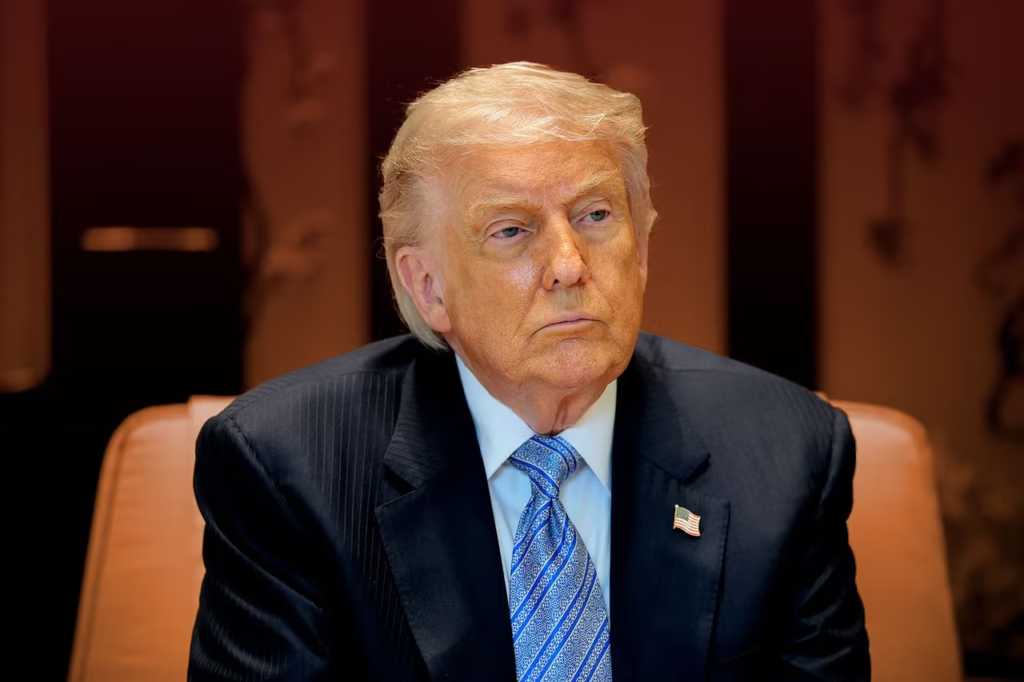
The US Court of Appeals for the DC Circuit ruled 2-1 Friday that construction on Trump’s White House ballroom and expansion project must halt above ground — writing in a 136-page opinion that the project exceeds executive authority because Congress has not approved it. The ruling came after: Trump originally estimated the project at $200 million; the Washington Post found contractor invoices showing the cost has ballooned to at least $600 million; Congress explicitly refused a $1 billion funding request in May; and Democrats alleged $350 million was redirected from an unrelated tax law. The court stayed its own ruling for two weeks to allow a Supreme Court appeal.
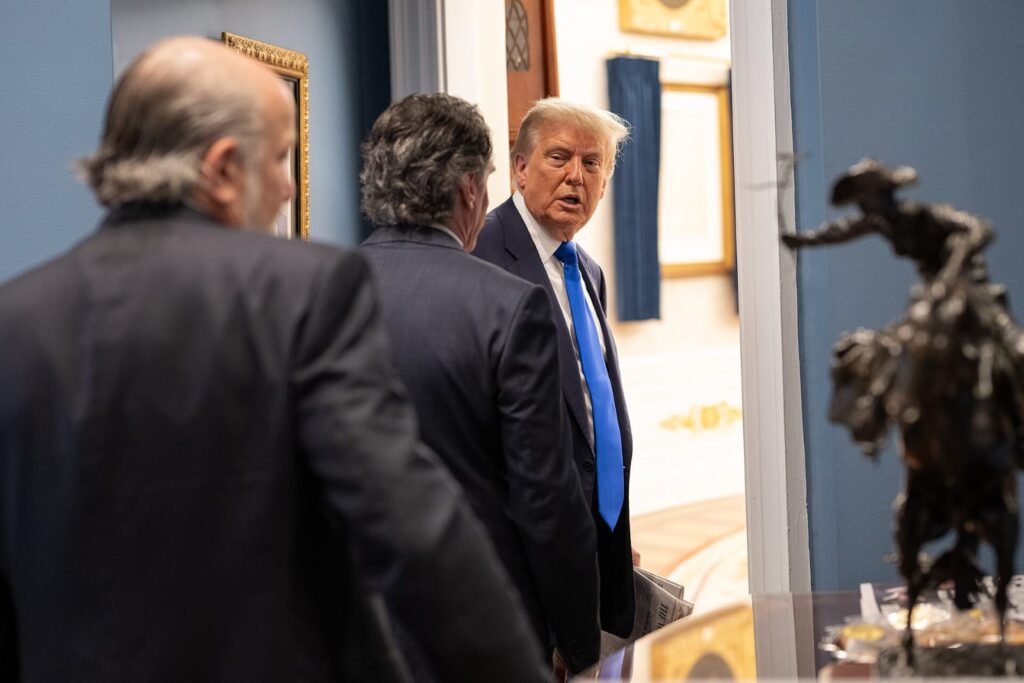
2-MINUTE CONTEXT — WHAT IS THE BALLROOM PROJECT?
Trump began the White House ballroom and expansion project early in his second term, demolishing the existing East Wing of the White House to build what was described as an “entertainments complex” — a large ballroom, event space, and expanded executive facilities. The stated purpose was to restore formal White House entertainment capacity and upgrade the residence for state functions.
The project immediately generated controversy. The demolition of the East Wing of the White House — a historically significant structure — without congressional authorization was the primary legal challenge. The National Park Service (which oversees the White House grounds) and historic preservation advocates objected. Congress refused the funding request. And then the cost estimates escalated from $200 million to $600 million to allegations of $1 billion.
Construction continued despite the legal challenge. The DC Circuit’s Friday ruling is the first court order actually halting the project — though only above-ground construction. Trump’s revelation that “the military is building a big complex” in the bunker beneath the demolished East Wing adds a further layer of unexplained construction the ruling does not directly address.
THE COURT’S LANGUAGE — AND WHY IT MATTERS
“Whether or not a massive ballroom should be constructed is for Congress to decide and is not a matter for Executive self-help.”
— US Court of Appeals for the DC Circuit, 2-1 majority opinion — August 8, 2026
“Executive self-help” is a pointed legal phrase. It means the executive branch cannot simply do things that require congressional authorization by acting unilaterally — by “helping itself” to authorities it doesn’t have. This phrase will be quoted in every law school discussion of executive overreach for decades.
The court’s 136-page opinion is unusually long for an injunction order. The length reflects the complexity of the legal questions being adjudicated: the scope of the president’s authority over the Executive Office of the President’s physical premises, the application of historic preservation law to White House structures, the congressional appropriations power, and the separation of powers principles governing when executive action requires legislative authorization.
The 2-1 split reflects genuine legal complexity: the dissenting judge presumably found grounds to support the executive authority claim. The majority opinion’s ruling will be read carefully by the Supreme Court if (when) the Trump administration appeals.
THE $600 MILLION COST ESCALATION
The cost trajectory of the ballroom project is itself a news story:
▸ Original estimate: $200 million — Trump announced this as the project’s cost
▸ Congressional request: $1 billion — the actual funding request to Congress, which Congress refused in May
▸ Contractor invoices reviewed by Washington Post: at least $600 million — the mid-point between announced cost and requested funding
▸ Democrats’ allegation: $350 million redirected from an unrelated tax law — the specific appropriations source critics allege was used without authorization
The gap between the $200 million public announcement and the $1 billion congressional request is a 5x difference. The Washington Post’s contractor invoice analysis — $600 million and rising — suggests the project’s true cost was already well above the public announcement before the congressional request was refused.
The $350 million redirection allegation, if substantiated, represents a specific violation of congressional appropriations authority — which is what the Impoundment Control Act of 1974 was designed to prevent. Democrats have been pursuing this claim in oversight hearings. The DC Circuit’s ruling does not directly address the appropriations allegation, but the ruling’s framework — Congress controls the funding; executive self-help is impermissible — is directly relevant to the redirection question.
THE MILITARY COMPLEX BELOW
Trump himself told reporters “the military is building a big complex” in the bunker beneath the demolished East Wing. Neither the White House nor the Pentagon has provided any further explanation of what this involves. The DC Circuit’s ruling halts above-ground construction but does not specifically address underground military construction, which would fall under different statutory authority.
The underground construction is significant for several reasons: military construction is funded through different appropriations channels than civilian construction; military construction below the White House may invoke national security authorities that override civilian historic preservation law; and the combination of a demolished historic wing with an unexplained underground military complex raises specific questions that neither historic preservation advocates nor oversight-focused members of Congress have been able to answer.
| 🔍 ONYX REALITY CHECK VERDICT: TRUE WHY? The DC Circuit ruling is documented from court records. The 2-1 majority opinion with “executive self-help” language is from the actual opinion. The cost figures (Trump’s $200M; Congress’s refused $1B request; WaPo contractor invoices $600M+; Democrats’ $350M redirection allegation) are all from documented sources. The two-week stay pending Supreme Court appeal is confirmed. Trump’s “military is building a big complex” quote is on the record. |
WHY THIS MATTERS
The DC Circuit ruling matters at three distinct levels.
First, for the White House specifically: a president cannot demolish a historic federal building and spend hundreds of millions of dollars building a replacement without congressional authorization. The court has said so, on the record, in 136 pages. Whether the Supreme Court agrees will determine whether this principle survives.
Second, for executive power broadly: the “executive self-help” framing applies far beyond ballroom construction. It describes the general category of executive action that exceeds authorized authority. The DC Circuit has added a significant building block to the legal architecture limiting unilateral executive appropriation and construction decisions.
Third, for historic preservation: the White House East Wing was a historically significant structure. Its demolition was controversial. The court’s ruling implicitly validates the historic preservation advocates who challenged the demolition — though it cannot un-demolish what was already destroyed.
POLITICAL IMPACT
▸ Trump administration — will appeal to the Supreme Court within the two-week stay period; the case is likely to be expedited given its national significance
▸ Democrats — will use the “executive self-help” framing against other executive actions across multiple policy areas
▸ Historic preservation community — significant victory; will push for stronger legislative protections for federally owned historic structures
▸ Congressional Republicans — will face pressure to explain their May refusal of the $1 billion request in the context of the legal proceedings
▸ Supreme Court — will decide whether to take up the case; the conservative majority’s recent expansion of executive power creates significant uncertainty about the outcome
WHAT HAPPENS NEXT
▸ Trump administration Supreme Court appeal expected within days of this ruling
▸ Supreme Court may grant an emergency stay of the ruling pending full appeal — watch for that within two weeks
▸ If the Supreme Court denies the stay, above-ground construction must halt — a visible, physical demonstration of a court order binding the executive
▸ Congressional Democrats will use the ruling to press for hearings on the $350 million redirection allegation
▸ The underground military construction question will be pressed through FOIA requests and congressional oversight
| CONFIDENCE: HIGH | DC Circuit ruling is documented from court proceedings. All cost figures are from documented sources with attribution. Trump quote on military complex is on the record. Supreme Court appeal timeline is from the court’s own stay period. |
| ⚖️ BIAS CHECK — WHO IS SAYING WHAT | |
| DC Circuit (2-1 majority) | Applied established constitutional appropriations and historic preservation law; “executive self-help” language is pointed but legally grounded |
| Trump Administration | Will frame as judicial overreach into executive authority over the president’s own residence; will appeal |
| Democrats | Using the ruling to validate their appropriations concerns; will push on the $350M redirection allegation |
| Historic Preservation Advocates | Treating as a victory; concerned that the physical structure is already demolished |
| Legal Scholars | Broadly supportive of the ruling’s constitutional reasoning; noting the Supreme Court outcome is uncertain given recent executive power expansions |
| Republican Congress | Mostly quiet; the May funding refusal creates a politically awkward position where they technically align with the court’s outcome |
SOURCES
▸ US Court of Appeals for the DC Circuit — ruling, 136-page opinion, August 8, 2026
▸ Washington Post — contractor invoice review showing $600 million+ cost
▸ Congressional record — May refusal of $1 billion Trump funding request
▸ Democrats’ $350 million redirection allegation — House Oversight documentation
▸ Trump — “military is building a big complex” quote to reporters
QUESTIONS YOU MAY STILL HAVE
Q: Can the Supreme Court reverse this?
A: Yes. The DC Circuit’s 2-1 ruling reflects one interpretation of the constitutional limits on executive authority. The current Supreme Court has shown a willingness to expand executive power in a series of recent decisions. Whether the same Court that has been expanding executive authority in other contexts would reverse it here is genuinely uncertain.
Q: Why did the court stay its own ruling?
A: Courts routinely issue stays when they expect the losing party to appeal to a higher court, and when the stakes are significant enough that halting the appealed action abruptly would cause undue harm. A two-week stay gives the Trump administration time to appeal to the Supreme Court and request an emergency stay from that court. It prevents the spectacle of construction abruptly halting based on a ruling that might be overturned.
Q: What is the legal basis for the challenge?
A: Multiple overlapping claims: separation of powers (Congress controls appropriations); historic preservation law (the White House is a federally protected historic structure); administrative law (required environmental and historic impact reviews were bypassed). The DC Circuit apparently found the appropriations argument sufficient without needing to reach all the others.