
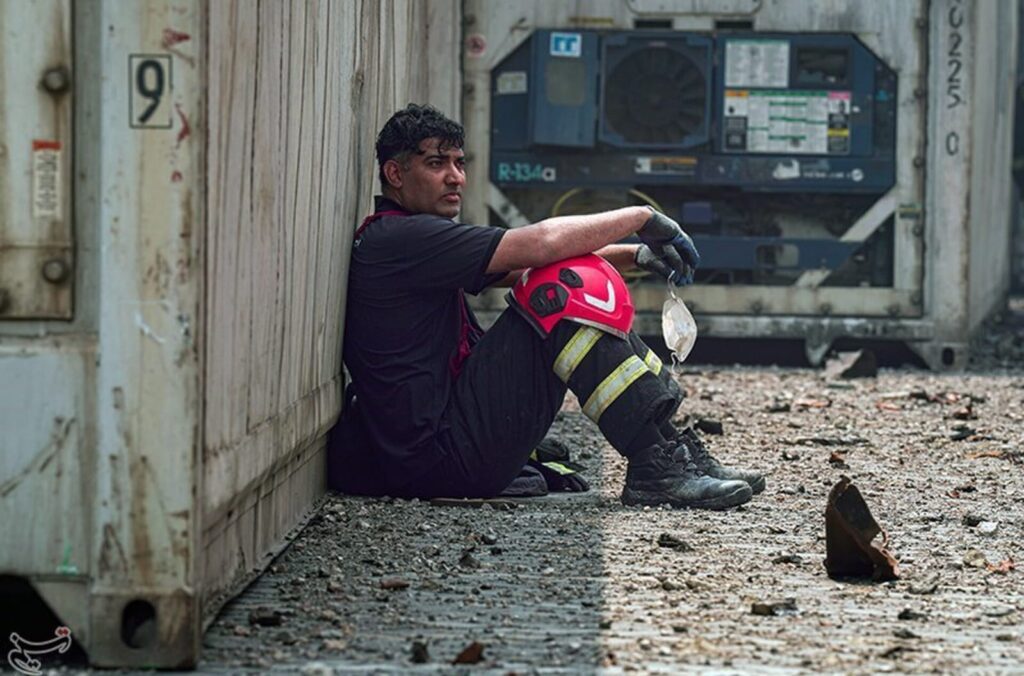
Three firefighters died battling Colorado’s Snyder Fire in June 2026. A Clifton Fire Protection District captain was photographed saluting their funeral procession. NPR’s reporting has expanded from that memorial into a broader examination of what wildfire professionals describe as an already “on-edge” firefighting workforce now being pushed harder than at any point in recent memory — by a season that has produced Spokane’s worst urban fire disaster, simultaneous fires across the West, and record heat conditions that make suppression harder and more dangerous than the training models anticipate.
2-MINUTE CONTEXT — THE STRUCTURAL WORKFORCE PROBLEM
Wildland firefighting in the United States is staffed through a complex combination of: federal agencies (US Forest Service, Bureau of Land Management, National Park Service); state forestry departments; local fire departments; contract crews; and mutual aid agreements between all of the above. The coordination is impressive. The workforce, however, is under pressure from multiple simultaneous forces.
First: pay. Federal wildland firefighters have historically been paid poorly relative to the physical danger and psychological toll of the work. Congress passed pay increases after sustained advocacy, but implementation has been uneven and some positions remain below market.
Second: tenure. Wildland firefighting is seasonal in its traditional form — fire season runs spring through fall, with winter furloughs. Consecutive 16-18 hour shifts during a fire siege, followed by months of uncertainty about employment, makes sustained career commitment difficult.
Third: mental health. Firefighters who have witnessed colleagues die, who have been overrun by fire, who have experienced near-misses and survivor guilt, face significant mental health challenges. The culture of stoicism in fire departments has historically made accessing mental health support difficult.
Fourth: the fires themselves. The fires are more intense, more unpredictable, and burning in places and conditions that the training scenarios were not designed for. The first-ever Washington State PDS red flag warning that presaged the Spokane disaster is an example: the training, the equipment, and the protocols were not designed for conditions that had never before been rated “particularly dangerous” in that state.
THE THREE SNYDER FIRE DEATHS — WHAT THEY REPRESENT
The three firefighters killed on the Snyder Fire represent the human cost of a system under strain. Their deaths will be investigated by both the Forest Service and OSHA. The investigation will focus on specific decisions, conditions, and protocols. But the broader context in which those decisions were made — exhausted crews, unprecedented fire behavior, compressed response windows — is the workforce crisis NPR’s expanded reporting documents.
The firefighter in the photograph saluting the funeral procession is still fighting fires. So is the crew that lost their colleagues. That’s what “on-edge” looks like.
THE SAFETY POLICY QUESTIONS
NPR’s reporting identifies specific policy questions being raised by the workforce under stress:
▸ CREW ROTATION: Protocols for when exhausted crews must be rotated off a fire; some crews report being held longer than protocols allow when there are no replacements available
▸ RISK ACCEPTANCE: Whether the “10 standard firefighting orders” — which require firefighters to refuse engagement if conditions are unsafe — are being genuinely followed or informally pressured aside during active crises
▸ ENTRAPMENT ZONES: Pre-designated safety zones where crews can shelter if conditions deteriorate; whether they are being adequately identified on new fire types burning in historically lower-risk terrain
▸ NEAR-MISS REPORTING: Whether the culture of near-miss reporting (documenting close calls to improve training) is functioning under an “on-edge” workforce where documenting vulnerability feels like admitting failure
WHY THIS MATTERS
Wildfire deaths are individually tragedies and collectively a policy failure. The deaths on the Snyder Fire in June, combined with the extraordinary fire events of this summer — Spokane’s first-ever PDS fire, the Greece and France simultaneous fires — represent a season in which the gap between the conditions firefighters face and the systems designed to protect them has become acute.
The workforce on edge is not only a safety issue. It is a capacity issue. When firefighters burn out, leave the profession, or are unavailable due to injury or trauma, the next fire has fewer crews to deploy. The firefighting workforce that gets through this season will face the next one — which climate science suggests will be worse.
WHAT HAPPENS NEXT
▸ Snyder Fire investigation findings expected within 6-9 months from OSHA and Forest Service
▸ Congressional appropriations for firefighter retention and mental health services will be debated in the fall spending fight
▸ Western state governors will push for federal workforce reform at the National Governors Association meeting in September
▸ The Spokane fire (arson) and the Snyder Fire (line-of-duty deaths) will both be cited in any congressional wildfire workforce hearing
| CONFIDENCE: HIGH | Three firefighter deaths on Snyder Fire are documented from official fire reporting. Clifton Fire Protection District captain photograph is AP wire service documentation. NPR workforce reporting is documented. Structural workforce issues described are from established federal firefighter union and Forest Service documentation. |
| ⚖️ BIAS CHECK — WHO IS SAYING WHAT | |
| NPR | Accountability journalism; connecting individual memorial to systemic workforce stress; not sensationalizing the deaths |
| Firefighter unions (AFGE, NFFE) | Using the deaths to push for pay, staffing, and safety protocol improvements; have been advocating for years |
| Forest Service / Interior Dept | Committed to safety investigation; defensive about protocol compliance; managing messaging carefully |
| Environmental advocates | Connecting workforce crisis to climate-driven fire intensity; arguing for prescribed burn programs to reduce fuel load |
| Republican Congress | Generally supportive of firefighters but resistant to expanded federal employment or spending commitments |
| Western state Democrats | Will push for comprehensive wildfire workforce legislation; this summer has given them powerful specific examples |
SOURCES
▸ NPR — wildfire firefighter workforce crisis reporting, August 2026
▸ Snyder Fire — three firefighter deaths, official forest service records
▸ AP — Clifton Fire Protection District captain saluting funeral procession
▸ Federal firefighter workforce data — AFGE, NFFE union documentation