
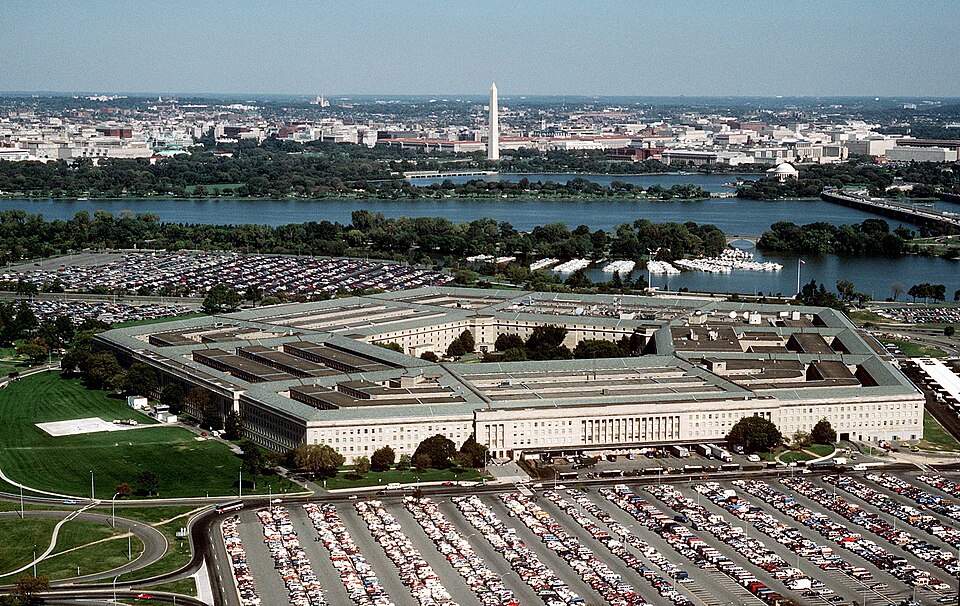
The Defense Department formally requested that US military contractors accelerate weapons production, CNN confirmed — a memo landing the same week as reports that stockpiles are running critically low nearly six months into the Iran war. The memo’s specific timing also coincides with Houthi rebels striking Saudi Aramco’s Jazan refinery, adding fresh supply chain pressure to a munitions production landscape that is already running at or near capacity. The problem: you cannot produce significantly more munitions than plants were designed to produce without building new production capacity, which takes years.
THE PRODUCTION CAPACITY PROBLEM
The memo from the Defense Department to weapons manufacturers is an acknowledgment of a documented problem ONYX has been tracking since August 5: US weapons stockpiles have been significantly depleted by six months of Iran war consumption. Patriot interceptors fell from approximately 2,300 pre-war to under 850. Long-range strike missiles (Tomahawk, PrSM, ATACMS) are described as ‘almost depleted.’ The US produces fewer than 1,000 Patriot interceptors per year.
A memo asking manufacturers to ‘ramp up’ production cannot overcome the physical constraint: ammunition plants operate on fixed infrastructure, with fixed workforce, fixed supply chains for specialized components. Many critical munitions components — the specific materials, electronics, and machined parts that go into precision weapons — are produced at a single facility or by a single supplier. Adding capacity requires building new facilities and supply chains, which takes 3-5 years at minimum from contract award to production.
The memo says: produce more. The plants say: we are already producing as much as we can. The gap between those two statements is a 3-to-5-year construction and tooling problem.
THE HOUTHI JAZAN REFINERY STRIKE — WHY IT MATTERS HERE
Houthi rebels struck Saudi Aramco’s Jazan refinery this week — a significant strike on Gulf energy infrastructure that demonstrates the ceasefire with Iran does not end regional proxy conflict. The Houthis are an Iranian-backed militia; the Iran-US ceasefire does not govern their operations. Saudi Arabia’s Jazan refinery strike creates additional pressure on Gulf energy security — and additional arguments for maintaining US weapons presence in the region that consume interceptors.
The specific implication for munitions production: even with the Iran ceasefire holding, the US continues to face active weapons consumption pressure from Houthi operations, from Ukraine support (via Germany-Netherlands resupply and US expected supplemental), and from the need to maintain reserves for any ceasefire failure. A memo asking for more production is the right policy response; its actual impact depends on what manufacturers can physically do with their existing plants.
THE PRODUCTION TIMELINE REALITY
| WEAPON SYSTEM | PRODUCTION REALITY |
| Patriot interceptors | Under 1,000/year US production; new production requires years from contract to delivery |
| Tomahawk cruise missiles | Production rates increased post-2022 but remain below wartime consumption rates |
| PrSM (Precision Strike Missile) | Newer system; production scaling is ongoing but not yet at volume |
| ATACMS (Army Tactical Missile) | Legacy system; limited ongoing production; existing stockpile is finite |
| 155mm artillery shells | Near-capacity production; US and allies have significantly increased rates since 2022 |
| Stinger anti-aircraft missiles | Production resumed after being discontinued; still below demand rates |
WHAT THE CEASEFIRE CHANGES — AND DOESN’T CHANGE
The Iran ceasefire reduces immediate US consumption in the Gulf theater — which is why the Germany-Netherlands Patriot resupply for Ukraine became politically possible on August 8. But it does not eliminate the consumption problem: Houthi operations continue; Ukraine continues to need interceptors; and the ceasefire has a 60-day window (expires October 6) with documented failure modes. The memo’s urgency is appropriate even with the ceasefire in effect.
| CONFIDENCE: HIGH | Pentagon memo to weapons manufacturers is from CNN confirmed reporting. Stockpile depletion figures (Patriot: 2,300 to under 850; long-range strike ‘almost depleted’) are from prior ONYX coverage (August 5, 6). Houthi Jazan refinery strike is from available reporting. Production capacity constraints are from established defense industry documentation. |
| ⚖️ BIAS CHECK — WHO IS SAYING WHAT | |
| Pentagon / Defense Department | Memo is an appropriate acknowledgment of the production problem; public release of the memo itself may be intended to create political pressure for supplemental defense spending |
| Defense Contractors | Will respond to the memo publicly with commitments; privately will present the production capacity constraints that prevent immediate ramp-up |
| Congress — Armed Services | Will use the memo as a basis for supplemental defense appropriations request; creates bipartisan case for production investment |
| Ukraine Advocates | The memo directly affects Ukraine interceptor availability; sustained US production investment is the only long-term solution to the Ukraine air defense gap |
| Houthi / Iran | The Jazan refinery strike demonstrates that proxy operations continue regardless of US-Iran bilateral ceasefire |
SOURCES
▸ CNN — Pentagon memo to weapons manufacturers, August 2026
▸ ONYX August 5-6 coverage — Patriot stockpile depletion and long-range missile depletion
▸ Houthi Jazan refinery strike — available reporting
▸ Defense industry production capacity — established documentation
Q: Can production actually be ramped up quickly?
A: No. The physical constraints of existing production facilities, supply chains, and specialized component suppliers prevent rapid capacity increases. What “ramp up” actually means in practice: existing plants running additional shifts, prioritizing military contracts over commercial, and identifying component supply chain bottlenecks. Meaningful new capacity requires new facility investment.
Q: Why weren’t stockpiles built up before the Iran war?
A: The Iran war began February 28, 2026. The US was simultaneously supporting Ukraine from February 2022. The consecutive high-consumption periods exhausted reserves that were not replenished at sufficient rates because annual production was below wartime consumption. The Pentagon memo is the consequence of that sustained drawdown.