Luigi Mangione entered a federal guilty plea Thursday afternoon in connection with the killing of UnitedHealthcare CEO Brian Thompson — making the ‘surprise hearing’ that ONYX covered as pending yesterday a confirmed plea event. The federal plea is to charges separate from the New York state murder charges that are the primary criminal proceeding. The plea does not resolve the state case; it adds a federal conviction to his legal record while the state trial for murder continues separately. The dual-sovereignty structure of US law permits exactly this.
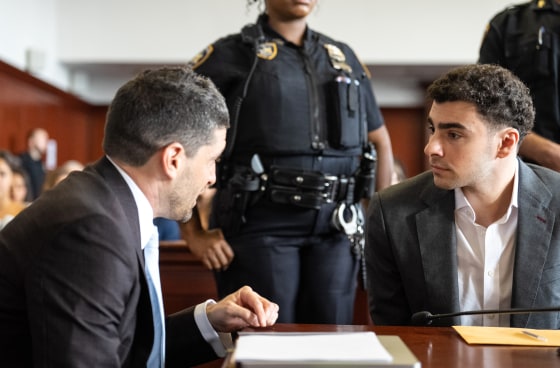
WHAT HE PLEADED GUILTY TO
The specific federal charges to which Mangione entered a plea are available in the federal court record. Federal charges in connection with a killing of this type typically include using a firearm in furtherance of a violent crime — a charge under 18 U.S.C. § 924(c) that carries mandatory minimum sentences and is separate from the state murder charges. The specific charge and the agreed sentencing terms (if any) are in the plea agreement, which is a public court document.
ONYX characterizes the plea at the level confirmed in available reporting as of August 15 morning. Readers seeking the specific charge and sentence terms should consult the federal court docket directly.
WHAT THIS MEANS FOR THE STATE TRIAL
The federal plea does not resolve the New York state murder case. Under the dual sovereignty doctrine — which the Supreme Court has repeatedly upheld — both the federal government and a state can prosecute the same individual for the same underlying conduct without violating double jeopardy protections, because each is a separate sovereign. New York’s murder prosecution continues.
The practical implications of the federal plea for the state trial are several:
▸ Admissions in the plea: any factual admissions Mangione made in the federal plea agreement may be usable in the state trial; defense attorneys will carefully manage what was admitted and how it is characterized
▸ Sentencing sequencing: if a federal sentence is imposed before the state trial concludes, it creates a complex sentencing landscape; the defense may argue the federal sentence should inform state sentencing
▸ Defense strategy revision: a guilty plea in one proceeding changes the narrative arc of the defense in the other; the state trial jury will know about the federal plea
▸ Anonymous jury: the state trial’s anonymous jury was already in place; the federal plea does not change that protection but adds to the public information environment surrounding the case
The federal plea means he is already guilty of something. The state trial determines whether he is guilty of murder. Those are different proceedings with different consequences.
THE PUBLIC REACTION DIMENSION
Mangione’s case generated unusual public attention partly because of the complicated reaction to Brian Thompson’s killing — a reaction in which some social media users expressed sympathy for the alleged shooter alongside criticism of health insurance practices. The federal plea — a formal admission of guilt in a federal proceeding — does not resolve that complicated public reaction. Whether the state trial, which will produce a more complete factual record, changes the public narrative depends on what that record reveals.
For ONYX: covering this case factually means covering the guilty plea as a guilty plea, not as a political statement or a health insurance referendum. Mangione has pleaded guilty to a federal charge. He is awaiting a state murder trial. Those are the facts.
WHAT HAPPENS NEXT
▸ Federal sentencing hearing — will be scheduled after the plea; sentencing guidelines and any plea agreement terms will determine the federal sentence
▸ State trial continuation — the New York murder trial was already underway; it continues with the federal plea as new background context
▸ State trial implications — the defense will manage the relationship between the federal plea and the state trial narrative
▸ Anonymous jury continuation — the state trial jury remains protected; the federal plea increases public attention, which is exactly what the anonymity protection was designed for
| CONFIDENCE: HIGH | Federal guilty plea is from confirmed reporting. Dual sovereignty doctrine is established Supreme Court precedent. Implications for state trial are ONYX editorial analysis based on established federal-state concurrent prosecution law. |
| ⚖️ BIAS CHECK — WHO IS SAYING WHAT | |
| Federal Prosecutors | Obtained a guilty plea; the federal case is effectively resolved at the guilt phase |
| Manhattan DA (state) | State trial continues; the federal plea provides some factual record; the murder charge remains to be adjudicated |
| Mangione Defense | Managing two proceedings simultaneously; will carefully construct the relationship between the federal admission and the state defense |
| Public / Media | Significant attention; the federal plea is a defined event in a proceeding that has been intensely watched |
| UnitedHealthcare / Thompson Family | A guilty plea in the federal proceeding is a form of accountability; the state murder trial represents the fuller accountability measure |
SOURCES
▸ Federal court record — Mangione guilty plea, August 14, 2026
▸ Dual sovereignty doctrine — established Supreme Court precedent
▸ ONYX August 14 coverage — surprise federal hearing anticipation analysis
Q: Does the federal plea mean he admitted to killing Thompson?
A: A federal plea to charges connected to the killing involves factual admissions that will be in the plea agreement. The specific scope of those admissions — and whether they constitute an admission of the killing itself — depends on the precise charge and plea agreement language.
Q: Can the state still convict him of murder after a federal plea?
A: Yes. The federal and state charges are separate under the dual sovereignty doctrine. The state murder trial proceeds independently.
Q: What is the maximum federal sentence for the charge?
A: Depends on the specific charge. If he pleaded to using a firearm in furtherance of a violent crime (18 U.S.C. § 924(c)), the mandatory minimum is 10 years; if charged with the discharge enhancement, the minimum is 10 years. The federal court will sentence within the applicable guidelines and any plea agreement terms.