Rapid Support Forces (RSF) attacks have reached Port Sudan — the Red Sea city that has been the primary humanitarian hub for Sudan’s aid operations throughout the civil war, according to Al Jazeera. Port Sudan’s status as a functioning city, government seat, and aid distribution point has been the specific logistical foundation that made any meaningful humanitarian response to Sudan’s famine possible. RSF attacks on Port Sudan mean the last functioning logistics hub in Sudan is now a conflict zone, which fundamentally changes the feasibility of sustaining humanitarian operations.
2-MINUTE CONTEXT — SUDAN’S CIVIL WAR
Sudan’s civil war began in April 2023 between the Sudanese Armed Forces (SAF) — the national military — and the Rapid Support Forces, a paramilitary group that emerged from the Janjaweed militias responsible for the Darfur genocide. The RSF, commanded by Mohamed Hamdan Dagalo (‘Hemedti’), has advanced significantly across Sudan since the war began: it controls large portions of Khartoum (the capital), Darfur, and much of central Sudan. The SAF retained control of Port Sudan, which became the de facto alternative government seat and the primary point of entry for international humanitarian assistance.
Sudan’s humanitarian crisis is one of the world’s worst: approximately 25 million people face acute food insecurity (more than half the country’s population); famine has been declared in specific areas; cholera, malaria, and other disease outbreaks are occurring in displaced populations; and approximately 10 million people have been displaced from their homes — one of the largest displacement events in the world in 2024-2026.
WHY PORT SUDAN MATTERS SO MUCH
Port Sudan is not just a government seat. It is the logistics hub through which:
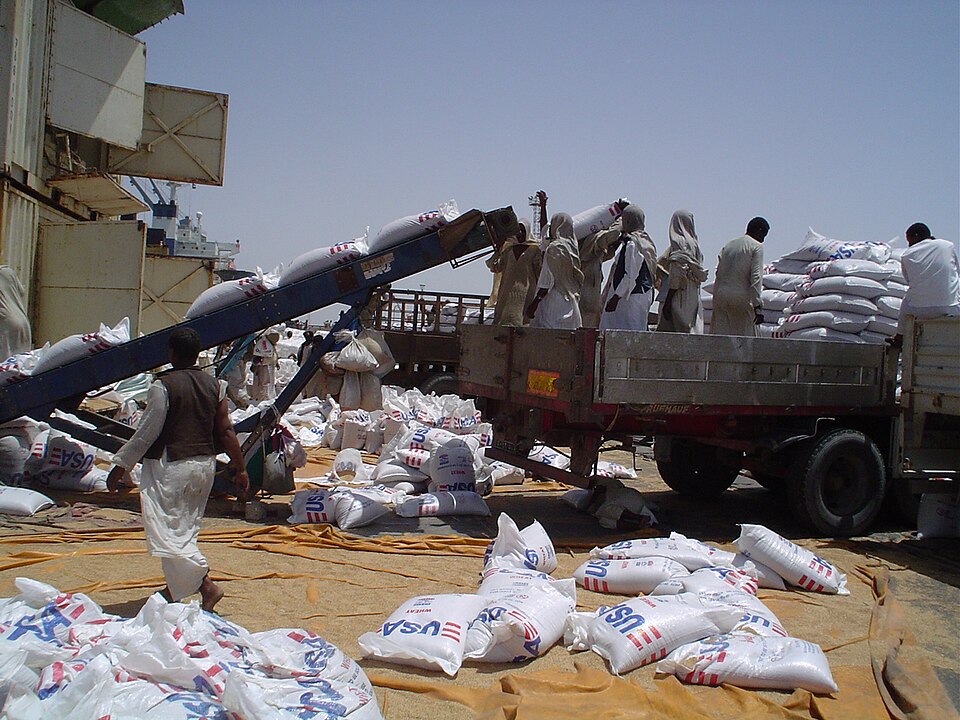
▸ All international humanitarian shipments enter Sudan — food, medicine, shelter materials, water treatment equipment
▸ The SAF government maintains its external communications and financial transactions
▸ International organizations (WFP, OCHA, UNICEF, MSF) have their Sudan operations bases
▸ Journalists and international officials access Sudan from outside
▸ Any future ceasefire negotiations would likely use Port Sudan as a staging point
RSF attacks on Port Sudan mean all of these functions are now under threat. If RSF advances into the city, the last functional logistics hub collapses — and with it, the ability to sustain any significant humanitarian operation in Sudan.
THE FAMINE COMPOUND
Sudan’s famine is not separate from the conflict — it is a consequence of it. Agricultural land abandonment, market disruption, blockade of aid, and active targeting of food supplies are all documented features of both sides’ conduct. The RSF advance to Port Sudan is not just a military movement; it is a direct threat to the food aid pipeline that is the only barrier between famine and mass death for millions of people already in acute food insecurity.
The specific timeline concern: WFP and other organizations have pre-positioned some supplies in Port Sudan for forward deployment. If those supplies become inaccessible because Port Sudan is in active conflict, the humanitarian pipeline breaks at a moment when the need is at its most acute.
Port Sudan was the last place in Sudan where the international humanitarian system could function. RSF attacking it is not a military operation. It is an attack on the mechanism that feeds millions of people.
THE INTERNATIONAL RESPONSE
The international response to Sudan’s civil war has been systematically inadequate relative to the scale of the crisis. The specific reasons: geopolitical distraction (Ukraine, Iran, Gaza); limited strategic interest in Sudan for major powers; the complexity of the two-party conflict (neither side is aligned with Western values or interests in a way that creates advocacy pressure); and the sheer scale of need, which exceeds the humanitarian system’s practical response capacity.
WHAT HAPPENS NEXT
▸ RSF’s advance on Port Sudan will determine the humanitarian timeline — if RSF occupies the city, humanitarian operations face collapse
▸ SAF response — whether the national military can defend Port Sudan, or whether it falls as Khartoum did
▸ International evacuation — international organization staff in Port Sudan face the same evacuation decisions that they faced in Khartoum in 2023
▸ Emergency humanitarian stockpiling — organizations will attempt to move supplies before access is cut; whether this is physically possible under attack is uncertain
▸ Security Council — Sudan has produced multiple Security Council discussions; binding resolutions have been blocked by Russian and Chinese vetoes; this is unlikely to change
| CONFIDENCE: HIGH | RSF attacks on Port Sudan are from Al Jazeera confirmed reporting. Sudan civil war context (RSF, SAF, Hemedti, war start April 2023) is from established public record. Humanitarian figures (25 million food insecure, 10 million displaced) are from UN documentation. |
| ⚖️ BIAS CHECK — WHO IS SAYING WHAT | |
| RSF | Conducting military operations for territorial control; not acknowledging humanitarian consequences |
| SAF | Defending Port Sudan; humanitarian consequences are collateral to the military objective |
| WFP / OCHA | Documenting and responding to the specific humanitarian threat posed by the Port Sudan advance |
| International Community | Watching; the limited response to Sudan’s crisis throughout the war will not change quickly |
| Sudanese Civilians | Most directly affected; the collapse of the Port Sudan logistics hub has direct food security consequences for millions |
SOURCES
▸ Al Jazeera — RSF attacks on Port Sudan, August 2026
▸ UN documentation — Sudan humanitarian figures (25M food insecure, 10M displaced)
Q: What started Sudan’s civil war?
A: The RSF and SAF were both part of Sudan’s transitional government following the 2019 revolution that ousted Omar al-Bashir. In April 2023, disagreements over the RSF’s integration into the national military command structure produced open conflict. The war began on April 15, 2023.
Q: Is there any ceasefire in Sudan?
A: Multiple ceasefire attempts have been made and collapsed. No sustained ceasefire has held. The Jeddah-mediated talks produced a Framework Agreement that was not implemented. US-led mediation has not produced a functioning ceasefire.