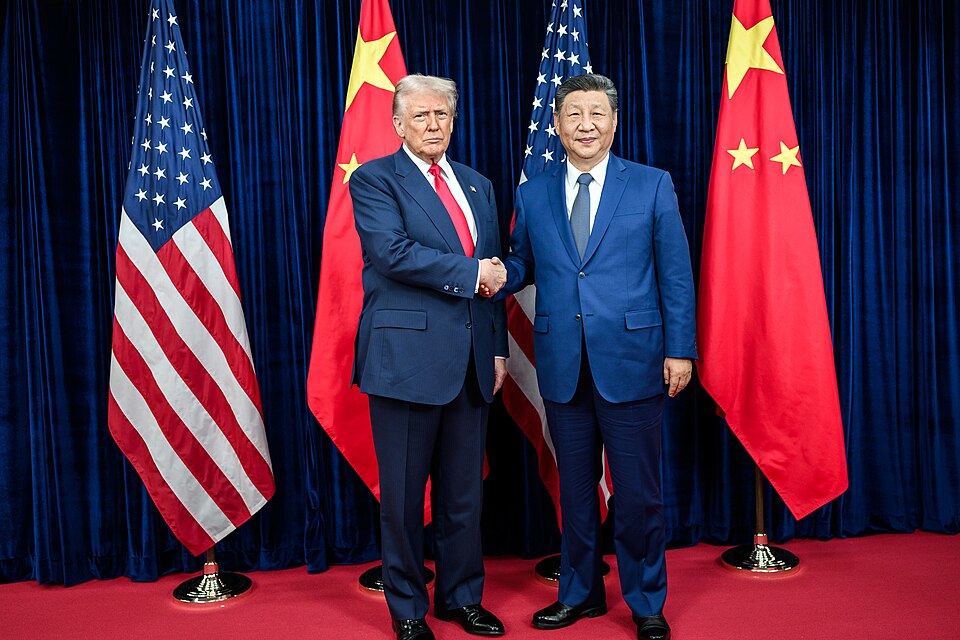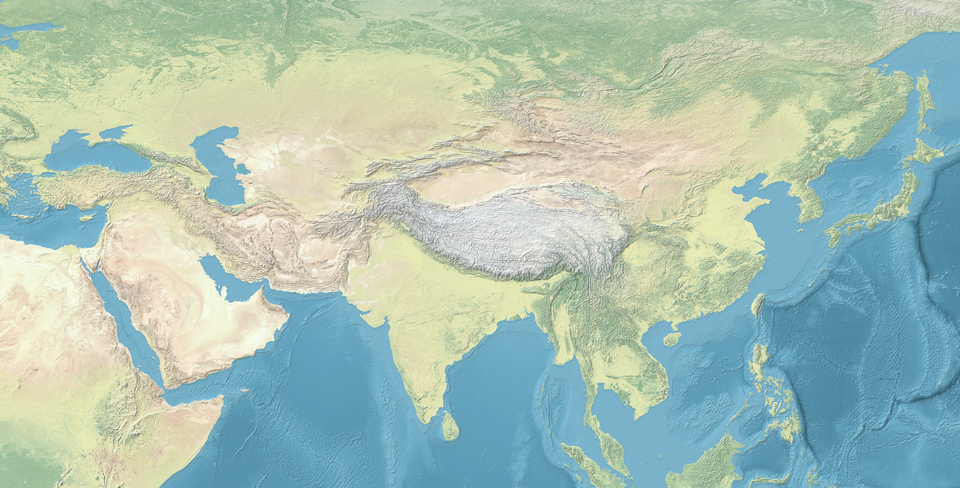
With the USS George Washington departing the western Pacific for the Middle East — leaving no US aircraft carrier in the region for the first time in recent memory — China conducted fresh naval exercises near the contested Scarborough Shoal and near Japan this week. CSIS analyst Bryan Clark characterized Beijing’s message explicitly: the US is ‘not the big dog’ anymore. CSIS analyst Greg Poling noted the administration claims the Pacific is its second priority behind the Western Hemisphere, and they are ‘doing the exact opposite’ in practice. The exercises are not random; their timing relative to the carrier departure is a deliberate signal.
2-MINUTE CONTEXT — WHAT SCARBOROUGH SHOAL IS AND WHY IT MATTERS
Scarborough Shoal is a small reef and fishing ground in the South China Sea, approximately 220 kilometers from the Philippine island of Luzon. China and the Philippines have contested control of the shoal for decades. In 2012, China effectively seized control of the shoal after a standoff with Philippine vessels, blocking Philippine fishermen from accessing traditional fishing grounds. The Philippines took China to international arbitration under UNCLOS; the tribunal ruled in 2016 that China’s claims had no legal basis. China ignored the ruling.
Scarborough Shoal matters for two reasons: it is the most direct maritime flashpoint between China and a US treaty ally (the Philippines); and it is approximately 700 kilometers from the Chinese mainland, meaning Chinese military control of the shoal would extend China’s defensive perimeter significantly toward the Philippines and away from China’s coast. Whether China uses the current US carrier absence to assert more direct control of Scarborough Shoal — as it used the 2012 standoff opportunity — is the specific military intelligence question being watched.
THE CARRIER GAP — WHY IT MATTERS MILITARILY
A US aircraft carrier battle group provides: approximately 60-70 aircraft for offensive and defensive operations; organic air defense that protects a 400+ mile radius from the carrier; a credible strike capability against land and sea targets; and a deterrent signal that has historically shaped Chinese military behavior in the South China Sea. In its absence, that deterrent is simply not there.
The specific deterrent function of carriers in the Pacific has been: discouraging Chinese military escalation against Taiwan; deterring confrontation with Philippine forces at Scarborough Shoal and Second Thomas Shoal; and maintaining the freedom of navigation that the US Navy asserts in contested waters. With the last carrier gone, the deterrent is provided by submarines (which cannot be seen and therefore cannot signal), surface combatants (which do not carry the same symbolic weight), and shore-based aircraft (which have limited reach).
| WITH A CARRIER BATTLE GROUP | WITHOUT A CARRIER BATTLE GROUP |
| 60-70 aircraft available for immediate response | Submarines provide covert deterrent only |
| Visible deterrent signal to regional actors | No visible naval presence to signal resolve |
| 400+ mile defensive radius from carrier | Shorter-range surface combatant air defense only |
| Freedom of navigation assertion exercises possible | FON ops still possible but without air cover |
| Taiwan contingency response time: immediate | Taiwan contingency response time: longer |
| Scarborough Shoal presence: credible | Scarborough Shoal presence: reduced |
WHAT ANALYSTS ARE SAYING
Greg Poling (CSIS): the administration’s claim that the Pacific is its second priority is contradicted by the decision to pull the western Pacific’s carrier to the Middle East. The administration is doing ‘the exact opposite’ of its stated priority. This is not simply a criticism; it is an observation about the gap between stated policy and operational reality.
Bryan Clark (defense analyst): Beijing is using the carrier gap specifically to demonstrate that the US is ‘not the big dog anymore’ in the Pacific. China’s exercises are designed to be noticed by the Philippines, Japan, Taiwan, South Korea, and Australia — the US’s regional partners — as a demonstration of what the region looks like without consistent US presence.
Navy Chief Admiral Daryl Caudle has been pushing toward smaller, more survivable ships rather than large carriers. The carrier vulnerability argument is real — modern anti-ship missiles and hypersonic glide vehicles make large carriers increasingly vulnerable targets. But smaller ships do not carry the same deterrent signal weight. The Navy’s doctrinal evolution and the immediate Pacific deterrence gap are in tension.
The carrier is the signal. Its absence is also a signal. China’s exercises are reading that signal and responding to it.
THE IRAN DEAL CONNECTION
The western Pacific carrier gap is a direct consequence of the Iran war. The USS Abraham Lincoln’s 240+ day deployment that the senators are investigating (ONYX August 14 Section A Story 6) is the immediate cause; the USS George Washington’s deployment to replace the Lincoln is the consequence that creates the gap. The Iran ceasefire deal, now on Day 9, should theoretically allow the Lincoln to begin returning to the Pacific. But the Lincoln’s return requires maintenance and crew rest that will take months, during which the gap persists unless the Theodore Roosevelt deploys from San Diego.
WHAT HAPPENS NEXT
▸ China’s exercises are expected to continue through the carrier gap period; watch for escalation in the Scarborough Shoal standoff
▸ The USS Theodore Roosevelt potential deployment from San Diego — if it deploys, it partially fills the gap; if it stays, the gap is sustained
▸ Philippines-China Scarborough Shoal — the specific flashpoint to watch; Chinese behavior at Scarborough Shoal in the next 2-4 weeks will reveal how aggressively it intends to exploit the gap
▸ Japan’s response — Japan has been investing in its own maritime defense capacity; the carrier gap may accelerate Japan’s independent defense posture
▸ Taiwan’s assessment — Taiwan defense planners are watching the carrier gap as the most direct change in the deterrence environment relevant to their security
| CONFIDENCE: HIGH | USS George Washington Pacific departure and carrier gap are from AP wire confirmed reporting. CSIS analyst Greg Poling quote (‘doing the exact opposite’) and Bryan Clark quote (‘not the big dog’) are from confirmed reporting. Scarborough Shoal background is from established South China Sea documentation. China exercises near Scarborough Shoal and Japan are from confirmed reporting. |
| ⚖️ BIAS CHECK — WHO IS SAYING WHAT | |
| China | Will not characterize the exercises as exploiting a gap; will describe as routine training; the timing is the signal, not the stated rationale |
| US Administration | Defends the carrier redeployment as operationally necessary; does not engage directly with the Pacific gap criticism |
| CSIS Analysts (Poling, Clark) | Independent think tank assessment; the characterization of the administration doing the opposite of stated priority is explicit critique, not reporting |
| Philippines | Most immediately affected; monitoring Scarborough Shoal behavior closely; US mutual defense treaty is their primary protection |
| Japan and Taiwan | Watching the carrier gap as a change in their deterrence environment; both have been building independent defense capacity |
SOURCES
▸ AP wire — USS George Washington Pacific departure, carrier gap, August 2026
▸ CSIS — Greg Poling assessment, Bryan Clark assessment (confirmed reporting)
▸ South China Sea documentation — Scarborough Shoal history, UNCLOS arbitration (established)
Q: Is the US technically “committed” to defending Scarborough Shoal?
A: The US-Philippines Mutual Defense Treaty (1951) commits both countries to defend each other in the Pacific area. The South China Sea is within that area. Whether an attack on Philippine vessels at Scarborough Shoal triggers the mutual defense commitment has been deliberately left ambiguous by successive US administrations; the ambiguity is meant to deter Chinese action without committing the US to specific force responses.
Q: How long will the carrier gap last?
A: The USS Abraham Lincoln needs maintenance and crew rest after its 240+ day deployment; it cannot immediately return to the Pacific. The USS Theodore Roosevelt from San Diego is the most likely near-term gap-filler if deployed. Without TR, the gap persists until Lincoln’s maintenance is complete, which could be 3-6 months.