A federal judge’s decision in Texas easing restrictions on firearm sound suppressors carries major implications for how the National Firearms Act of 1934 is enforced nationwide, according to NPR. The NFA is the foundational federal law regulating machine guns, short-barreled rifles, and suppressors, among other weapons — a 90-year-old regulatory framework that a single district court ruling can now challenge in ways that reach all the way to the Supreme Court’s Bruen standard.
2-MINUTE CONTEXT — THE NATIONAL FIREARMS ACT
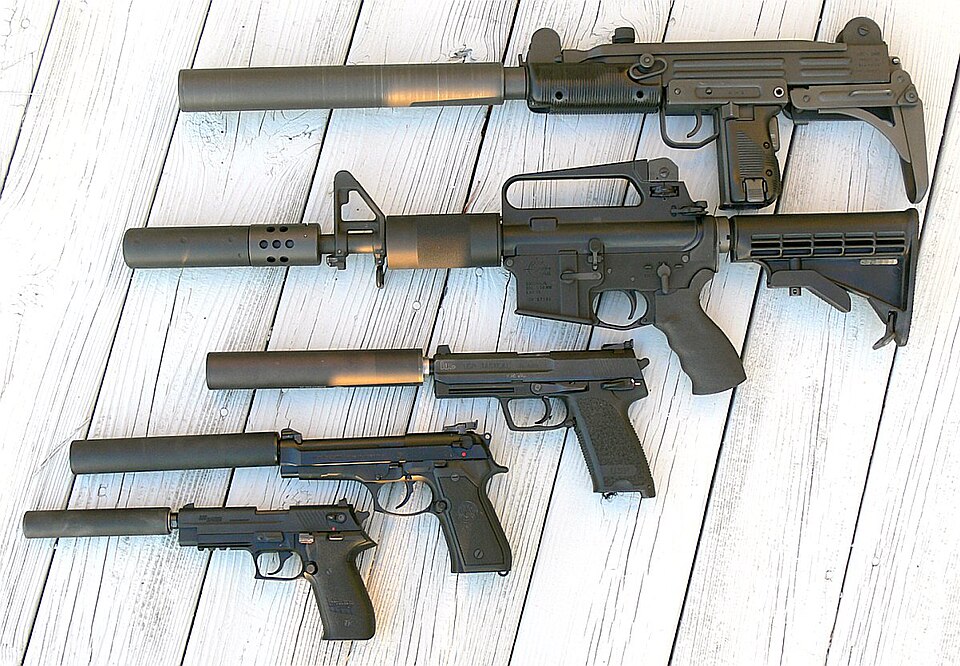
The National Firearms Act of 1934 was passed in response to the gang violence of Prohibition. It regulates: machine guns; short-barreled rifles and shotguns; destructive devices (grenades, bombs); suppressors (silencers); and any other weapons that do not fit standard categories. NFA items are not banned but are federally registered, taxed ($200 tax stamp), and subject to a rigorous background check and waiting period that can take months.
The regulatory structure: possessing an unregistered NFA item is a federal felony. The $200 tax stamp system, unchanged since 1934 (when $200 was a substantial sum), was designed as a de facto prohibition. Today, $200 is a minor cost, and the waiting period is the primary practical barrier.
WHAT THE TEXAS RULING DID
The specific ruling eases suppressor purchase restrictions. NPR’s characterization — ‘major implications for how the NFA is enforced nationwide’ — suggests the ruling goes beyond simply allowing an individual plaintiff to purchase a suppressor. The most likely legal mechanism: the ruling found that the NFA’s suppressor provisions are inconsistent with the historical tradition of firearms regulation as established by the Supreme Court’s 2022 Bruen standard.
The Bruen standard requires that firearm regulations be consistent with the historical tradition of firearms regulation at the time of the Second Amendment’s enactment (1791) or the Fourteenth Amendment’s enactment (1868). A 1934 law — enacted 143 years after the Second Amendment — is vulnerable to challenge under this standard. If the Texas ruling found that suppressor regulation has no historical tradition prior to 1934, the NFA’s suppressor provisions may not survive Bruen scrutiny.
THE NATIONWIDE IMPLICATIONS
If the ruling’s legal theory is sustained on appeal and reaches the Supreme Court:
▸ Suppressors could be deregulated from the NFA framework entirely, making them purchasable without the $200 tax, background check wait, or federal registration
▸ The same Bruen logic could be applied to other NFA categories: short-barreled rifles, other regulated weapons
▸ Machine gun provisions (the Hughes Amendment’s 1986 ban on new civilian machine gun registration) could face a separate Bruen challenge on similar grounds
▸ The entire NFA regulatory structure — 90 years of federal firearms regulation — could be destabilized if district courts systematically apply Bruen to pre-existing regulatory frameworks
A 1934 law designed to stop Prohibition-era gang violence is being evaluated against a Constitutional standard from 1791. The 143-year gap is the specific legal vulnerability that the Texas ruling is exploiting.
THE BRUEN STANDARD CONTEXT
The Supreme Court’s 2022 Bruen decision replaced the previous means-ends balancing test for Second Amendment challenges with a historical tradition test. The immediate effect was to invalidate New York’s concealed carry permit requirement. The downstream effect — which ONYX has been watching — is that every firearm regulation enacted after 1791 (or at most 1868) is now subject to challenge based on whether a historical analog existed. The NFA of 1934 is squarely in this vulnerable window.
WHAT HAPPENS NEXT
▸ Government appeal — the DOJ will appeal the Texas ruling to the Fifth Circuit; the Fifth Circuit’s ruling will determine whether the legal theory proceeds
▸ Fifth Circuit pattern — the Fifth Circuit has been receptive to Second Amendment challenges under Bruen; its ruling direction is consequential
▸ Supreme Court — if the Fifth Circuit sustains the ruling, the Supreme Court faces a direct challenge to the NFA’s foundational provisions
▸ Congressional response — some members will seek to codify the NFA’s provisions against judicial challenge; others will support the deregulation
| CONFIDENCE: HIGH | Texas federal judge suppressor ruling and NFA implications are from NPR confirmed reporting. NFA history and provisions are established public law. Bruen standard (2022) is established Supreme Court precedent. Legal theory analysis is ONYX editorial. |
| ⚖️ BIAS CHECK — WHO IS SAYING WHAT | |
| Second Amendment advocates | Supportive; view suppressor deregulation as consistent with Constitutional rights; will push for other NFA challenges using the same Bruen logic |
| Gun control advocates | Alarmed; the NFA is foundational federal gun regulation; its destabilization through district court rulings undermines 90 years of policy |
| DOJ / Federal Government | Will appeal; has institutional interest in maintaining existing regulatory frameworks |
| Fifth Circuit | Has been receptive to Second Amendment challenges; its handling of the government’s appeal will be decisive in the near term |
SOURCES
▸ NPR — Texas federal judge suppressor/NFA ruling, August 2026
▸ National Firearms Act of 1934 — established public law
▸ Bruen v. NYSRPA (2022) — established Supreme Court precedent
Q: What is a suppressor/silencer?
A: A suppressor (commonly called a silencer) is a device attached to a firearm barrel that reduces the sound of firing by allowing expanding gases to cool and slow. Suppressors do not make firearms “silent” as depicted in movies; they typically reduce noise to approximately 130 decibels from 160+ decibels, which is still above the threshold of hearing damage. Their primary legitimate uses are hearing protection and reducing noise disturbance in hunting and shooting sports.
Q: How many suppressors are currently registered?
A: The ATF NFA registry contains approximately 2.5 million suppressors as of recent data. If suppressors are deregulated from the NFA, this existing registry framework would be affected; how existing registered suppressors are treated in a deregulation scenario is one of the specific policy questions that courts and Congress would need to address.