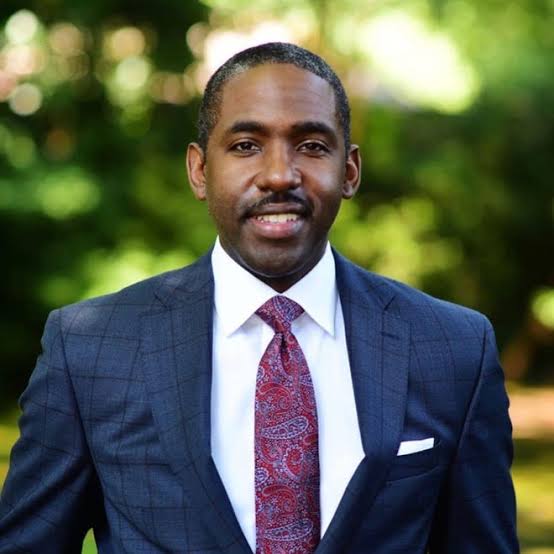
Attorney Andre Wharton, who represents Jonah Neal’s family, is simultaneously representing the families of two other individuals who were shot and killed by federal agents or federal task force members in separate incidents, according to NPR. One of those individuals is Tyrin Johnson, who was fatally shot by National Guard troops on July 5. A third case involves a separate federal agent-involved shooting. One attorney handling three separate families in three separate cases is not coincidental; it is a pattern being documented and litigated simultaneously.
THE TYRIN JOHNSON CASE
Tyrin Johnson was fatally shot by National Guard troops on July 5 — approximately seven weeks before the August 24 press conference on Jonah Neal. National Guard troops are state military assets that can be federalized and can be deployed in domestic law enforcement support roles. Their use in domestic contexts raises specific legal questions: under what authority were they operating; what use-of-force standard applied; and what accountability mechanism applies to National Guard troops involved in a fatal civilian shooting.
THE THREE-CASE PATTERN
The specific accountability argument Wharton is building by representing three families simultaneously: the individual cases are not isolated anomalies but instances of a pattern of unjustified federal use of force in domestic policing contexts. Pattern documentation matters for two specific legal and political purposes:
▸ Civil litigation: pattern evidence can support claims that an agency or deployment model has a systematic problem rather than an individual officer error; pattern claims have different legal reach than single-incident claims
▸ Political accountability: pattern documentation creates a body of evidence that congressional oversight, inspector general investigations, and public accountability campaigns can use to argue for policy change
One attorney. Three families. Three separate federal agent-involved shootings. Wharton is not treating each case as an isolated incident. He is building a pattern.
THE FEDERAL ACCOUNTABILITY QUESTION
Each of Wharton’s three cases involves federal agents or federally-deployed forces operating in domestic law enforcement contexts with different accountability structures than local police. The specific accountability challenge: there is no single federal accountability mechanism equivalent to a local police department’s civilian review board or a state’s attorney general oversight. Federal agent accountability runs through agency internal affairs, the DOJ Office of Professional Responsibility, and federal prosecution — all of which are within the executive branch that deployed the agents.
WHAT HAPPENS NEXT
▸ Civil litigation across three cases — the legal claims will develop in parallel; pattern evidence will be a central element
▸ Congressional oversight — federal task force deployment model and federal agent use-of-force accountability
▸ Third case details — the third family Wharton represents; their case has not been publicly detailed in available NPR reporting
| CONFIDENCE: HIGH | Wharton representing three families (Neal, Johnson, third case), Tyrin Johnson National Guard shooting July 5, and pattern documentation context are from NPR confirmed reporting. |
SOURCES
▸ NPR — Andre Wharton three federal shooting cases, pattern, August 24, 2026