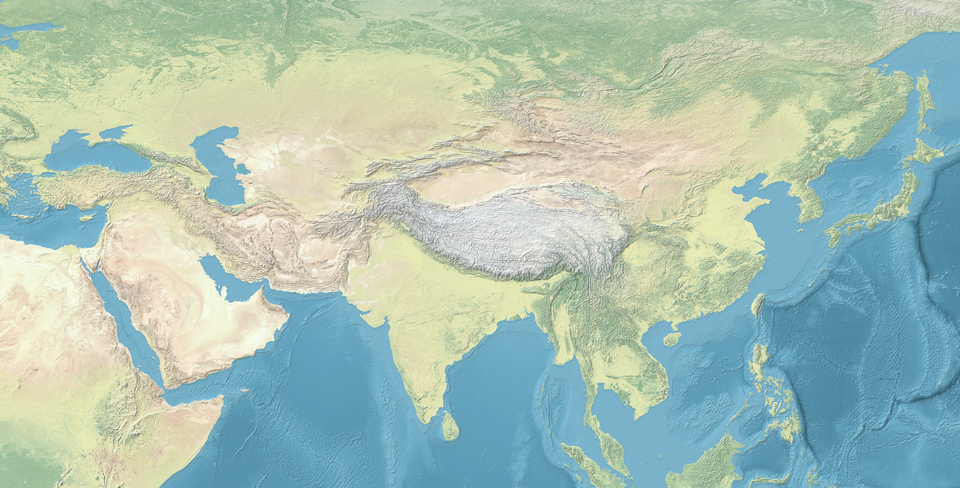
Soekarno-Hatta International Airport, Indonesia’s busiest and one of Southeast Asia’s most critical aviation hubs, suspended all flight operations after volcanic ash from Anak Krakatoa reached the airport, according to AFP reporting via ABS-CBN News. The closure affects connections across Indonesia’s archipelago of 17,000 islands as well as international traffic across the region.
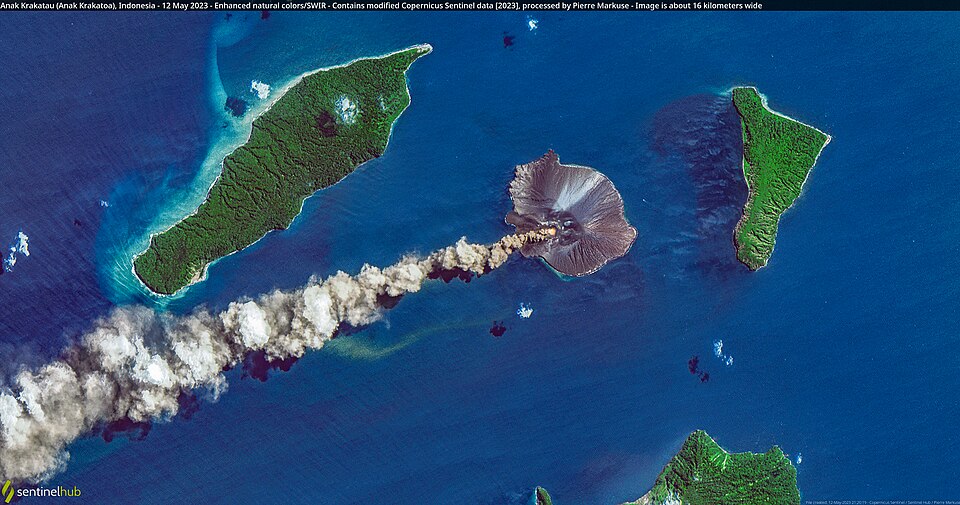
WHAT ANAK KRAKATOA IS
Anak Krakatoa — ‘Child of Krakatoa’ — is a volcanic island that emerged from the sea in 1927 in the Sunda Strait between Java and Sumatra, at the same site as the catastrophic 1883 Krakatoa eruption that killed approximately 36,000 people. Anak Krakatoa has been intermittently active since its emergence. It is a stratovolcano — the type of volcano whose steep flanks and explosive eruptions produce the most dangerous combinations of ash, pyroclastic flow, and collapse risk.
THE 2018 PRECEDENT
Anak Krakatoa’s most recent catastrophic event was December 22, 2018. The specific mechanism was not an explosive eruption but a flank collapse: a large section of the volcano’s southwestern flank slid into the Sunda Strait, displacing water and generating a tsunami that struck the coastlines of Java and Sumatra without warning. More than 400 people were killed; because the tsunami was generated by a flank collapse rather than an earthquake, there was no seismic signal to trigger standard tsunami warning systems.
The 2018 tsunami was a specific, documented scientific and emergency management failure: the warning system was calibrated for earthquake-generated tsunamis; a collapse-generated tsunami bypassed that system entirely. The region’s warning infrastructure has been updated since 2018, but the specific risk — that a collapse-generated tsunami can strike coastlines with minimal warning time — remains.
WHAT THE CURRENT ACTIVITY MEANS
Volcanic ash significant enough to close Indonesia’s busiest airport indicates that Anak Krakatoa’s current eruption phase is producing substantial eruptive material. The specific questions scientists are monitoring:
▸ Flank stability: whether the current eruptive activity is destabilizing the flanks of the volcanic edifice; a flank collapse is the specific risk that produced the 2018 tsunami
▸ Ash composition and volume: the chemistry and volume of ash tells geologists about the magma’s composition and the eruption’s intensity
▸ Seismic signatures: the specific pattern of earthquakes beneath the volcano indicates whether magma is moving toward the surface and at what rate
▸ Eruption style: explosive Vulcanian eruptions produce significant ash; effusive lava flows produce less ash but can contribute to flank instability
THE AVIATION IMPACT
Volcanic ash is specifically dangerous to jet aircraft engines: ash particles melt in the high-temperature combustion zone and then re-solidify on turbine blades, coating and potentially shutting down engines. Multiple commercial aircraft have experienced engine failure or shutdown in volcanic ash clouds; the specific accident risk is severe enough that aviation authorities routinely close airspace around active volcanoes. Closing Soekarno-Hatta — one of Asia’s top-30 busiest airports — reflects a standard aviation safety response to a genuine, specific risk.
Anak Krakatoa shut down Indonesia’s busiest airport. The same volcano sent a tsunami that killed 400 people in 2018 without warning because the warning system was designed for a different kind of tsunami. Scientists are watching the flank stability. That is the specific thing to watch.
WHAT HAPPENS NEXT
▸ Eruption monitoring — Indonesian geological agency PVMBG tracking eruption intensity and flank stability
▸ Airport reopening — when ash dispersal permits safe aviation operations
▸ Tsunami warning status — whether the Sunda Strait tsunami warning system is on elevated alert
▸ Evacuation decisions — whether coastal communities near Anak Krakatoa are advised to move
| CONFIDENCE: HIGH | Soekarno-Hatta International Airport closed due to Anak Krakatoa ash, AFP reporting, busiest Indonesia airport Southeast Asia hub are from confirmed reporting. 2018 flank collapse tsunami 400+ dead, warning system failure dimension from established scientific and news record. |
| ⚖️ BIAS CHECK — WHO IS SAYING WHAT | |
| Indonesian aviation authority (DGCA) | Closed the airport on volcanic ash safety grounds; standard aviation safety response |
| Geological agency (PVMBG) | Monitoring eruption intensity; their alerts determine the aviation authority’s response |
| ONYX | Covering the 2018 precedent explicitly because it is the specific documented risk; the flank collapse mechanism is the accountability the current activity requires naming |
SOURCES
▸ AFP / ABS-CBN News — Anak Krakatoa Jakarta airport closed ash, September 7, 2026
Q: How does a flank collapse produce a tsunami?
A: A volcanic flank collapse occurs when a section of the volcano’s exterior slope loses structural integrity and slides into adjacent water. The sliding mass displaces a large volume of water suddenly, generating waves that propagate outward in all directions. The 2018 event occurred when approximately 64 million cubic meters of Anak Krakatoa’s flank slid into the Sunda Strait over a period of about 2 minutes. The waves reached the Java coastline approximately 24 minutes later. Because there was no earthquake, seismometers that normally trigger tsunami warnings registered nothing significant; the warning system did not activate.
Q: Why can’t aircraft fly through volcanic ash?
A: Volcanic ash consists of tiny particles of pulverized rock, glass, and minerals. At cruise altitude temperatures, these particles are solid. Inside a jet engine’s combustion chamber, the temperature exceeds 1,400°C — above the melting point of the ash particles. The ash melts, then re-solidifies on the cooler turbine blades, coating them with a glassy layer that reduces performance and can eventually stall the engine. The 1982 British Airways incident over Galunggung volcano in Indonesia — all four engines shut down in ash cloud before restarting — is the defining accident that established aviation ash avoidance protocols.