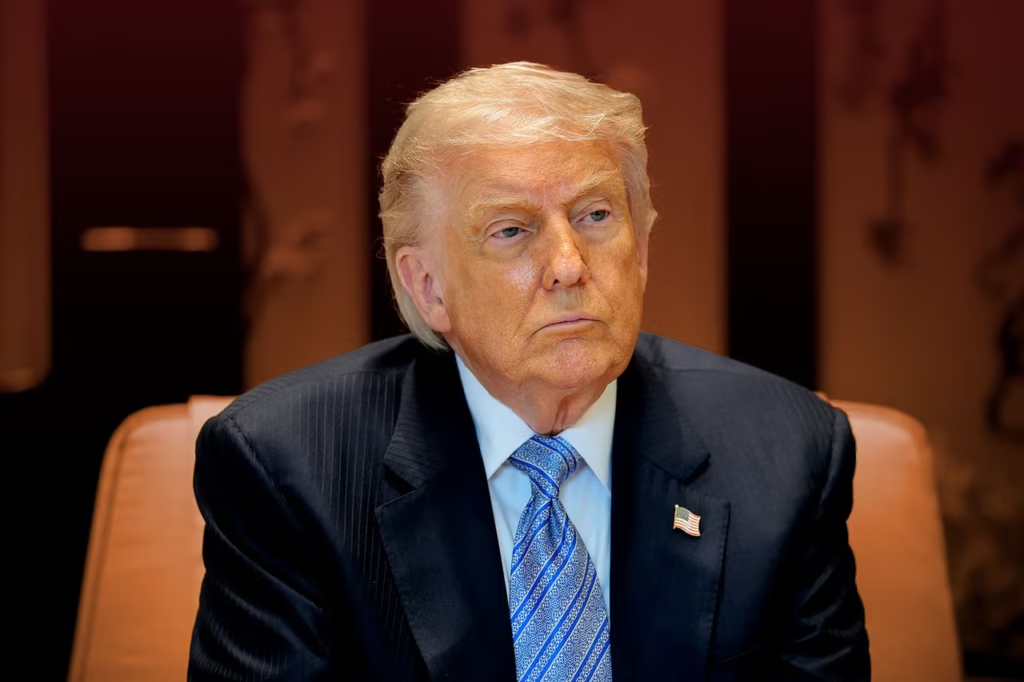
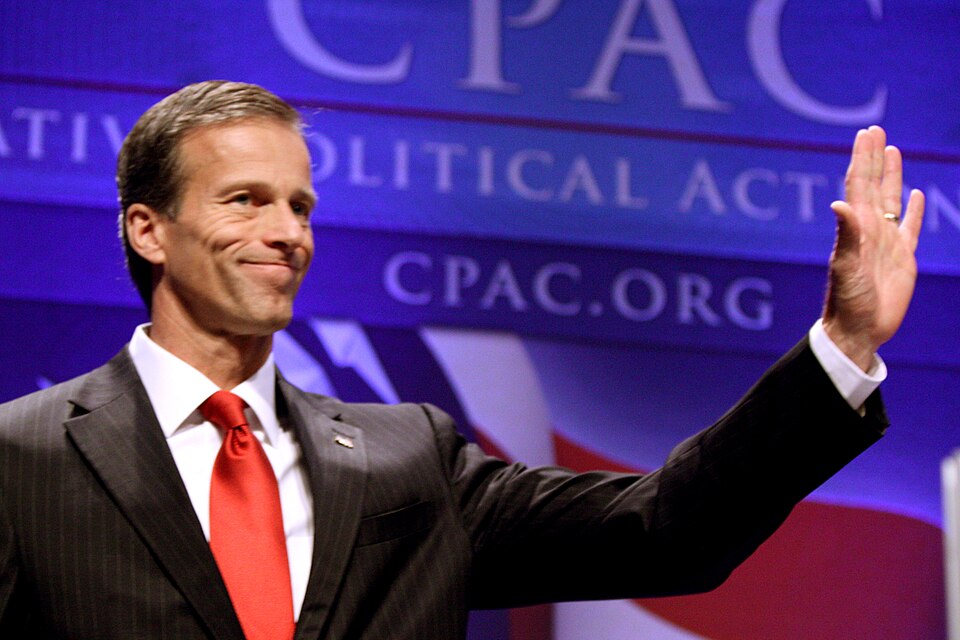
The Senate Leadership Fund — the super PAC tied to Majority Leader John Thune — placed its first general-election ad buy for Ken Paxton this week: $51.3 million across Dallas-Fort Worth, Houston, San Antonio, and Austin. Combined with nearly $10 million from Trump’s own Super PAC and $2 million from Elon Musk’s PAC, Republicans are now outspending Democrat James Talarico by more than $70 million in September alone, according to the Houston Chronicle.
WHAT THE SPEND TELLS YOU
Political spending of this magnitude tells a specific story about internal polling. Party committees and affiliated super PACs do not spend $70 million in a single month on a race they expect to win comfortably. They spend $70 million when their own internal numbers tell them they might lose. The Senate Leadership Fund spent months deliberately staying out of Texas precisely because Paxton’s baggage made the race difficult to message. When Thune’s PAC makes its first Texas buy at $51.3 million, the buy is the signal: the race is competitive enough to require emergency intervention.
THE ASYMMETRIC HISTORY
Before September, the money story ran the other way entirely:
▸ Talarico overall fundraising: $40 million+
▸ Paxton overall fundraising: $8 million
▸ Talarico advantage: 5-to-1 overall
▸ Talarico owned the airwaves for months with no Republican counter-presence
▸ Matt Angle (Texas Democratic operative): ‘nobody went into this race… thinking that at the end of the day, Democrats would outspend Republicans’
September reversed the asymmetry in dollar terms. It did not reverse the asymmetry in months of brand-building. Talarico spent months establishing his image in Texas media markets with no Republican counter-narrative. The $70 million buy arrives with 44 days until November 3.
COOK POLITICAL REPORT’S MOVE
Cook Political Report moved the Texas Senate race from ‘likely Republican’ to ‘lean Republican’ the moment Paxton beat Cornyn in the primary. That move was the specific signal that triggered the eventual national Republican response — and also explained why Republicans hesitated for months. A race rated ‘lean Republican’ is winnable but not safe; a race rated ‘lean Republican’ with a candidate carrying Paxton’s documented baggage is a race that national donors approached with documented reluctance.
TRUMP’S COMMITMENT
Trump told the GOP convention crowd in Dallas: ‘I’ll be coming back to Texas because we have to elect Ken Paxton. We have to. If I have to, I’ll come back twice or three times.’ A sitting President pledging to return to a state two or three times for a Senate race that his party expected to hold is the presidential equivalent of the $70 million buy: it is not confidence, it is alarm.
THE SENATE MAP IMPLICATIONS
ONYX has tracked the Senate map since the primary season. If Texas is genuinely competitive at ‘lean Republican,’ the map’s specific implication is that Republicans are defending more seats than anticipated. The Iran deal has changed the political environment in ways that may affect competitive Senate races. $87 oil is better for Republican incumbents than $100 oil. A deal announcement reduces the war’s drag on Republican Senate candidates. Whether those factors stabilize Texas or whether the money gap that existed before September made the race structurally competitive is up to the election’s outcome on November 3.
Senate Leadership Fund spent months staying out of Texas because of Paxton’s baggage. Then it dropped $51.3 million in a single week. Trump pledged to return two or three times. Musk’s PAC wrote a $2 million check. $70 million in one month in a state Republicans expected to hold. That is not a party confident in its position. That is a party that received internal numbers it did not like.
WHAT HAPPENS NEXT
▸ November 3 — 44 days; whether the $70 million September buy closes the structural gap Talarico built in prior months
▸ Trump visits — whether Trump makes additional Texas appearances
▸ Talarico response — whether the Democratic side can match any portion of September’s Republican spend
▸ Senate majority — if Texas flips, whether that changes Senate control
| CONFIDENCE: HIGH | Senate Leadership Fund $51.3 million to buy Dallas-Fort Worth, Houston, San Antonio, Austin; Trump PAC $10 million, Musk PAC $2 million, total $70 million in September. Cook Political lean Republican; Trump ‘come back twice or three times’ from Houston Chronicle confirmed reporting. |
| ⚖️ BIAS CHECK — WHO IS SAYING WHAT | |
| Senate Leadership Fund / Thune | Making an emergency buy in a race they deliberately avoided for months; the timing and size of the buy reflect their internal polling assessment |
| Trump | Publicly pledging multiple Texas visits; his public commitment adds political pressure to the race |
| Musk | Writing a $2 million check for a candidate in a state where Musk has significant business interests; his investment reflects both political and potentially economic considerations |
| Talarico | Built a 5-to-1 fundraising advantage over months; the airwaves advantage he established before September is his structural asset |
| Cook Political Report | Moving to lean Republican at Paxton’s primary victory was the trigger; their assessment drives national money decisions |
| ONYX | Covering the spending data and its political signal without characterizing which candidate is likely to win; the race is competitive and the outcome is from November 3 |
SOURCES
▸ Houston Chronicle — Texas Senate Paxton Talarico spending September 20, 2026
Q: How does a “lean Republican” rating differ from “likely Republican” in electoral terms?
A: Cook Political Report uses a spectrum from Solid to Toss-up in both partisan directions. “Likely Republican” means the race is expected to go Republican barring unusual circumstances; a Democrat would need a significant polling shift to be competitive. “Lean Republican” means the Republican has a real but not commanding advantage; the Democrat has a plausible path to victory under normal conditions. The shift from likely to lean at Paxton’s primary victory was significant because it happened immediately upon the candidate change — the Cook analysis was that Cornyn would have held the seat more safely, and Paxton’s specific baggage created genuine vulnerability. A lean Republican race requires active defense; a likely Republican race does not.
Q: What is the Senate Leadership Fund and why does its involvement signal alarm?
A: The Senate Leadership Fund is the super PAC directly affiliated with Senate Republican leadership — currently Majority Leader John Thune. It coordinates closely with Republican Senate strategy and focuses spending where its analysis identifies competitive races that require intervention. When the SLF places a buy in a state it had previously avoided, it signals that the official party leadership apparatus has concluded the race requires emergency resources. The SLF does not spend $51.3 million in a state it considers safe; the spend itself is a public signal of the internal assessment.
Q: What is the Iran deal’s specific effect on Texas Senate race dynamics?
A: The Iran deal’s most direct Texas effect is through oil prices. Texas has significant oil and gas sector employment and economic activity; $87 oil is economically relevant for the state’s energy economy in a different way than it is for most states. Lower oil prices generally favor consumers (cheaper gasoline) while creating some pressure on Texas energy producers. The net political effect on the Senate race is from polling data not available in public reporting; ONYX notes the connection without asserting a direction.