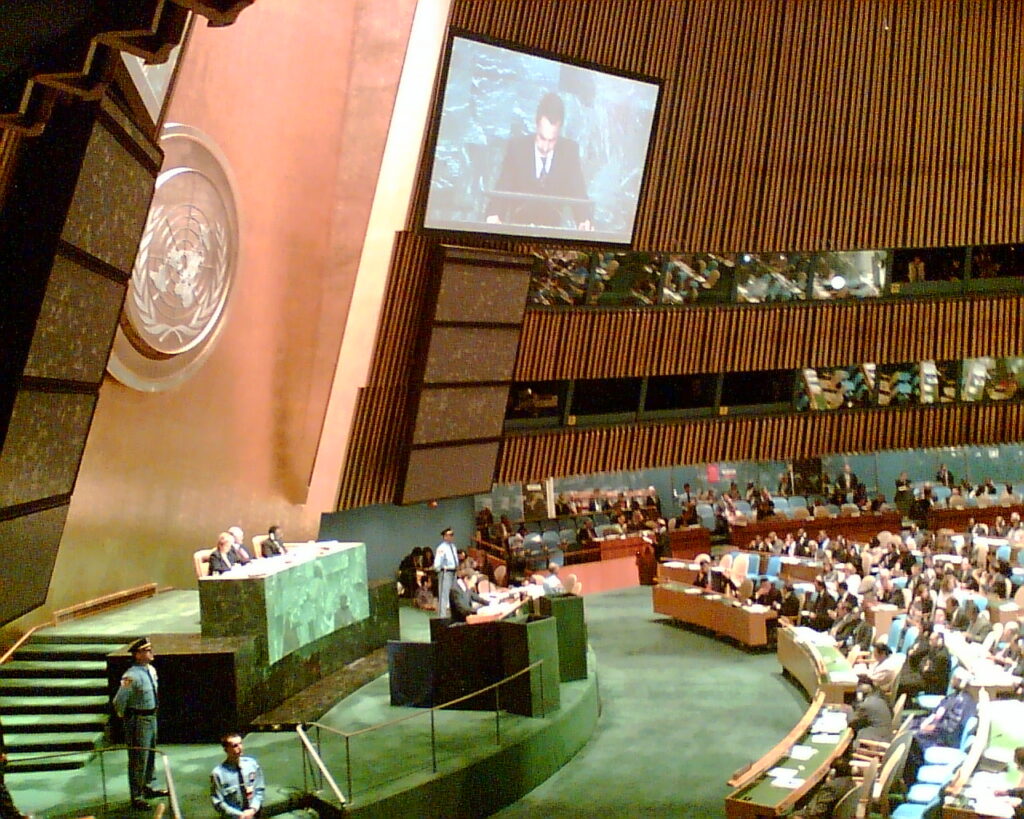
Around 80 countries issued a joint statement at the United Nations condemning attacks attributed to Iran and the Houthis and calling for the restoration of freedom of navigation and global energy security. The joint statement was issued at the UN General Assembly, where the world’s leaders are gathered for the high-level week ONYX documented beginning September 22.
WHY 80 MATTERS
The UN General Assembly has 193 member states. Eighty countries representing a joint condemnation is approximately 41% of the UN membership. It is not a majority, but it is a documented supercritical mass of international opinion. The specific significance of the coalition’s composition:
▸ The condemnation crosses the traditional Global North / Global South divide that has prevented unified responses to the Russia-Ukraine war
▸ It includes countries from multiple regions, not merely US allies
▸ It specifically names both Iran and the Houthis — addressing both chokepoints simultaneously
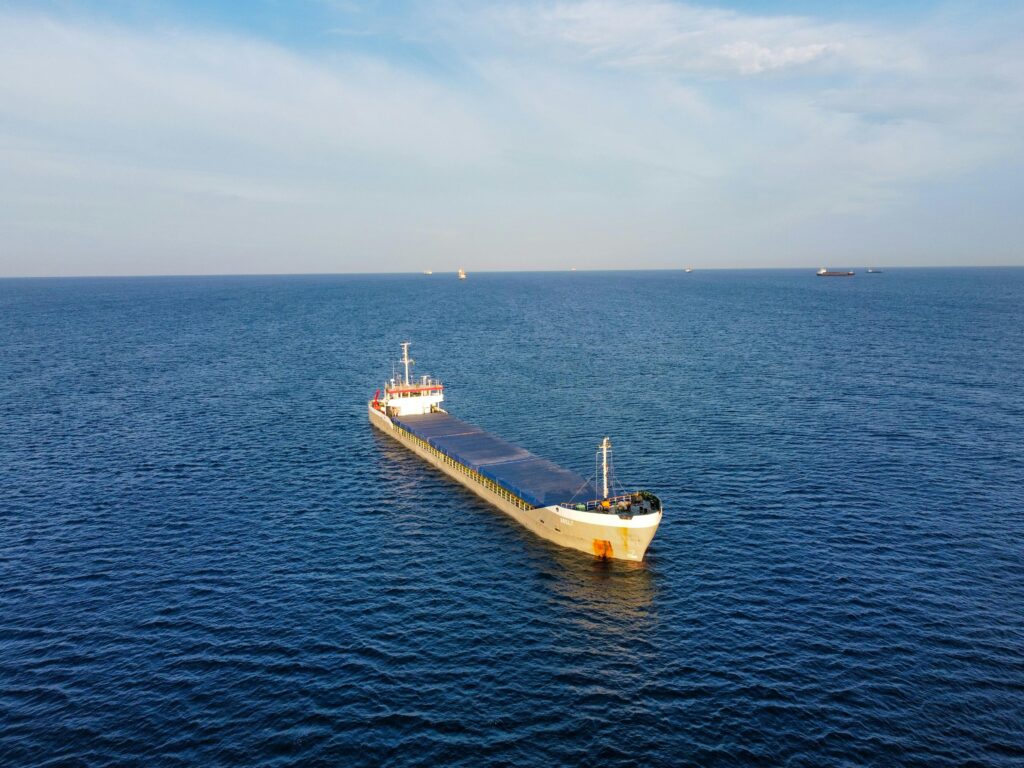
▸ It calls for global energy security — framing the Hormuz closure as not merely a US-Iran bilateral issue but a global economic harm
WHAT THE STATEMENT DEMANDS
The joint statement’s specific demands: restoration of freedom of navigation; restoration of global energy security. These are not demands directed only at Iran. Freedom of navigation is a principle of international law that applies to all maritime chokepoints, including Hormuz and Bab el-Mandeb. The 80-country statement is an international legal accountability document framing the Hormuz closure as a violation of a principle that 80 nations jointly affirm.
THE TIMING
The 80-country statement was issued at UNGA at a moment when Trump has simultaneously rejected Iran’s Hormuz reopening proposal. The specific diplomatic geometry: 80 countries are calling for the strait to reopen; Trump rejected a proposal to reopen it on the same day. Whether the 80-country statement changes the negotiating dynamics between Iran and the US — by giving Trump international legitimacy to demand more, or by pressuring Iran to offer better terms — is still being reported.
WHO IS NOT IN THE 80
Approximately 113 UN member states did not join the joint statement. The holdouts likely include: Russia and China, who have documented alignment with Iran; the BRICS members who heard Pezeshkian declare ‘we will not surrender’ on September 17; and multiple developing-economy states who abstained from the 143-5 vote condemning Russia’s Ukraine annexation and are applying similar non-alignment logic here. Whether the 80 expands or contracts in the next 8 days is the coalition’s specific accountability metric.
80 countries told the UN that Iran and the Houthis need to stop blocking the world’s most important oil shipping lane. Trump rejected Iran’s proposal to reopen it on the same day. 80 countries are 41% of the UN. 113 countries didn’t sign. The question now is whether the 80-country statement changes what Iran offers or what Trump accepts. 8 days to October 6.
WHAT HAPPENS NEXT
▸ Coalition expansion — whether additional countries join the joint statement
▸ Iran response — whether the 80-country condemnation produces a modified Iranian proposal
▸ UNSC action — whether any formal Security Council resolution is proposed
▸ October 6 — 8 days
| CONFIDENCE: HIGH | Around 80 countries’ joint statement: the UN condemned attacks by Iran and the Houthis, calling for the restoration of freedom, navigation, and global energy security, based on confirmed reporting. |
| ⚖️ BIAS CHECK — WHO IS SAYING WHAT | |
| 80 signatory nations | Representing a documented international coalition; their specific composition determines the statement’s diplomatic weight |
| Iran and Houthis | The named actors in the condemnation; both have been conducting operations that restricted Hormuz and Bab el-Mandeb commercial transit |
| China and Russia | Not confirmed as signatories; their absence from the 80 reflects their documented alignment with Iran and the BRICS non-Western framework |
| ONYX | Covering the coalition size, its specific demands, and the 113-country absence; naming the Global North/South dimension as relevant to understanding the coalition’s significance |
SOURCES
▸ Confirmed reporting — 80 countries UN Hormuz freedom of navigation September 28, 2026