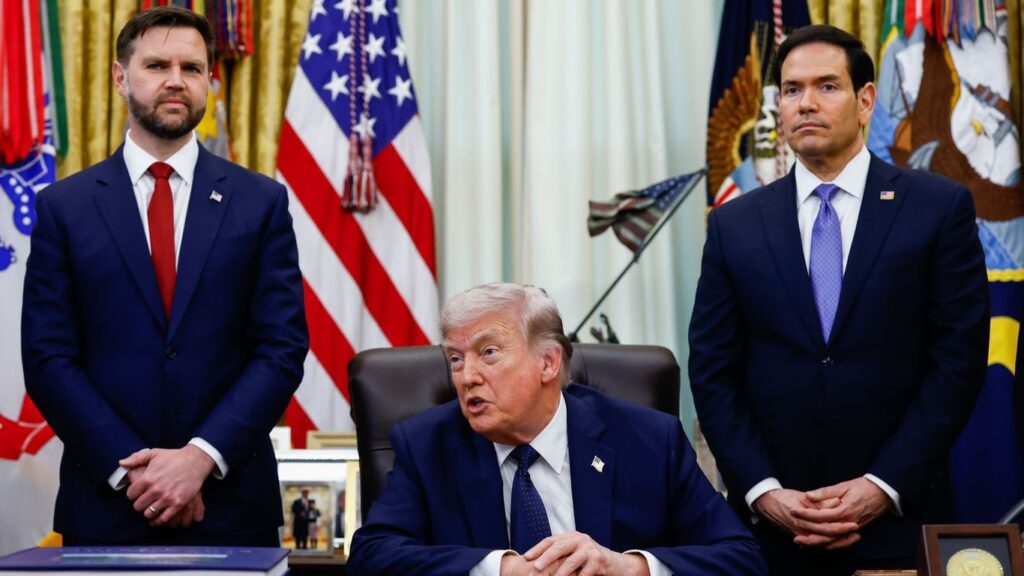
President Donald Trump said this week that Iran has “already agreed” it will not seek a nuclear weapon, a claim White House officials and administration statements framed as a key point in ongoing negotiations over a tentative ceasefire and nuclear restraints. Secretary of State Marco Rubio told the Senate Foreign Relations Committee that Tehran has signaled willingness to discuss previously off-limits aspects of its nuclear program and that Iran’s supreme leader appears increasingly engaged in the talks, according to his testimony.
Verified core reporting
- Trump said during a public appearance that Iran “will never have a nuclear weapon” and told reporters the country had agreed to that condition, a comment reported by ABC News and Reuters earlier this year.
- Rubio told lawmakers that Iran was prepared to negotiate aspects of its nuclear program it had previously refused to discuss, and that there were signs the supreme leader was communicating through intermediaries and becoming more active in state matters.
- Diplomatic sources and Iranian officials have not publicly confirmed a formal, verifiable written agreement that permanently bars Tehran from pursuing nuclear weapons; several outlets note the status of negotiations remains fluid and that key details remain unresolved.
- Military tensions have continued alongside diplomacy: U.S. and Gulf officials reported that Iranian drones and ballistic missiles have been intercepted over the Strait of Hormuz and near Kuwait, and U.S. forces carried out strikes on Iranian-linked targets in the region in late May, actions described by CENTCOM and regional militaries as responses to immediate threats.
Broader context
- Previous diplomatic efforts between Iran and Western powers have repeatedly produced interim understandings and frameworks without resolving technical verification questions such as enrichment limits, stockpile controls and on-site inspection regimes; those technical details are typically required to convert political commitments into enforceable safeguards.
- The regional security environment has been volatile since the opening phase of hostilities earlier this year, including the reported death of Iran’s former supreme leader during initial strikes and contested accounts about succession and leadership stability that have affected negotiation dynamics.
Multiple perspectives
- White House and administration spokespeople have framed recent comments as evidence of progress toward limiting Iran’s nuclear ambitions, citing presidential statements and diplomatic outreach.
- Iranian state media and official spokespeople have characterized talks as ongoing and, in some reports, said nothing definitive has been signed; independent verification of any binding, written commitment has not been produced publicly.
- Regional partners and international agencies have expressed cautious interest in any verifiable commitments but emphasize the need for documented, monitorable steps before sanctions relief or normalization measures are considered.
Implications and significance
- A credible, enforceable agreement that prevents Iran from developing a nuclear weapon would require explicit technical limits, verification mechanisms and agreed timelines; statements of political intent alone would be insufficient for most international monitors and would likely leave questions about compliance and enforcement.
- Continued military exchanges in the Gulf — including intercepted missiles and U.S. strikes — raise the risk that diplomatic openings could be disrupted by escalation on the ground or at sea, complicating efforts to finalize and implement any deal.
President Trump and Secretary of State Rubio have described developments they say indicate diplomatic progress, while independent verification of a legally binding or technical agreement preventing Iran from acquiring a nuclear weapon has not been publicly produced. Negotiations remain active and the security situation in the region continues to influence the pace and content of any final arrangement.
Sources: ABC News, Reuters, The Guardian, Al Jazeera, U.S. CENTCOM — June 2, 2026
Content Disclaimer: This report covers developing events and includes claims and statements from multiple parties whose accounts differ. Readers are encouraged to consult primary sources and multiple verified outlets for full context.