ONYX has tracked the immigration accountability arc throughout: Renée Good and Alex Pretti killed in Minneapolis (January); the Prairieland Nine prosecuted under national security statutes; Nazira Haji Zada; the Streever court order; Christian Castro; Rafael Garces Perez shot in Austin (September 21); the Schroyer nomination collapse. Today: the Supreme Court agrees to hear a challenge to the administration’s policy requiring undocumented immigrants to be held without bond hearings during deportation proceedings.
WHAT THE POLICY DOES
The administration’s policy requires many undocumented immigrants to be held in detention without bond hearings during deportation proceedings. A bond hearing is the mechanism by which a detained person can request release on bond while their case proceeds. Without a bond hearing:
▸ A detained person remains in custody regardless of whether they pose a flight risk or danger to the community
▸ The detained person has no opportunity to demonstrate to a judge that their release conditions are safe
▸ The government is not required to show an individualized reason why the specific person cannot be released
▸ Detention can persist for months or years while immigration proceedings continue
THE LEGAL QUESTION
The constitutional challenge’s specific legal argument: the Fifth Amendment’s Due Process Clause requires that the government provide individualized hearings before depriving a person of liberty. Detention without a bond hearing deprives a person of liberty — freedom — without the individualized process the Constitution requires. The administration’s counter-argument: Congress has authorized mandatory detention for certain categories of immigrants, and the executive branch is implementing that authority.
THE SCALE
The case could affect millions of people. The specific people affected: undocumented immigrants who are detained during deportation proceedings. Whether they are entitled to an individualized hearing about whether their detention is justified is the specific legal question the Supreme Court agreed to answer.
THE ARC’S ICE ACCOUNTABILITY CONTEXT
The Supreme Court case arrives in the context of the arc’s documented ICE accountability: the Prairieland Nine prosecuted under national security statutes; churches surveilled; Rafael Garces Perez shot in Austin with Mayor Watson saying he was not surprised. The ARC’s ICE documentation and the Supreme Court’s agreed-to case are both documenting the legal and practical boundaries of the administration’s immigration enforcement.
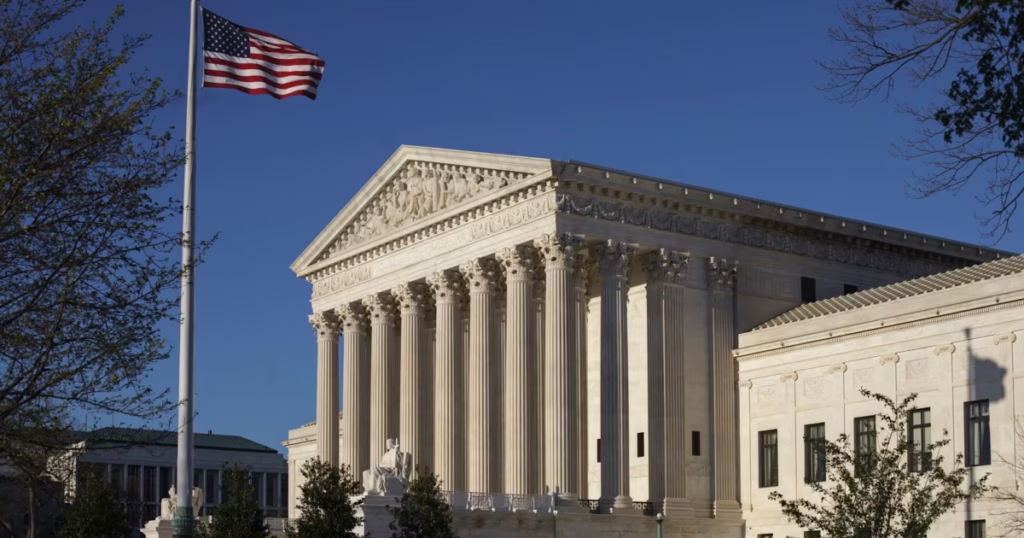
The Supreme Court agreed to decide whether the government can hold immigrants in detention without giving them a bond hearing. Millions of people are potentially affected. The Fifth Amendment says the government cannot deprive a person of liberty without due process. The administration says Congress authorized mandatory detention. The Supreme Court will decide which reading of the Constitution is correct. The ICE arc has documented what enforcement looks like in practice. The court case will document what it is legally allowed to look like.
WHAT HAPPENS NEXT
▸ Oral arguments — when the Supreme Court schedules and hears the case
▸ Ruling timeline — typically within the court’s term ending June 2027
▸ Interim effect — whether any lower court orders affect the policy while the Supreme Court case proceeds
| CONFIDENCE: HIGH | Supreme Court agreed to hear a challenge to an administration policy requiring many undocumented immigrants held without bond hearings to undergo deportation proceedings; the case could affect millions, according to confirmed reporting. |
| ⚖️ BIAS CHECK — WHO IS SAYING WHAT | |
| Trump administration | Defending the mandatory detention policy as authorized by Congress |
| Challengers | Arguing that mandatory detention without individualized hearings violates Fifth Amendment due process |
| Detainees | The millions of people affected; their liberty is the specific constitutional interest at stake |
| ONYX | Covering the legal question and connecting to the arc’s documented ICE enforcement pattern |
SOURCES
▸ Confirmed reporting — Supreme Court immigration detention October 1, 2026