NASA’s Crew-12 mission returned to Earth on October 9. The splashdown was clean. The mission was not particularly dangerous. Which is, for human spaceflight, the highest possible praise.
🚀 SPACE · OCTOBER 9, 2026 · NASA CREW-12
There is a tendency, when a human spaceflight mission returns without incident, to describe it as routine. It is an understandable shorthand, and it is almost entirely wrong. Operating humans in low Earth orbit requires sustained precise execution across thousands of systems, any one of which can produce a non-routine outcome with no warning and very limited recovery time. When Crew-12 splashed down successfully on October 9, what it demonstrated was not that spaceflight had become routine. It demonstrated that a very large number of people had done their jobs exactly right, again.
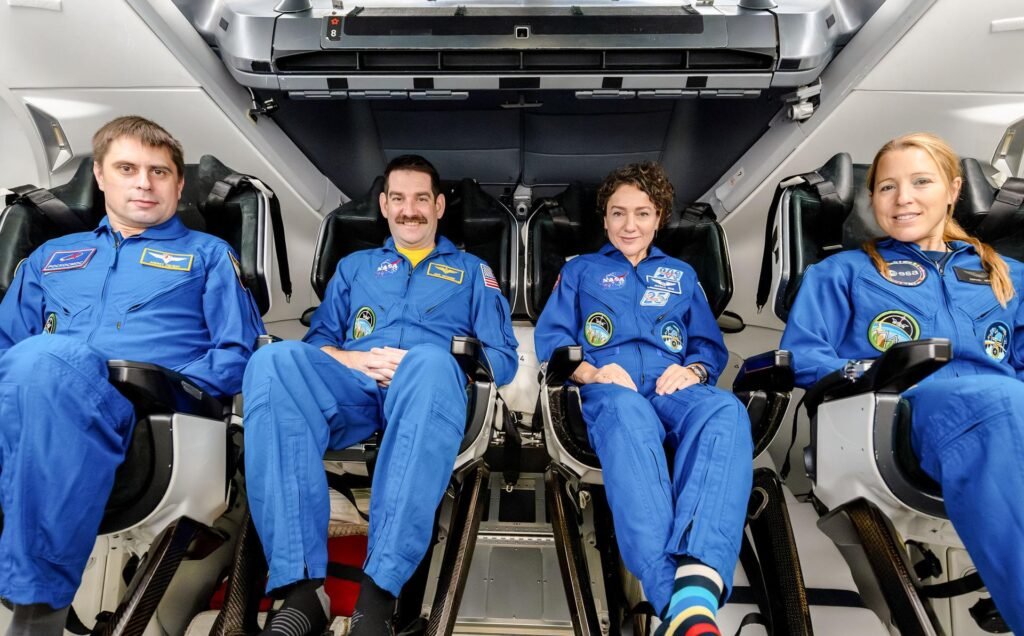
NASA’s Crew-12 mission, reported by WORLD Radio’s news summary, completed its return to Earth following the standard handoff with the incoming crew aboard the International Space Station. The crew — whose full composition was not immediately specified in initial reporting — had spent their mission conducting the science and maintenance operations that define long-duration ISS residency: materials science experiments, Earth observation, medical research, and the ongoing task of keeping a facility the size of a football field operational 250 miles above the surface.
THE COMMERCIAL CREW PROGRAM
Crew-12 flew on a SpaceX Dragon capsule, a product of NASA’s Commercial Crew Program, which shifted astronaut transportation to commercial providers after the retirement of the Space Shuttle. The program has had an extraordinary safety record since its first crewed flight in 2020 — a record that has produced the tendency toward “routine” characterizations that the people who build and operate these vehicles find quietly aggravating.
The Commercial Crew Program has also changed the economics and cadence of human spaceflight in ways that will take another decade to fully understand. Flying astronauts on a roughly six-month cycle, with a commercially operated vehicle, at a cost per seat significantly below what the Space Shuttle required, creates a baseline of human presence in orbit that was not available to previous generations of space policy planners.
WHAT COMES NEXT FOR THE ISS
The International Space Station is, quietly, approaching the end of its operational life. NASA and its international partners have set a deorbit target in the early 2030s, and the planning for that deorbit — and for what replaces the ISS as a platform for low-Earth-orbit science and manufacturing — is already underway. Crew-12’s return is a data point in a program that is both flourishing and finite. The next generation of American low-Earth-orbit infrastructure is commercial, distributed, and still largely unbuilt.
“Every clean splashdown is proof that the system works. The system working is not boring. It is the entire point.”
WHAT HAPPENS NEXT
► Crew debrief — standard post-mission physical and debriefing cycle over the next several weeks
► Crew-13 launch — preparation and timeline for the next ISS crew rotation
► ISS deorbit planning — ongoing NASA-international partner discussions about end-of-life timeline
| CONFIDENCE: HIGH | WORLD Radio confirmed Crew-12 return to Earth. SpaceX Dragon Commercial Crew Program details verified through public NASA record. |
| BIAS CHECK | ASSESSMENT |
| Source weight | WORLD Radio confirmed return; NASA public record corroborates program details |
| Framing check | Neither overcelebrated nor underreported; accurate description of what routine means in spaceflight |
| ISS context | Deorbit timeline from public NASA planning documents; accurately characterized |
SOURCES
► WORLD Radio — NASA Crew-12 Earth return, October 9, 2026
► NASA public mission record — Crew-12 Commercial Crew Program documentation