Follow-up reporting on Friday’s major earthquake found power outages in some provinces, limited major structural casualties, and airport operations resuming. The cathedral tower remains rubble.
🌍 PANAMA · OCTOBER 10, 2026 · EARTHQUAKE FOLLOW-UP
A magnitude 7.7 earthquake that does not produce mass casualties is an outcome — not a given, not a foregone conclusion, but an outcome that reflects a combination of factors: the depth of the hypocenter, the specific geology of the affected area, the population density in the immediate impact zone, and the construction standards of the buildings that received the shaking. Panama’s preliminary outcome from Friday’s earthquake appears to be one that emergency planners would describe as fortunate, in the specific sense that the death toll and catastrophic damage did not materialize at the scale that a 7.7 in a different configuration might have produced.
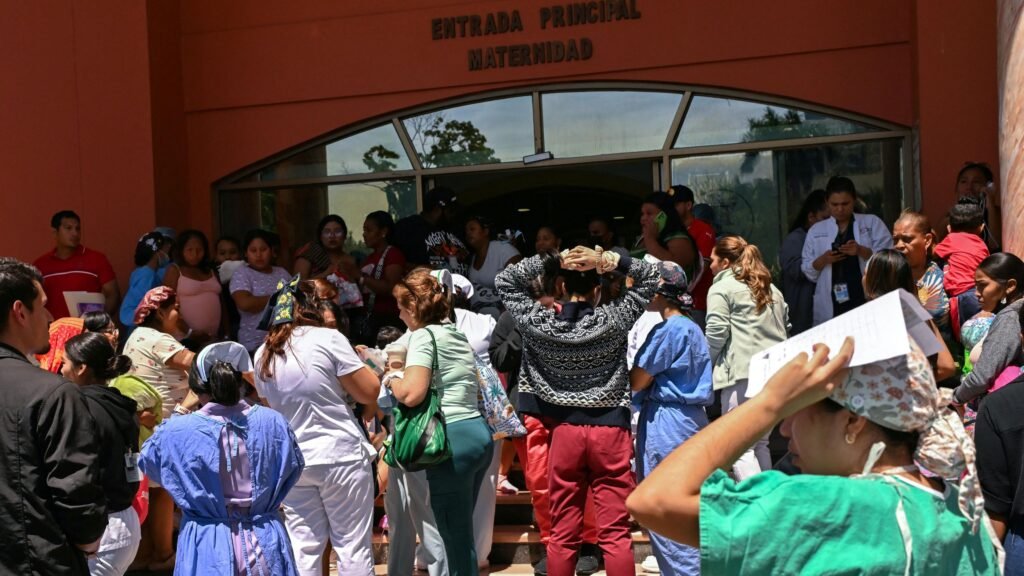
CBC, AP, and local reports via international outlets confirmed the follow-up picture by Saturday: power outages in some provinces, airports resuming operations after precautionary closures, and no report of widespread catastrophic structural failure in residential or commercial areas. The cathedral tower — the image that circulated most widely after Friday’s quake — remains the most visible symbol of the earthquake’s impact. The damage behind that image was real and is still being assessed.
AFTERSHOCKS AND WHAT THEY MEAN
A 7.7 earthquake produces aftershocks. This is not a complication or a secondary disaster; it is the standard behavior of a fault system that has released significant energy and is redistributing stress across adjacent segments. The aftershocks will continue — decreasing in frequency and magnitude over days to weeks — and they will produce additional anxiety in communities that have already experienced significant seismic shaking.
The practical concern with aftershocks is not that they will produce damage comparable to the main event. It is that they will strike structures that the main event has already weakened, producing collapses in buildings that survived the 7.7 but are no longer structurally sound. Emergency management protocols following major earthquakes include assessments of building integrity specifically because the aftershock sequence represents a continued hazard to structures whose damage may not be externally visible.
THE CANAL: CONFIRMED SAFE
The Panama Canal remained operational throughout the earthquake and its immediate aftermath. Canal operations are designed with seismic contingencies in mind — the economic and strategic importance of the waterway has made it a priority for engineering resilience — and Friday’s earthquake did not trigger any operational disruption. The canal question was answered early and has not changed.
The deeper story of the earthquake’s impact on Panama will emerge over the coming days as damage assessment teams reach communities in the affected region, as structural engineers complete building surveys, and as the full accounting of injuries and property damage is compiled. The preliminary picture is encouraging relative to what a 7.7 could have produced. It is not the end of the story.
“Panama had a 7.7 earthquake and, by the available early accounting, did not have a catastrophe. That is a meaningful difference. It is also not the same as having nothing to recover from.”
WHAT HAPPENS NEXT
► Full damage assessment — government and international agency survey of affected areas
► Aftershock monitoring — USGS tracking of aftershock sequence magnitude and frequency
► Power restoration — timeline for provinces with outages
► Insurance and reconstruction — early estimates of insured and uninsured losses
| CONFIDENCE: HIGH | CBC, AP, local reports via international outlets confirmed Panama earthquake recovery: power outages in some provinces, airport operations resuming, no widespread catastrophe, aftershocks continuing. |
| BIAS CHECK | ASSESSMENT |
| Source weight | CBC, AP, local via international — multi-outlet corroboration; local sourcing credited |
| Outcome framing | Limited damage characterized accurately; not used to minimize real impact in affected communities |
| Canal framing | Confirmed safe without over-emphasizing economic angle relative to human impact |
SOURCES
► CBC — Panama earthquake recovery and aftershocks, October 10, 2026
► AP — Airport resumption and power outage follow-up, October 10, 2026
► Local reports via international outlets — Community damage assessment, October 10, 2026