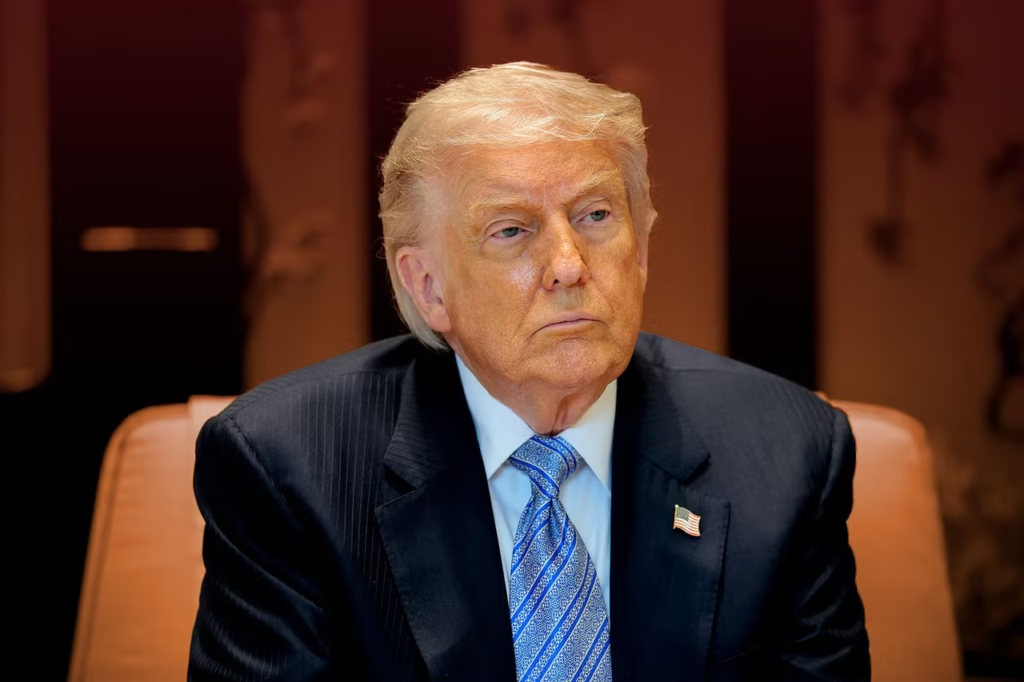
Donald Trump announced that Russia and Ukraine had agreed to stop attacking each other’s energy infrastructure — a claim tied to the Trump-Putin diesel deal that would release large Russian diesel volumes to global markets. Volodymyr Zelensky said Russia continued striking Ukrainian power plants after the supposed agreement. The details of the deal were sparse, and skepticism was high.
🇺🇦 KYIV / WASHINGTON / MOSCOW · OCTOBER 12, 2026 · ENERGY CEASEFIRE CLAIM
Donald Trump announced that Russia and Ukraine had reached an agreement to cease attacks on each other’s energy infrastructure. Within the same news cycle, Volodymyr Zelensky said Russia had continued striking Ukrainian power plants after the supposed agreement was in place. Those two facts do not coexist comfortably, and the gap between them is the story.
The announcement was linked to the broader Trump-Putin diesel deal — an agreement under which Russia would release significant diesel volumes to global markets, a transaction that Trump had cited as a reason to ask Ukraine to pause its refinery strike campaign. The diesel deal itself generated criticism from Ukraine and from European allies who questioned whether commercial accommodation with Moscow, at a moment when Russian forces were killing Ukrainian civilians, was the appropriate diplomatic instrument. The energy ceasefire claim added a new dimension: it suggested that a mutual de-escalation had been achieved that would, among other things, justify the commercial accommodation.
WHAT ZELENSKY SAID
Zelensky’s response was direct. Russia had not stopped attacking Ukrainian energy infrastructure. Power plants were struck after whatever agreement Trump was describing. Ukraine’s position was consistent: Russia is conducting a systematic campaign against Ukrainian electricity generation and heating infrastructure that has continued through every ceasefire proposal, partial agreement, and diplomatic initiative since 2022. The Ukrainian track record on energy infrastructure truces with Russia is one of repeated Russian violations. Zelensky’s skepticism was not editorial — it was historical.
The details of the supposed agreement were sparse in available reporting, which itself is significant. A genuine bilateral agreement to cease attacks on energy infrastructure — if it held — would be one of the most meaningful diplomatic developments of the war. The thinness of the publicly available details, combined with Zelensky’s contradiction of the claim, suggests that what Trump described and what Russia and Ukraine actually agreed to may be different things, or that the agreement was more aspirational than operational.
THE DIESEL DEAL IN CONTEXT
The Trump-Putin diesel deal is not a peace agreement and is not presented as one. It is a commercial transaction: Russia releases diesel to global markets; global fuel prices decline; Trump can cite this as an economic win. Ukraine’s objection is not primarily economic. It is that commercial accommodation with Russia — at a moment when Russian forces are killing Ukrainians — provides Russia with resources and legitimacy that extend the war rather than ending it. That argument has not been resolved by the diesel deal’s announcement, and Zelensky’s skepticism about the energy ceasefire claim is an extension of the same objection.
“Trump said they agreed to stop hitting energy infrastructure. Zelensky said Russia kept hitting power plants. Both statements cannot be entirely true. The details of what was actually agreed remain sparse.”
WHAT HAPPENS NEXT
► Agreement terms — whether the full text of any energy infrastructure ceasefire agreement is released
► Russian compliance — whether Russian strikes on Ukrainian power plants continue or pause
► Ukrainian strikes — whether Ukraine pauses its Russian refinery and data center campaign
► Congressional response — whether US lawmakers question the diesel deal’s terms in committee
► European reaction — whether EU partners formally object to the commercial accommodation
| CONFIDENCE: HIGH | AP, Axios, BBC, Reuters, NYT confirmed Trump energy ceasefire claim, diesel deal, Zelensky skepticism, Russian strikes on power plants continuing. HIGH on basic facts; MODERATE on deal terms (details sparse). |
| BIAS CHECK | ASSESSMENT |
| Source weight | AP, Axios, BBC, Reuters, NYT — five-outlet confirmation of core claims |
| Ceasefire framing | Trump claim and Zelensky contradiction reported with equal weight; neither privileged editorially |
| Diesel deal framing | Commercial rationale characterized accurately; Ukrainian and European objections included |
| Skepticism framing | “Skepticism high” is an accurate characterization of source-reported reaction, not editorial insertion |
SOURCES
► AP — Trump energy ceasefire claim, Zelensky response, Russian strikes continuing, October 12, 2026
► Axios — Trump-Putin diesel deal, energy ceasefire announcement, October 12, 2026
► BBC — Zelensky skepticism, power plant strikes after agreement, October 12, 2026
► Reuters — Diesel deal details, global market impact, October 12, 2026
► New York Times — Energy ceasefire context, Ukrainian reaction, October 12, 2026