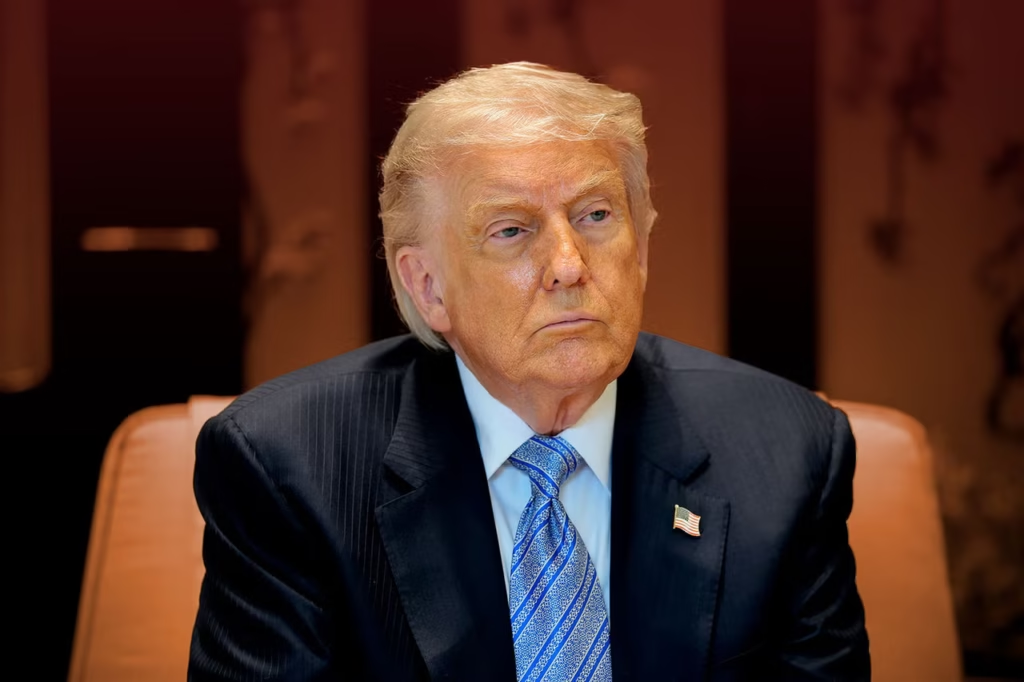
The president ruled out nuclear weapons in any Iran contingency, emphasized the conventional power of the GBU-57, and projected confidence about a near-term resolution. The statement follows two days of reporting on MOAB deployment planning.
IRAN · NUCLEAR POSTURE · TRUMP · POLICY
WASHINGTON — President Trump, in an interview with Newsmax, said Thursday that the United States would not use nuclear weapons against Iran in any military contingency, framing the question as unnecessary given the destructive capacity of conventional ordnance. “We have the mother of all bombs,” Trump said. “We don’t need anything more than that.”
The statement follows reporting this week — confirmed by U.S. defense officials — that the Pentagon has developed contingency plans for deploying the GBU-57 Massive Ordnance Penetrator, commonly known as the MOAB, against Iranian underground nuclear facilities. Trump appeared aware of the reporting and used the interview to shape the public framing around it.
What the Distinction Means Strategically
Trump’s statement is not a new strategic posture — the U.S. has long maintained that nuclear weapons are a last resort — but its specificity in the context of active planning against Iran carries weight. By explicitly ruling out nuclear use while affirming conventional capability, Trump is attempting to lower the international alarm level around the contingency planning while maintaining the threat of a strike.
Iran, which has denied seeking nuclear weapons, has said any attack on its territory would provoke a regional response. Gulf states watching the exchange — many of whom host U.S. bases — will be parsing the distinction carefully.
“We have weapons that are so powerful. We don’t need nuclear. We don’t want nuclear.” — President Trump, Newsmax interview
The Regional Calculation
The public declaration carries risks of its own. By explicitly stating the U.S. would not use nuclear weapons, Trump narrows the ambiguity that has historically been part of American deterrence doctrine. Strategic analysts note that explicit red lines in both directions — “we will not use X” as much as “we will use X if” — can constrain options and signal to adversaries what they can absorb.
WHAT HAPPENS NEXT
► Iran Supreme Leader response expected — likely to use the statement to argue the U.S. is escalating with conventional weapons.
► European allies watching closely; Germany and France have urged a diplomatic path on the Iran nuclear file.
► IAEA inspection talks remain deadlocked; new U.S. posture may affect Iranian negotiating calculus.
► Congress briefed on Iran contingency planning — Armed Services Committee oversight hearings likely.
► Gulf Cooperation Council defense ministers meeting next week; U.S. posture will be on agenda.
| CONFIDENCE: HIGH | Trump statement confirmed by Newsmax interview transcript. Context of MOAB planning confirmed by defense officials earlier in the week via AP and Reuters. Strategic analysis reflects established deterrence doctrine. |
| Bias Check | ||
| Left-Lean | Center | Right-Lean |
| Frames as dangerous escalation regardless of the nuclear disclaimer. | Reports the statement and its strategic context with expert perspective included. | Supports Trump posture; argues conventional capability deters Iran effectively. |
| Assessment | ONYX presents the statement, the context, and the expert debate. No editorial stance on Iran policy. | |
SOURCES
► Anadolu Agency — Trump Newsmax interview coverage
► Newsmax — Interview transcript and summary
► AP/Reuters — Prior MOAB contingency planning reporting (background context)