China’s third-quarter economic growth figures showed a pickup, driven by robust exports and rising demand for AI-related technology and infrastructure. The numbers came in above expectations. In a global economic environment where most major economies are managing uncertainty from the Iran war and energy costs, China posting stronger growth is a significant data point — both for global markets and for the geopolitics of the current moment.
BUSINESS · CHINA · GDP · EXPORTS · AI · GROWTH
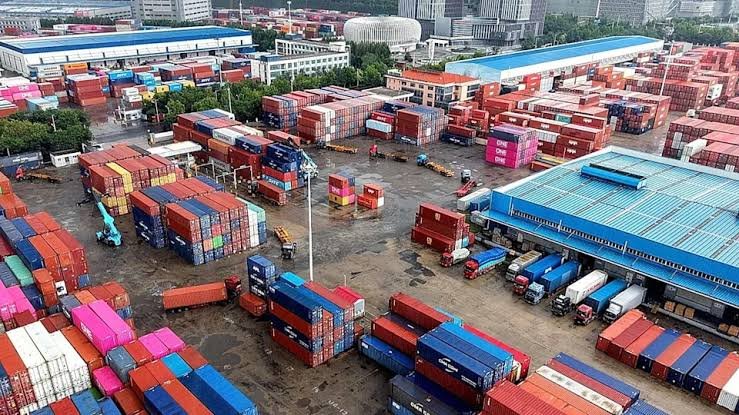
BEIJING — China released third-quarter economic growth figures that showed acceleration in GDP growth, driven primarily by strong export performance and rising domestic and international demand for AI-related technology, infrastructure, and components, according to the BBC. The figures beat analyst expectations, continuing a pattern in which China’s economic performance in the current period has been more resilient than forecasters anticipated. The specific Q3 GDP growth rate was reported as beating expectations; the precise figure was not detailed in the BBC report summary available for this edition.
The export strength reflects China’s competitive position in global manufacturing, including in sectors that have seen increased demand from AI buildout — high-performance computing components, data center infrastructure, and the supply chain inputs that AI hardware depends on. China has been competing aggressively in AI-related hardware exports, and the Q3 figures suggest that competition is producing revenue at scale.
The AI Demand Factor
The specific callout of AI demand as a growth driver is significant beyond the headline GDP number. It reflects the extent to which the global AI infrastructure buildout — which is drawing massive capital investment across the United States, Europe, and Asia — is producing Chinese export revenue. China’s position in the supply chains for AI hardware means that the AI investment boom in the U.S. and Europe is partially flowing through Chinese manufacturing.
The geopolitical implications are not lost on American and European policymakers who have been attempting to restrict Chinese access to the most advanced semiconductor technology while simultaneously depending on Chinese supply chains for the components that AI hardware requires. The Q3 figures suggest that the restrictions have not prevented China from benefiting substantially from the global AI demand wave.
“China’s economy is demonstrating resilience that many analysts did not anticipate. The AI export story is real, and it is large.” — Economic analyst commenting on Q3 figures, via BBC
WHAT HAPPENS NEXT
► Full Q3 GDP details to be published by the National Bureau of Statistics — analysts reviewing composition.
► U.S. and European policymakers reassessing export controls in light of Chinese AI hardware gains.
► Global markets responding to China data — commodity and currency movements to follow.
► IMF and World Bank updating China forecasts for 2026 full year.
► AI supply chain dependency debate intensifying in U.S. Congressional tech and trade committees.
| CONFIDENCE: MODERATE | Q3 growth acceleration confirmed by BBC. Export and AI demand as drivers confirmed. Specific GDP growth rate not detailed in available reporting — flagged. Analyst comment from BBC confirmed. China AI export supply chain context from established technology and trade reporting. |
| Bias Check | ||
| Left-Lean | Center | Right-Lean |
| Notes AI demand growth funding adversary military-civil fusion; calls for stronger export controls. | Reports the growth figures, the drivers, and the beat-expectations characterization as confirmed. | Celebrates market performance while noting geopolitical risks of Chinese growth. |
| Assessment | ONYX presents confirmed growth data and the supply chain context. Specific growth rate flagged as not detailed in available reporting. | |
SOURCES
► BBC — China Q3 growth figures, export performance, and AI demand analysis