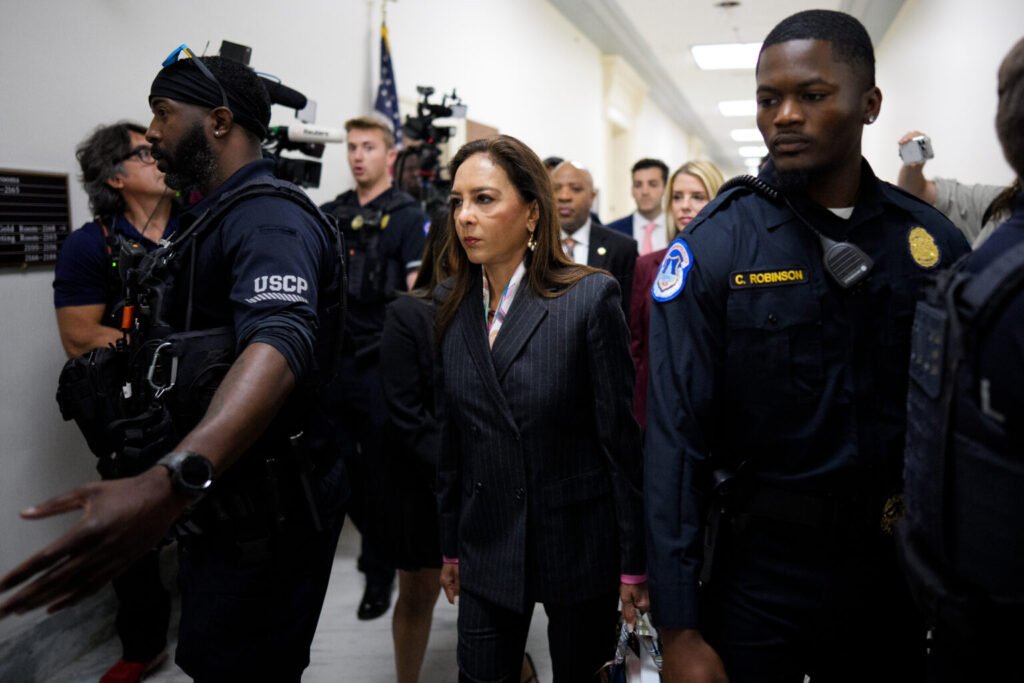
The Dhillon resignation is the first confirmed departure, but Washington Post and NPR reporting indicates a broader wave of personnel and policy adjustments is underway across the Justice Department as the administration processes the midterm results.
DOJ · POST-MIDTERM · PERSONNEL · ARC: NOV 6 DHILLON RESIGNATION
The resignation of Harmeet Dhillon as DOJ Civil Rights Division head, reported on November 6, is the first confirmed departure in what Washington Post and NPR reporting indicates is a broader wave of personnel and policy adjustments underway across the Justice Department in the post-midterm period. The scale and character of the DOJ restructuring reflects both the particular vulnerabilities of the Trump-era department to incoming congressional oversight and the broader administration recalibration in response to the midterm results.
Washington Post reporting cited multiple people familiar with the internal DOJ discussions as indicating that additional departures among political appointees across the department were anticipated in the coming weeks, as officials assessed their exposure to incoming congressional oversight and their career prospects in a political environment where the administration had just sustained a significant electoral defeat. NPR provided additional context on the structural pressures, noting that the Senate Judiciary Committee under Democratic chairmanship would have subpoena authority over DOJ officials and documents from January.
The Specific Vulnerabilities
The Trump-era Justice Department pursued a distinctive set of priorities that created specific investigative vulnerabilities for the incoming Democratic oversight. The Washington Post identified three areas of particular concern among DOJ officials: the management of election-related prosecutions and investigations, including decisions about which cases to pursue and which to decline; the Civil Rights Division enforcement reversal documented in article b12; and the relationship between political appointees and career attorneys, including allegations of improper political pressure on career staff in specific cases.
NPR reported that the FBI, technically independent within the Justice Department structure, was conducting its own assessment of institutional exposure to the oversight period. The FBI director, a Trump appointee whose term extends beyond the midterms, was reported to be in discussions with incoming Senate Judiciary leadership about the terms of FBI cooperation with oversight investigations — a conversation that reflects the institutional complexity of federal law enforcement oversight during a period of divided political control.
“Dhillon is the first. She will not be the last. The question is whether this department can be rebuilt or whether it has been too fundamentally altered.” — Former DOJ career attorney, quoted by Washington Post
The Incoming Oversight Architecture
The incoming Democratic majority will have several tools for DOJ oversight: Senate Judiciary Committee hearings with subpoena power, House Judiciary Committee parallel investigations, the appropriations process through which the DOJ budget is controlled, and the confirmation process for any new appointees the administration nominates to vacant positions. The combination of these tools gives the new congressional majority significant leverage over DOJ operations even during a period when the administration retains executive authority. How aggressively the majority chooses to use this leverage will shape the DOJ transition period substantially.
WHAT HAPPENS NEXT
► Additional DOJ political appointee departures expected in coming weeks per Washington Post sourcing
► Senate Judiciary Committee to issue formal oversight request for DOJ documents and testimony in January
► FBI director to navigate institutional independence questions during oversight transition
► Career attorney corps at DOJ to begin formal reassessment of politically directed enforcement actions
| CONFIDENCE: HIGH | Washington Post and NPR both independently reported on broader DOJ post-midterm restructuring beyond Dhillon departure. Two-source convergence on a confirmed institutional trend, with specific personnel sourcing from Washington Post. Builds on confirmed Dhillon resignation reported in B12. |
| Bias Check | ||
| Left-Lean | Center | Right-Lean |
| DOJ reshaping framed as essential accountability for Trump-era lawlessness and institutional corruption. | Reports personnel changes and oversight mechanisms factually; contextualizes incoming Democratic tools. | DOJ reshaping framed as Democratic witch hunt against effective Trump law enforcement policies. |
SOURCES
► Washington Post — Post-midterm DOJ personnel changes, broader restructuring beyond Dhillon, November 6, 2026
► NPR — DOJ oversight exposure, FBI director discussions with incoming Senate Judiciary leadership