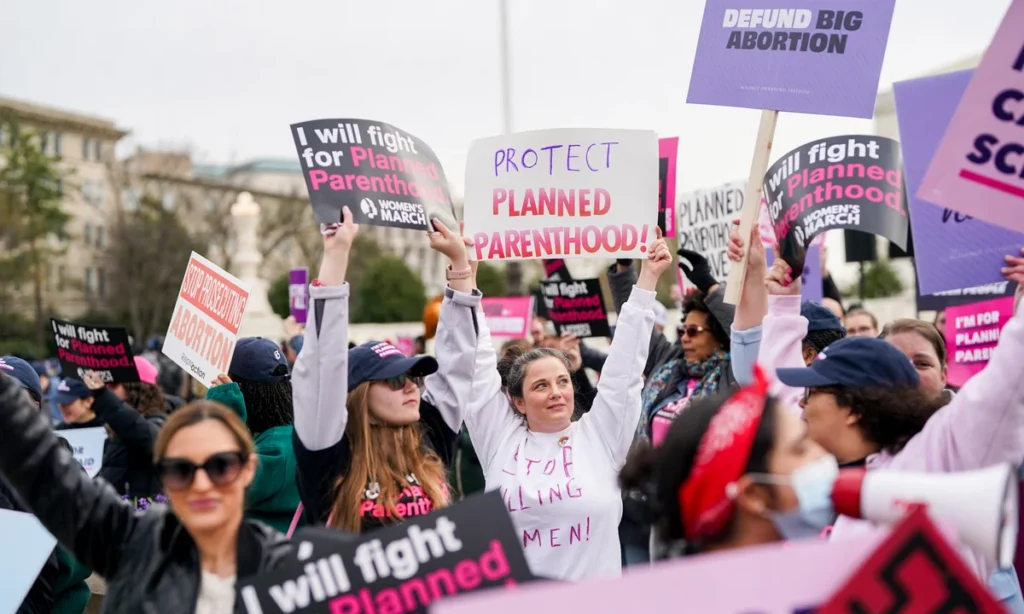
The case involves alleged improper Medicaid payments; the intervention signals the administration’s continued pursuit of reproductive health funding restrictions despite the midterm shift in congressional power.
DOJ · PLANNED PARENTHOOD · TEXAS · MEDICAID · ARC: NOV 6 DOJ RESHAPING
The Department of Justice plans to intervene in a Texas lawsuit against Planned Parenthood alleging improper Medicaid payments, NPR reported on Sunday. The intervention would put the federal government alongside Texas in the case, using DOJ legal resources to advance the state argument that Planned Parenthood received Medicaid funding through improper channels. The intervention signals that the Trump administration intends to continue its pursuit of reproductive health funding restrictions through the available legal tools — including DOJ litigation intervention — regardless of the midterm shift in congressional power that produced a Democratic majority in both chambers.
The Texas lawsuit against Planned Parenthood centers on allegations that the organization improperly billed Medicaid for services and that the state is entitled to recoup payments made under the program. Planned Parenthood has consistently contested the Texas characterization of its billing practices, and the case has moved through federal courts with varying outcomes at different levels. NPR reporting noted that DOJ intervention in state-federal Medicaid disputes is an established legal mechanism, but that the direction of intervention — whether the federal government sides with the state challenging a provider or with the provider — reflects the administration’s policy priorities directly.
The Legal Mechanism
Federal DOJ intervention in private or state-initiated lawsuits is authorized under the False Claims Act, which allows the federal government to join cases alleging fraud against federal programs including Medicaid. The False Claims Act intervention mechanism gives DOJ both the ability to take over prosecution of the case if it chooses and the ability to participate as an additional party alongside the original plaintiff — in this case, Texas. NPR cited legal experts who noted that DOJ intervention under the False Claims Act in a Medicaid case against a reproductive health provider is a legally available but politically loaded tool, as it brings the full resources of the federal government to bear on a case with direct implications for reproductive healthcare access.
The implications for Planned Parenthood operations in Texas extend beyond the specific lawsuit outcome. If the DOJ intervention succeeds and Texas prevails on the improper payment allegation, the resulting Medicaid billing restrictions would significantly constrain the financial viability of Planned Parenthood facilities in Texas, many of which depend on Medicaid reimbursement for a substantial portion of their operating revenue. The practical effect would be a further restriction on reproductive healthcare access in a state that has already significantly curtailed abortion services through the Texas Heartbeat Act and subsequent legislation.
“The DOJ joining Texas against Planned Parenthood is not a legal decision. It is a political decision using legal tools to restrict reproductive care.” — Reproductive rights organization statement cited by NPR
The Post-Midterm Context
The planned DOJ intervention comes in the same week as the broader DOJ post-midterm reshaping analysis reported on November 6, and represents a continuation of administration legal strategy that is explicitly designed to outlast the midterm results. The Trump administration legal team has consistently pursued its policy priorities through litigation and executive action channels that are insulated from immediate congressional action, and the Planned Parenthood intervention is consistent with that approach. The incoming Democratic congressional majority can potentially respond through appropriations — including restrictions on DOJ use of funds for Medicaid litigation against reproductive health providers — but those tools operate on a legislative timeline that extends months into the future.
WHAT HAPPENS NEXT
► DOJ to file formal intervention papers in Texas Planned Parenthood Medicaid case
► Planned Parenthood to challenge DOJ intervention in federal court
► Democratic congressional leadership to explore appropriations restrictions on DOJ Medicaid litigation
► Case outcome to affect Planned Parenthood Medicaid billing in Texas and potentially other states
| CONFIDENCE: HIGH | NPR confirmed the DOJ intervention plan with direct reporting on the case, the legal mechanism, and the policy context. Single outlet but NPR has strong DOJ and legal affairs coverage with established sourcing in the federal courts and reproductive rights community. |
| Bias Check | ||
| Left-Lean | Center | Right-Lean |
| DOJ intervention framed as weaponization of federal legal resources against reproductive healthcare. | Reports intervention mechanism, case facts, and post-midterm context factually; notes legal tools. | DOJ intervention framed as appropriate enforcement of Medicaid program integrity requirements. |
SOURCES
► NPR — DOJ plans intervention in Texas Planned Parenthood Medicaid lawsuit, False Claims Act mechanism, November 8, 2026