Justices stayed a lower-court injunction blocking construction, allowing work to resume while litigation over the environmental and cultural impacts continues in the lower courts.
SUPREME COURT · BORDER WALL · TEXAS · BIG BEND · IMMIGRATION
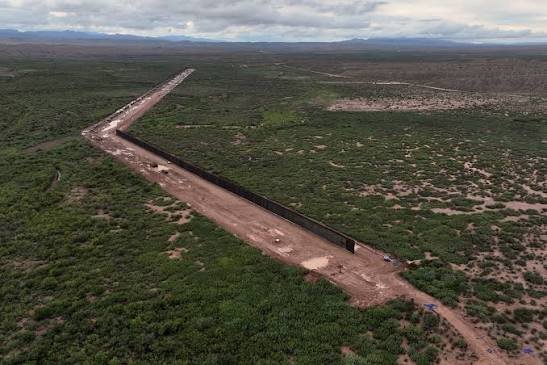
The United States Supreme Court stayed a lower-court order that had blocked border wall construction in the Big Bend region of Texas, allowing construction to resume while litigation over the environmental, cultural, and legal challenges to the project continues in the federal courts; NPR, NBC News, and the Christian Science Monitor all confirmed on Monday. The stay does not resolve the underlying legal challenges to the wall construction — those remain active in the lower courts — but it removes the immediate legal obstacle to construction proceeding while those challenges are litigated, consistent with the standard Supreme Court analysis for stays pending appeal, which requires the government to show a likelihood of success on the merits and irreparable harm from the lower-court order.
The Big Bend region of Texas is home to Big Bend National Park, one of the most remote and ecologically significant protected areas in the continental United States, and a section of the Rio Grande that has significant cultural and ceremonial importance to Indigenous communities on both sides of the border, including the Kickapoo Traditional Tribe of Texas. The lower-court injunction that the Supreme Court stayed had been obtained by a coalition of environmental groups, Indigenous rights organizations, and local communities arguing that the wall construction would cause irreparable environmental damage to the river ecosystem and irreparable cultural harm to Indigenous communities whose traditional territories it would bisect.
The Legal Analysis
NPR cited legal experts who analyzed the Supreme Court stay decision. The standard for a stay pending appeal requires the applicant — in this case the federal government — to demonstrate a likelihood of success on the merits of the appeal, that the balance of equities favors the stay, and that the stay serves the public interest. The Court granting the stay indicates that at least five justices concluded the federal government met that standard, which NPR described as a signal about the likely ultimate outcome of the litigation without constituting a final ruling on the merits.
NBC News reported that the specific section of wall affected by the stay is a 47-mile segment in the Big Bend area that the Trump administration had prioritized for construction as part of the broader border security executive action agenda. The construction contract for the segment had already been awarded, and construction equipment had been staged at the site before the lower-court injunction halted work. The Supreme Court stay allows that staged equipment to begin work while the litigation continues, though environmental and Indigenous rights advocates immediately vowed to continue pressing the lower-court challenges.
“The Supreme Court has cleared the way for irreversible harm to begin while the courts are still deciding whether it is legal. That is exactly what emergency injunctions are designed to prevent.” — Environmental coalition statement cited by Christian Science Monitor
The Big Bend Specific Stakes
The Christian Science Monitor provided detailed context on what is specifically at stake in the Big Bend region. The area is unique in the border context: Big Bend National Park is an International Biosphere Reserve under UNESCO designation, the Rio Grande in the Big Bend reach is designated a Wild and Scenic River under federal law, and the Chihuahuan Desert ecosystem that the region anchors is one of the most biodiverse desert systems in North America. The wall construction as designed would require significant alteration of the river floodplain and would create a barrier through habitat that large mammals, including mountain lions and black bears, currently cross between the US and Mexico. These ecological stakes give the Big Bend litigation a character that is distinct from other border wall legal challenges.
WHAT HAPPENS NEXT
► Big Bend wall construction to resume under the Supreme Court stay immediately
► Lower courts to continue hearing environmental and Indigenous rights challenges
► UNESCO International Biosphere Reserve designation to be assessed for implications on US federal land use
► Indigenous communities to press cultural harm claims in expedited lower-court proceedings
| CONFIDENCE: HIGH | NPR, NBC News, and Christian Science Monitor all confirmed the Supreme Court stay, the lower-court context, and the Big Bend-specific stakes. Three-source convergence on a confirmed Supreme Court action. |
| Bias Check | ||
| Left-Lean | Center | Right-Lean |
| Stay framed as Supreme Court enabling irreversible environmental destruction before legal review is complete. | Reports stay, legal standard, and Big Bend ecological stakes factually; contextualizes litigation continuation. | Stay framed as Court correctly applying law; border security executive authority vindicated at Supreme Court. |
SOURCES
► NPR — Supreme Court stays lower-court order on Big Bend border wall, legal standard analysis, November 10, 2026
► NBC News — 47-mile segment details, construction contract, equipment staging, advocate response
► Christian Science Monitor — Big Bend ecological stakes, UNESCO designation, Chihuahuan Desert biodiversity