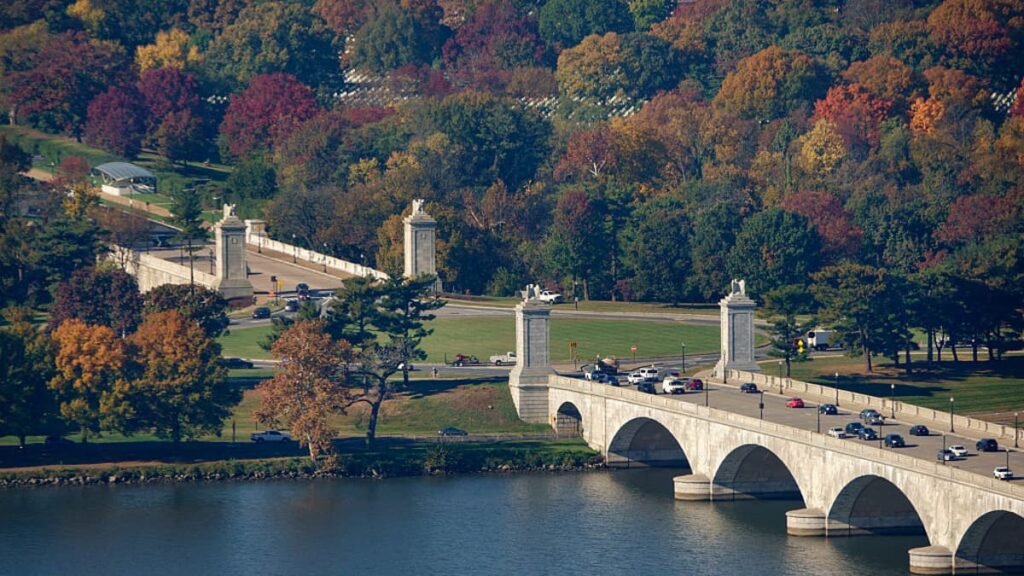
Relatives argue the proposed structure would cast a shadow on graves at Arlington, including the grave of President John F. Kennedy; the lawsuit challenges the administration’s plan on historical and preservation grounds.
LEGAL · ARLINGTON · KENNEDY FAMILY · TRUMP · MONUMENT
Members of the Kennedy family filed a lawsuit seeking to block the construction of a triumphal arch proposed by the Trump administration near Arlington National Cemetery, arguing that the structure as designed would cast a shadow over graves at Arlington, including the grave of President John F. Kennedy, the Washington Post and The Hill both confirmed on Tuesday. The lawsuit challenges the arch proposal on historical preservation, National Register of Historic Places, and cemetery regulations grounds, arguing that the administration has not followed required federal review processes for proposed structures that would affect the visual environment and character of a national cemetery that is among the most sacred sites in American civic life.
The Washington Post provided background on the Trump arch proposal. The administration has proposed a large ceremonial arch near the main entrance area of Arlington National Cemetery as part of a broader redesign of the approach to the cemetery that supporters characterize as a dignified monument appropriate to the national significance of the site. Critics, including the Kennedy family plaintiffs, argue that the arch design as proposed is inconsistent with the character and dignity of a cemetery, that it prioritizes monumental display over the solemnity that the burial site of more than 400,000 service members and their families deserves, and that the specific placement would affect the sight lines and visual environment of one of the most visited sections of the cemetery.
The JFK Grave Dimension
The Washington Post noted that the specific Kennedy family objection to the arch centers on the relationship between the proposed structure and the Kennedy grave site. President Kennedy grave, marked by an eternal flame and located on a hillside in one of the most visited sections of Arlington, draws millions of visitors annually and is one of the most recognized sites in American civic life. The Kennedy family argues that the proposed arch would cast a shadow on the grave — both literally in terms of physical shadow at certain times of day and figuratively in terms of the visual dominance of the arch over the surrounding cemetery landscape — and that this is both a practical preservation argument and a statement about the appropriateness of the arch as an addition to the specific landscape around one of the most historically significant grave sites in the country.
The Hill reported on the legal theory underpinning the Kennedy lawsuit. The plaintiffs argue that the arch proposal violates the National Historic Preservation Act requirement for a Section 106 review before federal undertakings that may affect properties listed on or eligible for the National Register of Historic Places. Arlington National Cemetery is a National Historic Landmark — a category of special significance within the Register — and any federal undertaking that affects its character and setting requires a formal consultation process with the State Historic Preservation Officer and affected parties. The plaintiffs argue that this process was not completed before the arch proposal moved forward.
“Arlington is not a backdrop. It is a promise we made to those who served, and their families deserve to be heard before anyone builds a monument to themselves in its shadow.” — Kennedy family legal statement cited by Washington Post
The Administration Response
The Washington Post reported that the administration characterized the Kennedy family lawsuit as a politically motivated attempt to block a legitimate federal infrastructure and beautification project that has undergone appropriate internal review. The administration’s position is that the arch proposal serves the national interest in honoring military service and that the design process included appropriate consultation. The specific dispute about whether the Section 106 process was completed will be adjudicated in the federal court proceedings, with the plaintiffs bearing the initial burden of demonstrating a likelihood of success on the merits sufficient to obtain a preliminary injunction blocking construction while the case is litigated.
WHAT HAPPENS NEXT
► Federal court to hear Kennedy family preliminary injunction motion; timeline to be set
► Administration to file response to lawsuit; Section 106 review documentation to be central issue
► Arlington Cemetery administration to submit declarations on internal review process
► National preservation advocacy groups to assess filing amicus briefs in support of plaintiffs
| CONFIDENCE: HIGH | Washington Post and The Hill both confirmed the Kennedy family lawsuit filing, the arch proposal context, and the JFK grave shadow argument. Two-source convergence on a confirmed federal court filing with specific legal theory identified. |
| Bias Check | ||
| Left-Lean | Center | Right-Lean |
| Lawsuit framed as Kennedy family defending the sanctity of Arlington from administration self-aggrandizement. | Reports lawsuit, arch proposal context, and Section 106 legal theory factually; notes administration response. | Lawsuit framed as political obstruction of legitimate federal beautification and monument project. |
SOURCES
► Washington Post — Kennedy family sues to block Trump Arlington arch, JFK grave shadow argument, administration response, November 11, 2026
► The Hill — Section 106 National Historic Preservation Act legal theory, National Historic Landmark status, injunction motion