A coordinated cyberattack hit water systems across at least seven US states, targeting more than 30 Minnesota facilities alone. Hackers remotely changed passwords and IP addresses, locking operators out of their own equipment. In Braham, Minnesota, they simply turned a town’s well off. The FBI called the scale “unprecedented.” CISA confirmed a “significant increase” in attacks on the exact type of industrial control devices used. At Camp David, Trump dismissed Iranian involvement and instead blamed Minnesota’s governor for “gross incompetence.” Gov. Tim Walz responded directly: Trump knows who did this, and he’s lying.
2-MINUTE CONTEXT — HOW DID WE GET HERE?
Water infrastructure is classified as critical infrastructure under US law — meaning it sits alongside the power grid, financial system, and communications networks as a priority protection target. The challenge is that many water utilities, especially small-town and rural ones, operate legacy control systems that were never designed with cybersecurity in mind. They were built for reliability, not defense against remote intrusion.
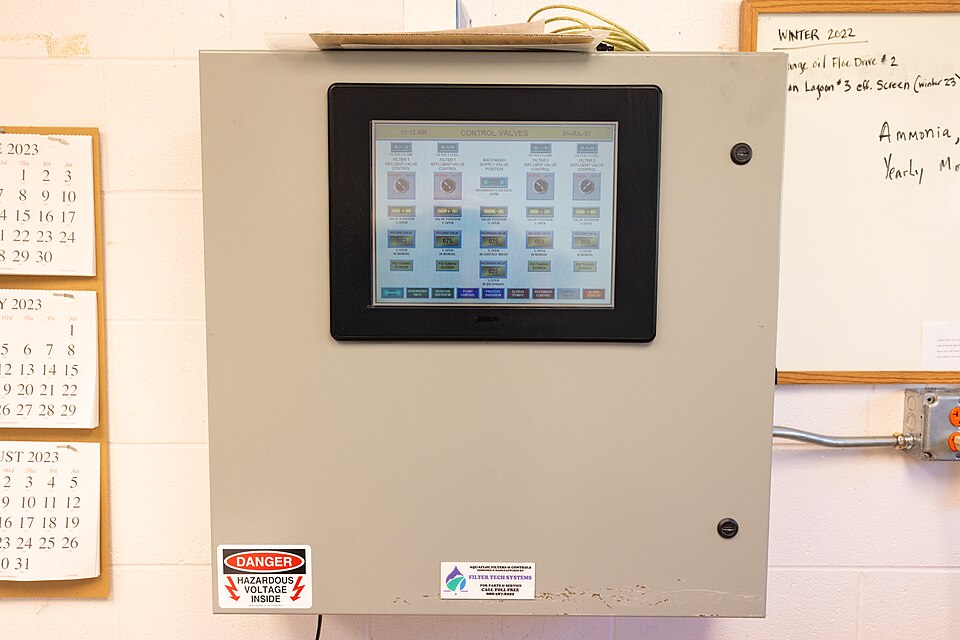
CyberAv3ngers — an IRGC-affiliated hacking group — has been attacking exactly this category of vulnerability since at least 2023. They specifically targeted Unitronics programmable logic controllers (PLCs), the same brand of device exploited in this week’s attacks. CISA issued formal advisories about this exact threat in 2023 and 2024. The vulnerability was known. The attacks still happened.
The political dimension starts with DOGE. The Department of Government Efficiency — Trump’s government-cutting initiative — reduced staffing and funding at CISA, the federal cybersecurity agency responsible for helping utilities defend against exactly this kind of attack. Walz argues this cut left the country exposed. The Trump administration argues the attacks prove state-level incompetence, not federal failure.
WHAT ACTUALLY HAPPENED IN BRAHAM, MINNESOTA
Braham’s mayor described the incident in specific terms: hackers penetrated the control system of the town’s well and simply turned it off. That is not a data breach. That is operational sabotage of the physical water supply. The Minnesota Bureau of Criminal Apprehension memo went further, stating the hackers’ “likely desired impact” was to cause loss of system pressure and the “subsequent potential contamination of the water supply.”
Loss of system pressure in a water distribution network is not just inconvenient — it creates a specific contamination pathway. When pressure drops below a threshold, water can flow backward, potentially introducing contaminants from the distribution network into the supply. This is the scenario water utility engineers have identified as one of the most dangerous consequences of this type of attack.
“They were able to hack into the control system of the well and just turn the well off.”
— Mayor of Braham, Minnesota
TRUMP VS. WALZ — THE POLITICAL CONFRONTATION
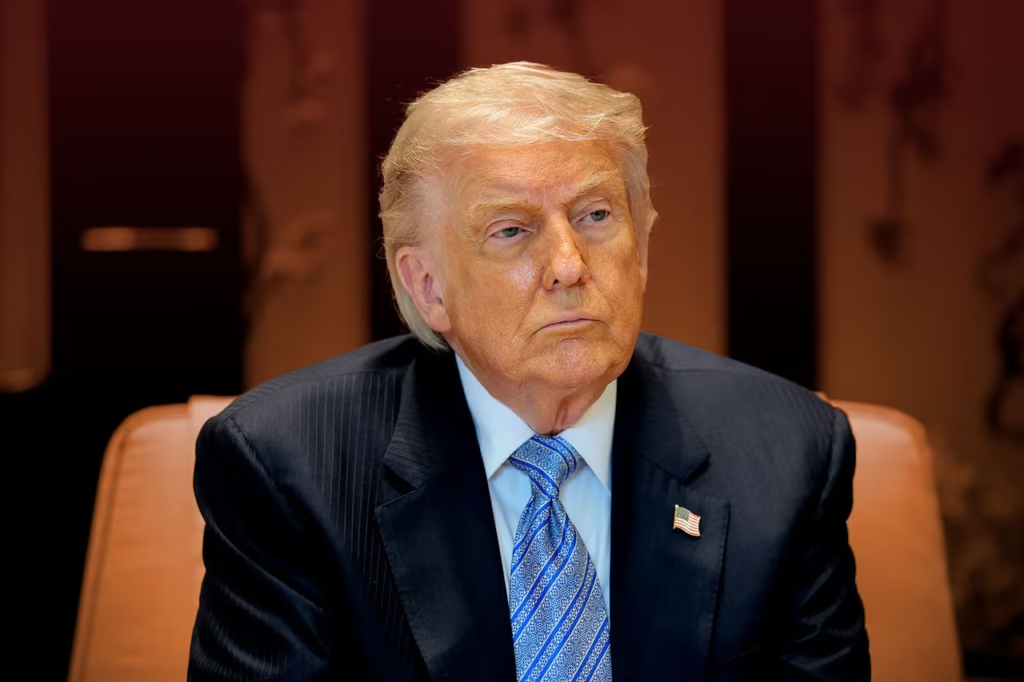
At Camp David, Trump did two things simultaneously: dismissed Iranian responsibility and blamed Minnesota’s Democratic governor. “I think that Minnesota is behind it,” he said. “Because they’re grossly incompetent. I think the governor’s behind it.” This statement — that a Democratic state government sabotaged its own water supply — has no factual basis that has been publicly presented.
Walz’s response was direct and specific. He accused DOGE of taking “an axe” to CISA, leaving the US exposed to exactly the kind of attack that just occurred. He stated flatly: “Trump knows exactly who is responsible for this attack, and knows that other states were hit too.” The “other states” reference is significant — it suggests Walz believes the federal government has attribution intelligence it is choosing not to share publicly.
“Trump knows exactly who is responsible for this attack, and knows that other states were hit too.”
— Gov. Tim Walz, August 2, 2026
| 🔍 ONYX REALITY CHECK VERDICT: MISLEADING CONTEXT WHY? Trump’s claim that “Minnesota is behind it” is not supported by any publicly presented evidence. The FBI and CISA have both confirmed the attack is real and is part of a “significant” pattern against industrial control systems. CyberAv3ngers, an IRGC-affiliated group, has a documented history of attacking this exact category of infrastructure with these exact techniques. Trump’s dismissal of Iranian involvement contradicts both the historical pattern and the ongoing federal investigation context. This rates as Misleading Context rather than False because an investigation is ongoing and final attribution has not been formally published — but the claim that a Democratic governor is “behind it” has zero public evidentiary support. |
WHY THIS MATTERS — WATER IS NOT ABSTRACT
Every American drinks water, depends on water pressure for sanitation, and trusts that the tap is safe. Water infrastructure attacks are not the same as data breaches. They are attacks on physical safety. The specific contamination pathway created by pressure loss is not theoretical — it is a documented risk that water engineers and public health authorities take seriously.
The scale — 30+ facilities in Minnesota alone, seven states affected — suggests this was not opportunistic. It was coordinated, targeted, and designed for maximum disruption. The fact that it occurred during an active US-Iran conflict, using tactics identical to a documented Iranian state-linked group’s prior operations, is the primary reason the attribution question matters so much politically.
The gap between federal government attribution (silent or dismissing Iran) and the documented technical evidence is creating a crisis of credibility. If CISA and the FBI have attribution evidence pointing to Iran, and the president is pointing at a Democratic governor instead, that is not a political spat. That is a national security communication failure.
| States affected7+confirmed as of August 2, 2026 | MN facilities hit30+Minnesota Bureau of Criminal Apprehension |
| CISA threat ratingSIGNIFICANT“significant increase” in ICS targeting | FBI descriptionUNPRECEDENTEDper water-sector cybersecurity expert Gus Serino |
POLITICAL IMPACT
| WHO BENEFITS | WHO FACES PRESSURE |
| Walz — emerges as credible voice on DOGE/CISA cuts | Trump — blaming a governor without evidence is politically risky if attribution is confirmed |
| Democrats — DOGE/CISA cut narrative is powerful | CISA — embarrassed by attack on systems it was defunded to protect |
| Cybersecurity industry — urgency for new federal contracts | Republicans — defending a policy (DOGE cuts) that may have worsened vulnerability |
| Iran (strategically) — attack creates domestic political division | EPA and DHS — responsibility overlap creates accountability gaps |
WHAT HAPPENS NEXT
▸ The FBI and CISA will issue a formal joint advisory. When they do, watch whether they name Iran or remain vague.
▸ Congress will hold hearings. The DOGE/CISA cuts will be central to Democratic questioning.
▸ Water utilities nationwide are now on elevated alert — watch for CISA issuing emergency guidance for Unitronics PLC users.
▸ Trump’s attribution statement will face scrutiny. If Iran is formally blamed, his Camp David remarks become a documented presidential misstatement on national security.
▸ Walz’s “other states” claim — if confirmed — expands the scope of the story significantly. Watch for more state disclosures.
GLOBAL IMPACT
Iran benefits from this politically regardless of attribution. The attack created domestic US political division, forced the government to choose between transparency and political messaging, and demonstrated that US critical infrastructure remains vulnerable during an active military conflict. For US allies watching from Europe and Asia, the attack raises questions about allied infrastructure vulnerability — most NATO states share similar legacy ICS/SCADA weaknesses.
For oil markets: minimal direct impact. For national security credibility: significant. An active wartime adversary demonstrating the ability to remotely disable US water systems — and a president responding by blaming a Democratic governor — is the kind of story that undermines confidence in the coherence of US national security governance.
| CONFIDENCE: HIGH | Core attack facts confirmed by Minnesota BCA memo, FBI, CISA, and multiple municipal officials. Trump’s Camp David statement is documented. Walz’s response is documented. CISA’s “significant increase” in ICS threats is from official advisory. Gus Serino’s “unprecedented” assessment is on the record. Attribution to a specific actor remains under investigation — ONYX does not confirm attribution, only documents the established pattern. |
| ⚖️ BIAS CHECK — WHO IS SAYING WHAT | |
| Trump / White House | Blaming Minnesota’s Democratic governor; dismissing Iranian involvement; framing as state incompetence |
| Gov. Walz / Democrats | Blaming DOGE cuts to CISA; accusing Trump of withholding attribution intelligence; framing as federal failure |
| FBI / CISA | Confirmed attack is real and significant; not yet published formal attribution; investigation ongoing |
| Cybersecurity Experts | “Unprecedented” scale; documented CyberAv3ngers pattern matches; CISA cuts were a genuine risk factor |
| Republican Media | Emphasizing state-level incompetence; downplaying federal cuts; supporting Trump’s framing |
| Iranian State Media | Denial of involvement; framing as US domestic political problem |
| International Media | Reporting the political confrontation as much as the cyberattack itself |
📅 NEWS EVOLUTION
2023–2024: CyberAv3ngers attacks US and Israeli water systems using Unitronics PLCs; CISA issues advisories
2025: DOGE cuts reduce CISA staffing and budget; cybersecurity community raises concerns
Aug 1, 2026: Coordinated cyberattack hits 30+ Minnesota water facilities and systems in 6 other states
Aug 2, 2026: Trump at Camp David blames Minnesota governor; Walz responds publicly accusing Trump of lying about attribution
Pending: FBI/CISA joint advisory expected; congressional hearings likely; formal attribution TBD
SOURCES
▸ Minnesota Bureau of Criminal Apprehension — internal memo on “likely desired impact” of attacks
▸ Braham Mayor — direct quote on well shutdown via CNN report
▸ FBI — “unprecedented” characterization, confirmed per water-sector expert
▸ CISA — official advisory on “significant increase” in ICS/SCADA targeting
▸ Gus Serino (water-sector cybersecurity specialist) — CNN interview
▸ Trump — Camp David remarks on Minnesota governor blame
▸ Gov. Tim Walz — social media response on DOGE/CISA cuts
▸ CISA 2023–2024 advisories on CyberAv3ngers and Unitronics PLC vulnerabilities
QUESTIONS YOU MAY STILL HAVE
Q: Was anyone’s drinking water actually contaminated?
A: No contamination has been confirmed publicly. The BCA memo described contamination as the “likely desired impact” — meaning the goal, not necessarily the achieved outcome. Utilities typically have offline backup systems and manual override procedures.
Q: Why haven’t we heard about the other six states?
A: States may be under federal guidance not to publicly disclose during an active investigation. Walz’s mention of “other states” suggests coordinated federal awareness — watch for more disclosures after the investigation phase.
Q: What is CISA and what did DOGE actually cut?
A: CISA (Cybersecurity and Infrastructure Security Agency) is the federal agency responsible for defending critical infrastructure. DOGE reduced its workforce and operational budget in 2025 as part of broader government downsizing. The specific operational impact of those cuts on critical infrastructure protection is contested between parties.
Q: If Iran did this, does it change anything legally?A: Yes. An attack on US critical infrastructure during an active military conflict by an adversary state could trigger a formal legal authorization for military response under existing US law. This is why the attribution question is politically sensitive — it has potential escalation consequences.