
Wednesday’s solar eclipse — the total eclipse that crossed Greenland, Iceland, and Spain and produced a partial eclipse across the US — did more than provide a viewing experience. CNN Senior Science Reporter Kasha Patel detailed four distinct ways the eclipse affected local atmospheric conditions, from a documented phenomenon called ‘eclipse wind’ to measurable shifts in GPS signal accuracy. These effects happen during every total eclipse; most people never know they are occurring.
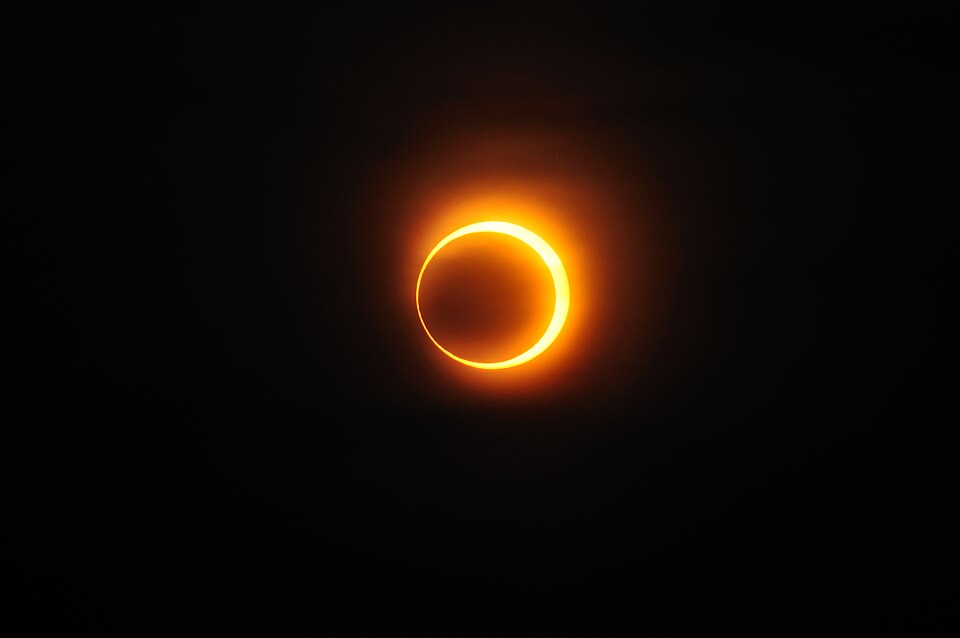
THE FOUR ATMOSPHERIC EFFECTS
▸ ECLIPSE WIND: During totality, the rapid temperature drop (as the moon blocks solar radiation) creates a localized pressure gradient that produces wind. The air near the eclipse path cools; surrounding warmer air moves toward it. Meteorologists near Wednesday’s path of totality in Iceland and northern Spain documented the effect. It is a real, measurable wind pattern produced by the shadow itself.
▸ TEMPERATURE DROP: Within the path of totality, surface temperatures drop measurably during the eclipse’s peak — sometimes by several degrees Celsius within minutes. This is the most intuitively obvious atmospheric effect but is still striking in its speed: the moon’s shadow creates a localized cooling event at the scale of a region.
▸ GPS SIGNAL DISRUPTION: The ionosphere — the charged upper atmosphere that GPS signals travel through — responds to solar radiation. During a solar eclipse, the sudden reduction in solar radiation causes the ionosphere to rapidly change its electron density. This affects GPS signal propagation, producing measurable accuracy degradation in areas near the eclipse path. Navigation systems, aviation GPS, and precision agriculture GPS all experience this effect.
▸ ANIMAL BEHAVIOR CHANGES: Documented in prior eclipses: birds return to roosts, insects begin nighttime behaviors, and farm animals respond to the sudden darkness as they would to dusk. These behavioral changes are observable ecological responses to the atmospheric and light conditions the eclipse produces.
WHY THIS SCIENCE IS WORTH NOTING
Total solar eclipses are among the rarest natural experiments available to atmospheric and space weather scientists. They provide a sudden, predictable, geographically specific reduction in solar radiation that allows researchers to isolate the effects of that reduction on the atmosphere, ionosphere, and biological systems. No simulation can replicate what an actual eclipse provides: a real-world test of solar-atmospheric interactions at scale.
Scientists organized measurement campaigns at multiple points along Wednesday’s totality path specifically to gather this data. The atmospheric science from Wednesday’s eclipse will produce research publications for years. The 2-3 minutes of totality over Iceland and Spain generated scientific data that would otherwise require years of satellite observation to accumulate.
| CONFIDENCE: HIGH | Kasha Patel CNN reporting on four atmospheric effects is documented. Eclipse wind, temperature drop, GPS disruption, and animal behavior changes are all documented in established atmospheric and space weather science literature. |
SOURCES
▸ CNN — Kasha Patel, four atmospheric effects of the solar eclipse, August 2026
▸ Atmospheric science literature — eclipse wind, ionospheric GPS effects (established research)