
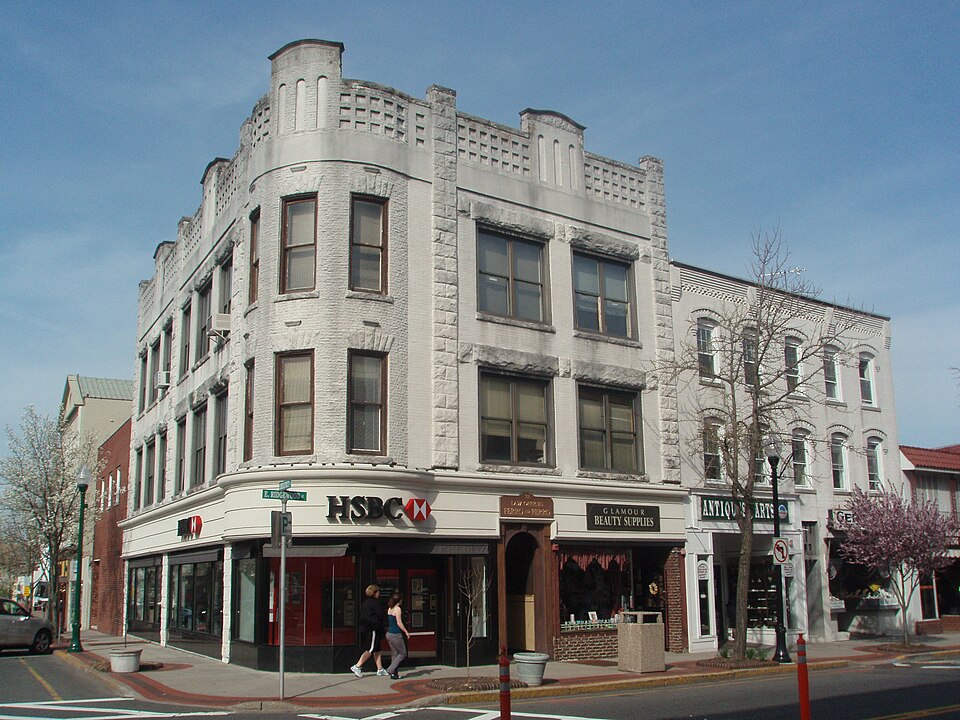
NPR’s reporting on downtown Ridgewood, New Jersey’s transformation — with MilkShake Factory, Maroons Creamery, and Hey Yogurt among a wave of dessert shops replacing traditional retail — is a granular, on-the-ground look at a national pattern. American downtown commercial districts are shifting from goods-based retail (stores selling products) toward experience-based services (restaurants, dessert shops, entertainment, personal services). This shift reflects real consumer behavior changes, real commercial real estate economics, and real consequences for the tax base and character of American towns.
THE ECONOMIC FORCES BEHIND THE DESSERT SHOPS
Three forces are driving the shift from retail to dessert and service businesses in American downtowns:
▸ E-commerce: products that can be purchased online and delivered can no longer sustain downtown retail stores. Clothing, electronics, books, home goods — all categories that once anchored downtown retail — have moved substantially online. Physical retail survives only where the in-person experience adds value that online cannot replicate.
▸ Experience economy: post-pandemic consumer behavior research consistently shows increased spending on experiences relative to goods. A milkshake shop is an experience; a clothing purchase is a transaction. Downtown retail that survives is retail that provides the experience of buying.
▸ Commercial real estate economics: when retail stores leave, landlords face pressure to fill spaces. Restaurant and food-service tenants are often willing to pay rents that struggling retail stores cannot support. Dessert shops in particular tend to have lower build-out costs and can operate profitably in small footprints.
WHAT THIS MEANS FOR DOWNTOWNS
The dessert-shop downtown is not economically inert. MilkShake Factory, Maroons Creamery, and Hey Yogurt are businesses that employ people, pay taxes, and generate foot traffic that benefits neighboring businesses. The question is whether a downtown built around experience services provides the same civic function — the same capacity for community gathering, for diverse economic activity, for the kind of commercial ecosystem that makes a downtown a genuine center of community life — as a mixed retail-service downtown.
The answer is probably: somewhat, but differently. Dessert shop downtowns tend to be more homogeneous in their appeal (they serve a specific demographic willing to spend on premium experiences) and more vulnerable to economic downturns (discretionary spending on treats contracts quickly in recessions). They are also less likely to provide the practical goods and services that make a downtown genuinely useful to a diverse community — hardware stores, pharmacies, dry cleaners.
| CONFIDENCE: HIGH | NPR reporting on Ridgewood, NJ downtown transformation is documented. Business names (MilkShake Factory, Maroons Creamery, Hey Yogurt) are from NPR. Economic analysis of forces driving the shift is ONYX editorial based on established retail economics research. |
SOURCES
▸ NPR — Ridgewood NJ downtown dessert shops report, August 2026
Q: Is this happening everywhere?
A: The pattern is national but variable. Larger cities with diverse populations and tourist traffic have sustained more varied downtown retail mixes. Smaller suburban towns — like Ridgewood, a wealthy suburb — tend to show the dessert-shop pattern most clearly because their demographic profile (higher-income families with disposable spending) makes them ideal dessert-shop markets.
Q: What does this mean for property taxes?
A: Restaurants and food service businesses generate sales tax; they can support property values if they drive foot traffic. Whether the dessert-shop downtown produces the same property value support as a diverse retail downtown depends on specific local conditions.