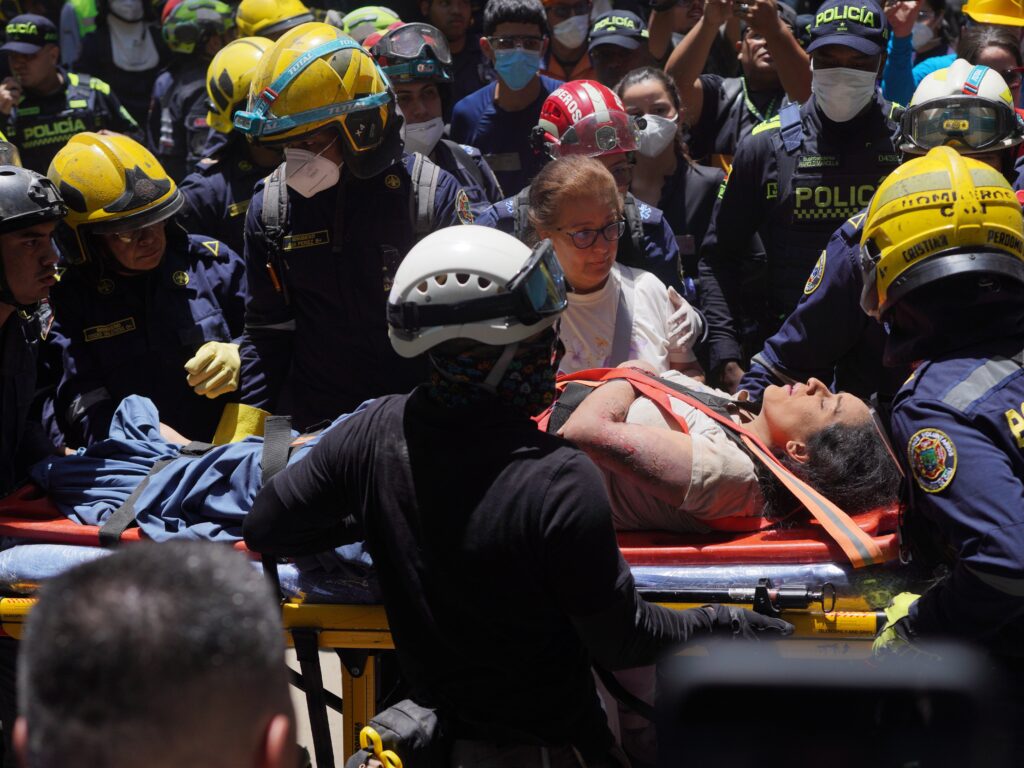
AP photography documented the moment Diana Troncoso was lifted from a collapsed building in Cali and placed on a stretcher — and onlookers cheering as she emerged. That image is the specific, human counterpoint to every number in this disaster: the death toll, the missing count, the damage assessment backlog, the access logistics, the official versus civilian count discrepancy. Diana Troncoso is a person. The people who found her are people. The people who cheered are people. That is the specific thing numbers cannot capture.
WHY THESE MOMENTS MATTER
Disaster coverage that consists entirely of statistics, logistics, and political accountability has a specific moral failure: it removes the humans whose lives are the actual subject. Diana Troncoso’s rescue — and the dust-covered baby pulled through the crack in the wall — are not human interest postscripts to the ‘real’ story. They are the reason the ‘real’ story matters. The death toll exists because people died. The missing count exists because people are missing. The survival window closes because people are trapped and time is running out for them specifically.
Rescue teams working the critical 72-hour window are not abstract actors in a logistics operation. They are people who chose this work, who have watched colleagues die (three did, on Colorado’s Snyder Fire in June, documented in ONYX’s August 9 wildfire coverage), and who continue working because the alternative — stopping while someone might still be alive in there — is not something they are constituted to do. Diana Troncoso’s survival confirms, for the specific rescue team that found her, that their choice to keep working was the right one.
THE JOURNALISTIC FUNCTION OF AP PHOTOGRAPHY
AP photography exists to provide images that words cannot replicate. The specific image of Diana Troncoso being lifted onto the stretcher, with onlookers cheering, conveys the emotional reality of a successful rescue in a way that any written description — including this one — cannot. AP’s photographers are working in active disaster zones, under the same access constraints as rescue teams, to produce the visual documentation that connects global audiences to events they cannot personally witness.
ONYX notes: we are not reproducing the AP image directly (copyright) but are describing its documented content and directing readers to AP’s documentation for the full visual record.
THE ONYX NOTE
Every story pack ends with something that holds the scale of the human stakes. Today’s Section B has covered two volcanoes, multiple disaster logistics chains, death tolls, survival windows, and resource allocation analyses. Diana Troncoso was alive when she came out of that building. That matters independent of everything else in this pack.
| CONFIDENCE: HIGH | Diana Troncoso rescue is from AP wire documentation. Baby rescue is from confirmed reporting. Rescue team motivation analysis is ONYX editorial, clearly labeled. |
SOURCES
▸ AP photography — Diana Troncoso rescue, Cali, Colombia, August 2026