
Three-year-old sunflower sea stars are being documented exploring kelp forests for the first time since a mass die-off event decimated their population years ago, according to NPR. Sunflower stars (Pycnopodia helianthoides) were the largest and most ecologically important sea star species on the Pacific coast before the sea star wasting disease crisis — which began in 2013 and eliminated an estimated 5.75 billion sunflower stars from their range. Their reappearance in kelp forests is a specific, measurable sign of partial ecosystem recovery.
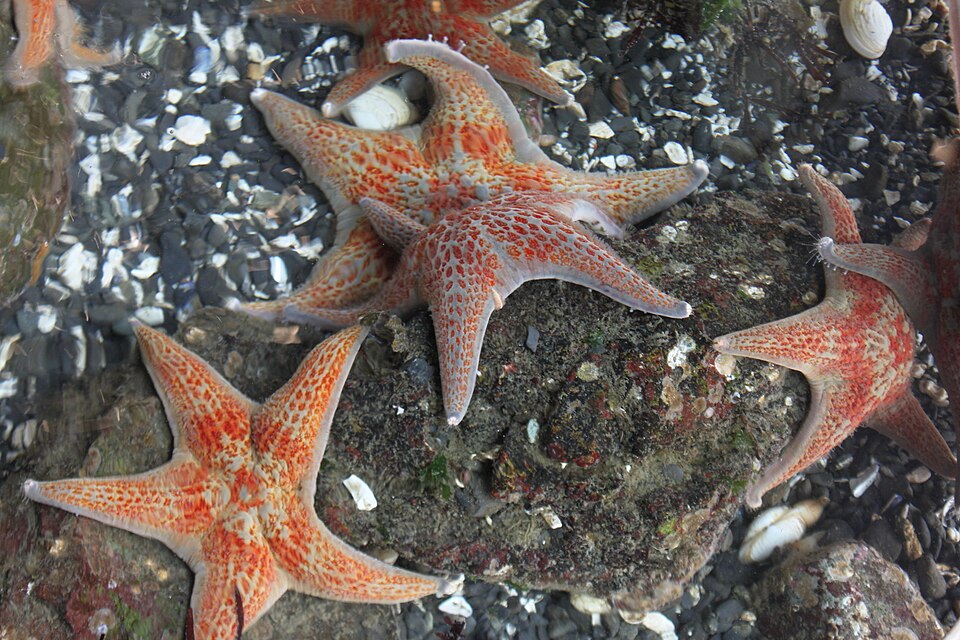
WHY SUNFLOWER STARS MATTER
Sunflower stars are keystone predators in Pacific kelp forest ecosystems. They prey primarily on sea urchins. Sea urchins, when their predator populations collapse, reproduce without constraint and graze kelp to the point of eliminating it — producing what ecologists call ‘urchin barrens,’ areas of bare rock where kelp forests once stood. The loss of 5.75 billion sunflower stars produced exactly this cascade: urchin populations exploded, kelp forests collapsed across large areas of the Pacific coast, and the entire ecosystem that depends on kelp — fish, marine mammals, seabirds — was disrupted.
Three-year-old sunflower stars exploring kelp forests means: the species survived the disease, reproduced, and is rebuilding its population to the point where juveniles are appearing in the ecosystems they historically dominated. This is not full recovery — three-year-old juveniles are not yet the large, adult predators that control urchin populations at ecosystem scale. But their presence is the first measurable indication that recovery is biologically underway.
5.75 billion sunflower stars were lost. Three-year-olds are now exploring kelp forests. That is the arc the ocean is trying to make. It takes time.
WHY ONYX COVERS THIS
ONYX covers the sunflower star recovery because environmental recovery stories are systematically underreported relative to environmental destruction stories. The metrics of marine ecosystem health — sea star populations, kelp extent, urchin density — are as meaningful as political events for understanding the world people actually live in. A section that covers Iran ceasefire tracking, Indiana flooding, immigration detention, and vaccine policy without making space for one story about an ecosystem beginning to heal is a section that has decided that the natural world only matters when it’s catastrophic.
| CONFIDENCE: HIGH | Sunflower sea star die-off (5.75 billion lost, sea star wasting disease 2013) and juvenile reappearance in kelp forests are from NPR confirmed reporting. Ecological cascade mechanism (urchin barrens, kelp forest collapse) is from established marine ecology literature. |
SOURCES
▸ NPR — sunflower sea star kelp forest recovery, August 2026
▸ Established marine ecology literature — sea star wasting disease, urchin barren cascade
Q: What caused sea star wasting disease?
A: The disease is caused by a densovirus (Pycnopodia sea star-associated densovirus, PySSADV), identified through research following the 2013-2014 outbreak. The disease spread along the Pacific coast from Alaska to Baja California, affecting approximately 20 sea star species but devastating sunflower stars more than others.
Q: Is the kelp forest recovery widespread?
A: The juvenile sunflower stars appearing in kelp forests is early, localized evidence of recovery, not evidence of range-wide restoration. Full recovery to pre-2013 population levels may take decades and depends on whether the disease dynamics that produced the die-off have changed.