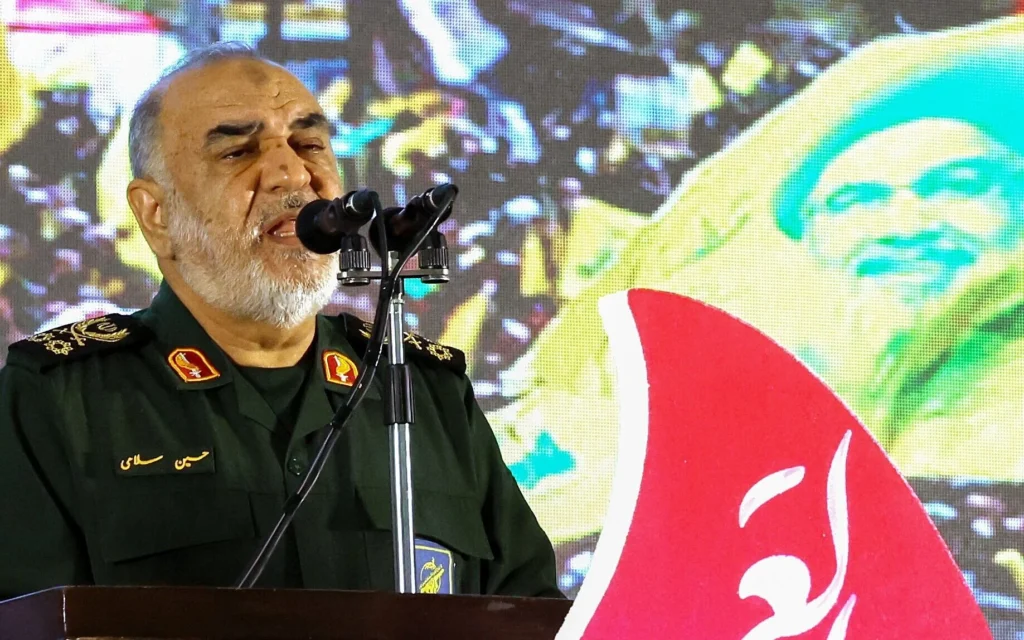
The United Arab Emirates announced Wednesday it is suspending all trade, commercial exchanges, and financial transactions with Iran ‘until further notice,’ according to foreign ministry communications director Afra Al Hameli. The announcement came one day after the UAE issued its first missile threat warning to residents in weeks — warning them to be alert to potential incoming missile threats. Iran’s armed forces chief simultaneously renewed warnings to Persian Gulf states against assisting the US military, saying any such help ‘would amount to joining operations against the Islamic Republic.’ Iran’s foreign minister confirmed Tehran will not accept a ceasefire — only a deal to fully end the war is acceptable.

2-MINUTE CONTEXT — THE UAE-IRAN ECONOMIC RELATIONSHIP
The UAE — specifically Dubai — has historically been one of the most important trading partners for Iran despite official US sanctions. Dubai’s position as a global trading hub, its large Iranian diaspora community, and the practical proximity of the two countries across the Persian Gulf made the UAE a significant route for goods, financial flows, and people between Iran and the international economy. The UAE has also been subject to US secondary sanctions pressure for facilitating Iran trade.
The scale of UAE-Iran trade is substantial: estimates place bilateral trade at several billion dollars annually, with a significant portion representing re-export of goods that circumvent direct US-Iran trade restrictions. Suspending ‘all trade, commercial exchanges, and financial transactions’ is not a symbolic gesture — it is a major economic action that will affect Iranian access to goods, financial services, and the global economy more broadly.
THE MISSILE THREAT WARNING — WHAT IT MEANS
The UAE’s missile threat warning to residents — its first in weeks — is the specific precipitating event for the trade suspension. If the UAE government assessed an incoming Iranian missile threat and issued a public warning, it is treating Iran as an active military threat to its own territory. That assessment is categorically different from the Gulf state diplomatic posture of prior weeks, in which the UAE was simultaneously engaging in normalization activities with Israel (documented Abraham Accords context) and maintaining economic ties with Iran.
The specific sequence — missile threat warning, then total trade suspension — indicates the UAE government assessed that the missile threat was Iranian in origin, and responded with an economic severance. Iran’s denial and ‘false-flag’ warning (Story 12) directly contests this attribution.
IRAN’S ARMED FORCES CHIEF WARNING
Iran’s armed forces chief renewing warnings against Gulf states assisting the US military — ‘would amount to joining operations against the Islamic Republic’ — is a direct threat to the Gulf Cooperation Council states that host US military installations. The UAE hosts US military at Al-Dhafra Air Base; Saudi Arabia at Prince Sultan Air Base; Qatar at Al Udeid Air Base (the largest US military base in the Middle East). The warning is not abstract.
This threat arrives in the same week that the ceasefire is on Day 12 and the Muscat nuclear dialogue second session has not yet been formally scheduled. If Gulf states are receiving direct threats for hosting US military while the ceasefire is supposed to be producing diplomatic progress, the ceasefire’s stability is being tested from multiple directions simultaneously.
IRAN’S FOREIGN MINISTER ON “END THE WAR” VS. “CEASEFIRE”
Iran’s foreign minister’s confirmation that Tehran will not accept ‘a mere ceasefire’ — only a deal to ‘fully end the war’ — is consistent with Iran’s established rhetorical framing throughout the ceasefire period. ONYX noted this distinction on August 17 Section B Story 11: Iran consistently frames the August 7 agreement as an ‘end to the war’ rather than a ‘ceasefire,’ while the deal’s 60-day structure and October 6 expiration make it operationally a ceasefire regardless of the rhetorical framing. The foreign minister’s statement today is continuous with that established pattern.
The UAE issued a missile warning. Then it cut off all trade with Iran. That sequence is the most direct Gulf state action against Iran since the ceasefire deal was signed.
THE FIVE FAILURE MODE ASSESSMENT — UPDATED
ONYX’s five failure modes for the deal, updated at Day 12:
▸ Israeli unilateral strike on Iran: STILL HIGH — unchanged; Ben Gvir watching second session
▸ Iran enrichment violation: MONITORING — IAEA through Day 11 shows compliance
▸ Iranian domestic collapse: NOT ACTIVE — parliament legislation is political theater; government operational
▸ Gulf proxy incident: ELEVATED — the UAE missile warning and trade suspension represent an escalation in this failure mode; whether the missile was Iranian is contested but the UAE’s response is real
▸ 60-day cliff: 47 DAYS AWAY — second nuclear session not yet scheduled; October 6 approaching
WHAT HAPPENS NEXT
▸ UAE-Iran trade suspension duration — ‘until further notice’ means this persists until the UAE determines the threat has passed or relations normalize
▸ Attribution of the missile threat — UAE’s formal attribution claim and Iran’s ‘false-flag’ counter will be assessed by US and allied intelligence
▸ Gulf state coalition response — whether Saudi Arabia, Qatar, Kuwait, and Bahrain follow the UAE with their own trade measures
▸ Ceasefire stress — a Gulf state trade war running parallel to a ceasefire nuclear dialogue is a stress combination the deal was not designed to absorb
▸ 47 days to October 6
| CONFIDENCE: HIGH | UAE foreign ministry communications director Afra Al Hameli statement (total trade suspension), UAE missile threat warning, Iran armed forces chief Gulf state warning, and Iran foreign minister ‘end the war’ position are all from confirmed reporting. Five failure mode update is ONYX editorial based on cumulative tracking. |
| ⚖️ BIAS CHECK — WHO IS SAYING WHAT | |
| UAE | Treating the missile incident as Iranian in origin and responding with economic severance; the trade suspension is a policy choice that reflects their security assessment |
| Iran | Denying the missile attribution and warning of false-flag operations; has institutional incentives to deny Gulf state missile attacks that could justify US military response |
| Iran Armed Forces Chief | The Gulf state warning is aimed at the specific US military installation hosts; it is a military threat, not diplomatic language |
| ONYX | Covering the UAE action as a genuine deal-stress escalation; noting Iran’s denial without resolving the attribution question |
SOURCES
▸ UAE Foreign Ministry Director Afra Al Hameli — total trade suspension announcement, August 19, 2026
▸ Iran Armed Forces Chief — Gulf state warning (confirmed reporting)
▸ Iran Foreign Minister — “end the war” position (confirmed reporting)
Q: How much does Iran depend on UAE trade?
A: The UAE — specifically Dubai — has been a critical economic lifeline for Iran given US sanctions. Estimates of bilateral trade range from $3-5 billion annually, with significant additional informal and re-export trade flows. The suspension will materially affect Iranian access to goods and financial services that previously cleared through Dubai.
Q: What is Al-Dhafra Air Base?
A: Al-Dhafra Air Base is a UAE air base that hosts significant US Air Force presence, including reconnaissance and strike aircraft. A threat against Gulf states hosting US military would include Al-Dhafra as a potential target. The UAE’s missile warning and trade suspension may be partly a response to the specific military threat to that installation.