Global oil prices are poised to record their steepest monthly decline since the onset of the COVID-19 pandemic as traders bet on a potential U.S.-Iran agreement to extend a ceasefire and reopen the Strait of Hormuz.

Brent crude has fallen nearly 19% in May, trading around $92 per barrel—its lowest point in six weeks—marking the benchmark’s most significant monthly decrease since March 2020. West Texas Intermediate (WTI) crude has experienced similar declines, dropping below $90 per barrel at one point during the month.
Deal Optimism Drives Selloff
The price tumble accelerated after reports emerged that U.S. and Iranian negotiators reached a framework for a 60-day memorandum of understanding to extend the ceasefire and initiate discussions on Iran’s nuclear program. According to Axios reporting published on May 28, the proposed agreement would allow unrestricted shipping through the Strait of Hormuz and require Iran to clear sea mines within 30 days.
However, two American officials and a regional source involved in the mediation process confirmed that President Donald Trump has not yet provided final endorsement of the deal. Iranian state media has also not verified its acceptance of the memorandum of understanding.
U.S. Secretary of State Marco Rubio told the New York Times that “the strait must reopen immediately, after which we can begin serious discussions on issues like uranium”. Kevin Hassett, Chairman of the White House National Economic Council and a key economic advisor to President Trump, stated in a CBS interview that “once the strait opens, global refineries will secure the necessary crude oil within 1–2 months”.
On May 24, oil prices plummeted over 6% when news broke that the U.S. and Iran had reached a principle agreement to reopen the strait and extend the ceasefire. Brent crude fell to $97.20 per barrel during trading, a 6.1% drop from the previous day’s $103.54, while WTI plunged over 6.5% intraday.
Massive Backlog Complicates Recovery
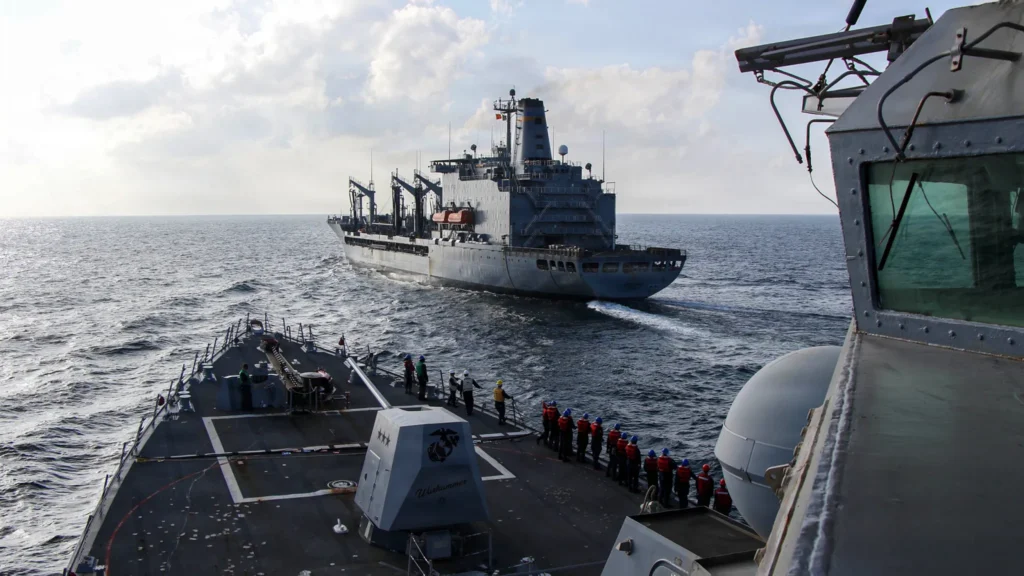
Even if a final agreement is reached, analysts warn that normalization of oil flows will take months. Between 1,500 and 2,000 vessels remain stranded in the Persian Gulf awaiting passage. Before the conflict, approximately 120 to 130 ships passed through the strait daily; recent weeks have seen as few as two to six vessels per day.
The Pentagon has informed members of the House Armed Services Committee that clearing Iranian mines could take up to six months after any peace deal is implemented, according to The National. Officials said Iran may have placed more than 20 GPS-guided devices in the waterway that would be difficult to locate.
Sultan Al-Jaber, CEO of UAE state energy company ADNOC, analyzed that “even if the conflict ends immediately, it will take at least four months for Hormuz transit volumes to recover to 80% of pre-war levels,” adding that full normalization is unlikely before the first half of 2027.
Data from shipping analytics firm Kpler suggests a phased recovery from May to September, depending on vessel type. Tankers and dry-bulk carriers are projected to recover close to 100% of pre-war Middle East Gulf export capacity by early July, while container ships would return to normal by August. Liquefied natural gas carriers will be the last to return to normality, with full capacity not expected until September.
Broader Market Context
The Strait of Hormuz typically accounts for about 20% of global oil supply and significant volumes of liquefied natural gas. The waterway has been largely closed since Iran began attacking vessels following the outbreak of U.S.-Iran tensions on February 28, 2026.
Brent crude peaked above $118 per barrel in late March when Iran attacked a tanker near the UAE coastline. Since the conflict began, U.S. gasoline prices have risen more than 50%, averaging around $4.51 per gallon according to AAA.
Goldman Sachs has kept its third-quarter 2026 forecasts steady at $82 per barrel for Brent and $77 for WTI, with a fourth-quarter base projection of $80 for Brent and $75 for WTI. However, the bank noted an extended Hormuz closure scenario could push Brent to $120 in the third quarter and $115 in the fourth.
Many experts remain skeptical about oil prices returning to pre-war levels in the $60s this year. Kim Tae-hwan, Head of the Oil Policy Division at the Korea Energy Economics Institute, said “the actual situation hasn’t changed yet, so we need to remain calm”. Professor Shin Hyun-don at Inha University stated that “while oil prices may fall further from the current $90s range, a return to the $60s within the year seems unlikely”.
Current Status
As of May 29, 2026, the ceasefire extension framework remains pending President Trump’s approval, with U.S. officials indicating the president “needs a few days to contemplate it”. The U.S. blockade would be lifted corresponding with the resumption of commercial shipping, and Washington plans to issue certain sanctions waivers to permit Iran to sell oil without restrictions as part of the proposed deal.
Sources: Barrons, CNBC, Bloomberg, Axios, Al Jazeera, Chosun, The National, Yahoo Finance — May 24–29, 2026
Content Disclaimer: This report covers developing military and diplomatic events characterized differently by U.S. and Iranian officials. The ceasefire extension agreement has not received final approval from President Trump, and Iran has not verified its acceptance. Readers are encouraged to consult primary sources and multiple verified outlets for full context.