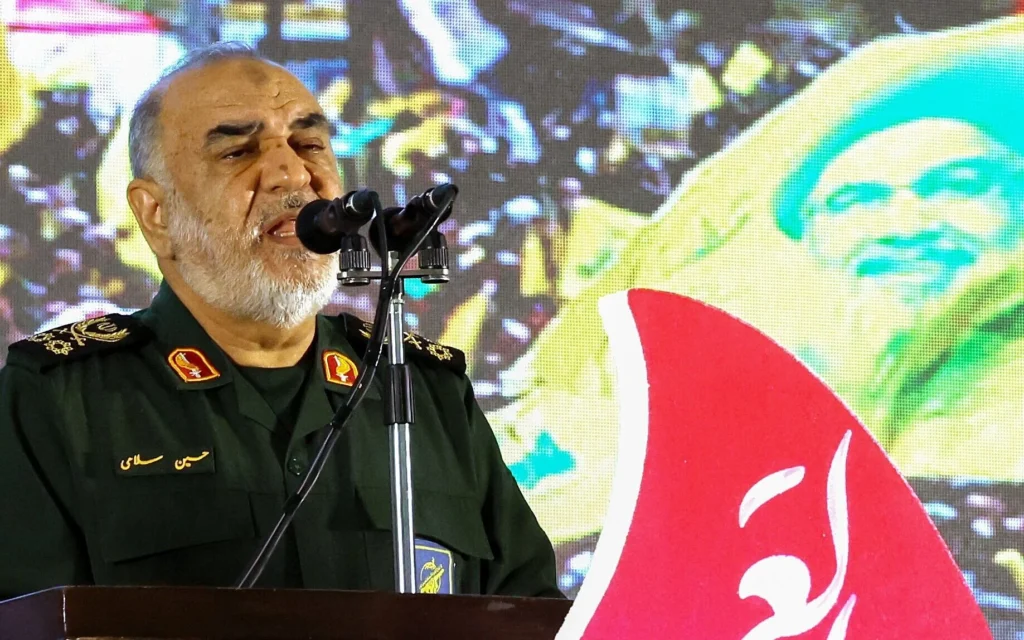
Iranian foreign ministry spokesperson Esmaeil Baghaei rejected as ‘unfounded’ the UAE’s accusation that Iran launched two missiles at the Gulf kingdom, according to CNN. Simultaneously, Baghaei explicitly warned regional states to ‘be vigilant against false-flag operations’ — a pointed suggestion that Iran believes it may be deliberately being framed for an attack it did not carry out. ONYX covers both dimensions: the factual attribution question (which remains unresolved) and the strategic implication of the false-flag warning (which, regardless of whether it is true, shapes how regional actors interpret any future incidents).
THE ATTRIBUTION QUESTION — WHAT IS AND ISN’T KNOWN
What is established: the UAE issued a missile threat warning to residents; the UAE government attributed the threat to Iran; the UAE subsequently suspended all trade with Iran. What is not established: independent confirmation of missile launches; radar or satellite data from non-UAE sources confirming the launches; or attribution evidence that has been independently verified.
Iran’s denial is consistent with its institutional pattern: Iran denies attacks on Gulf state or US assets as a matter of policy, whether or not those attacks occurred. The IRGC’s drone and missile attacks on Saudi Arabia (via Houthi proxy) in prior years were similarly denied or characterized differently by Iranian officials. A denial does not mean the attack did not happen.
WHAT “FALSE-FLAG OPERATIONS” ACTUALLY MEANS AS A CLAIM
A false-flag operation is a covert operation designed to appear as though it was carried out by a different party than the actual perpetrator. False-flag claims in military and intelligence contexts range from documented historical reality (Operation Northwoods, the Gulf of Tonkin, the Gleiwitz incident) to unfounded conspiracy theories. The concept has genuine historical grounding; it is also a standard rhetorical device for any party seeking to deny attribution for an attack it carried out.
Iran’s specific false-flag warning — ‘be vigilant against false-flag operations’ — serves two purposes simultaneously: if Iran did not launch missiles at the UAE, the warning is a legitimate caution about deliberate misattribution; if Iran did launch missiles, the warning is a preemptive deflection designed to create doubt about future Iranian attacks by suggesting any attack could be attributed to a third party framing Iran.
ONYX cannot determine which of these is true. Both are analytically plausible.
THE SPECIFIC ACTORS WHO MIGHT CONDUCT SUCH OPERATIONS
If Iran’s false-flag claim is taken seriously, the question is: who would benefit from framing Iran for a missile attack on the UAE? The candidate actors:
▸ Israeli intelligence (Mossad): has conducted operations designed to complicate Iran’s diplomatic relationships; a missile attack on the UAE framed as Iranian would justify UAE trade severance and Gulf state alignment against Iran
▸ Iran hardliners acting independently: IRGC factions that oppose the ceasefire could conduct an attack that undermines the diplomatic track while maintaining the Foreign Ministry’s deniability
▸ Houthi proxies acting without Iranian direction: Yemen’s Houthi movement has previously attacked UAE territory; their launches could be attributed to Iran by the UAE without Iranian government sanction
▸ Unknown non-state actor: the Galápagos drone pattern (ONYX August 16) documents that sophisticated armed drone/missile capabilities are proliferating beyond state actors
Iran says it was framed. The UAE says it was attacked. Both can’t be fully right. The specific evidence that would resolve the question is not yet public.
THE STRATEGIC CONSEQUENCE OF THE FALSE-FLAG CLAIM
Regardless of whether Iran’s false-flag claim is accurate, its effect is to introduce uncertainty into every future incident in the Gulf. If regional actors accept that false-flag operations are a feature of the current environment, they will be slower to respond to what appear to be Iranian attacks, and Iran’s deterrence calculus shifts accordingly. The claim is strategically valuable to Iran whether or not it is true.
WHAT HAPPENS NEXT
▸ US and allied intelligence assessment — radar, satellite, and signals intelligence data will be used to establish or refute Iranian attribution; the classification of that data determines what becomes public
▸ UAE’s formal attribution evidence — whether Abu Dhabi publishes evidence for the Iranian attribution
▸ GCC response — other Gulf states will assess the attribution question and calibrate their own responses
▸ Ceasefire implications — if the missile launches are confirmed as Iranian, the ceasefire’s Gulf proxy incident failure mode has been triggered in a significant way
| CONFIDENCE: MODERATE | Iran denial and Baghaei ‘false-flag’ warning are from CNN confirmed reporting. Attribution question (unresolved) is accurately characterized as unresolved. False-flag candidate actors analysis is ONYX editorial, clearly labeled. |
| ⚖️ BIAS CHECK — WHO IS SAYING WHAT | |
| Iran | Has institutional incentives to deny the attack regardless of whether it occurred; the false-flag warning is both a legitimate caution and a deflection tool |
| UAE | Has attributed the attack to Iran and responded with trade severance; their attribution will need independent verification to be accepted internationally |
| US Intelligence | Will have independent assessment; whether and when it is made public will determine whether the attribution question is resolved |
| Houthi Movement | Has previously attacked UAE territory; their potential involvement is a genuine alternative attribution that Iran’s warning implicitly points toward |
SOURCES
▸ CNN — Iran Baghaei denial and false-flag warning, August 2026
Q: Have false-flag operations actually been used in the Middle East recently?
A: Yes. The Middle East has a documented history of operations designed to misattribute attacks, including the 2019 Abqaiq oil facility attack on Saudi Arabia that Iran denied despite US attribution, and multiple incidents in the Gulf where attribution required extended intelligence analysis. The false-flag concept is not paranoia in this environment; it is an established feature of covert operations.
Q: Could Houthis have launched the missiles?
A: The Houthi movement has previously attacked UAE territory with drones and missiles from Yemen. Their missile capability is substantial and has grown significantly with Iranian support and Russian-supplied components. A Houthi launch that the UAE attributed to Iran — either through genuine misattribution or deliberate conflation of the Iran-Houthi relationship — is analytically plausible.