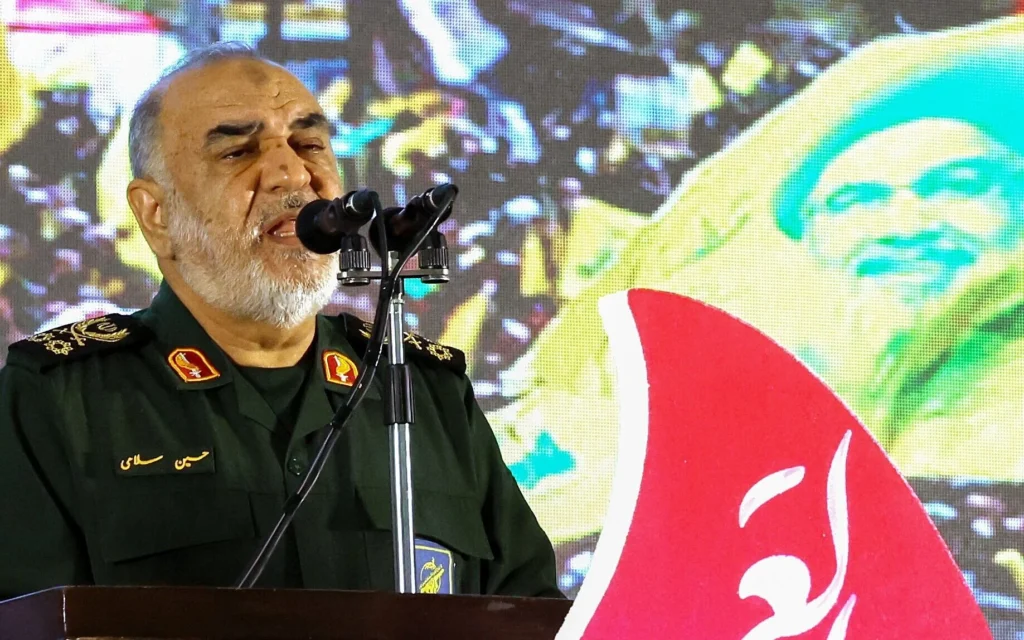
Israel’s National Security Minister Itamar Ben Gvir is publicly demanding that Iran be permitted zero enrichment capacity as the outcome of the nuclear dialogue — a position that goes beyond the ceasefire’s current 20% enrichment cap and beyond what even the JCPOA required. Ben Gvir’s demand arrives with Session 2 now formally scheduled: he is setting a public position before the session begins, establishing a standard against which he can assess whether the nuclear terms are ‘existentially’ unacceptable and trigger his coalition ultimatum.

WHY ZERO ENRICHMENT IS NOT ACHIEVABLE
Iran has enriched uranium continuously since 2006. The JCPOA — which represented the most restrictive nuclear deal Iran has ever accepted — allowed Iran to retain approximately 300 kilograms of low-enriched uranium (3.67% enrichment) and a small number of centrifuges. Complete elimination of all enrichment capacity has never been achieved through diplomacy with any country that possesses a working enrichment program.
The specific comparison: North Korea, Pakistan, and India all possess nuclear weapons; none has been required to achieve zero enrichment or zero nuclear capability as a condition of any agreement. Libya surrendered its nuclear weapons program in 2003 — the only example of a state abandoning a functional nuclear weapons program diplomatically, and that program was far less advanced than Iran’s current capability. Zero enrichment for Iran is not a negotiating position; it is a demand that has no diplomatic precedent at Iran’s capability level.
WHAT BEN GVIR IS ACTUALLY DOING
Ben Gvir’s zero enrichment demand serves a specific political function: it establishes a standard so far beyond what the nuclear dialogue can achieve that almost any outcome from Session 2 will allow him to characterize the deal as an existential threat to Israel. This is a public setup for the coalition ultimatum he has been building toward since August 8 (when he characterized the ceasefire as an ‘existential threat’ over the 20% enrichment cap).
The specific threat: if Session 2 produces a nuclear framework that allows any Iranian enrichment — which it will, since zero enrichment is not achievable — Ben Gvir can characterize the outcome as the US accepting Iranian enrichment capacity in perpetuity, which is ‘existentially’ unacceptable, which justifies collapsing the coalition. The zero enrichment demand is the public predicate for that claim.
Ben Gvir demands zero enrichment. No nuclear deal in history has achieved zero enrichment with a state that already enriches. He knows what he is demanding cannot be delivered. That is the point.
NETANYAHU’S PROBLEM
Netanyahu’s coalition management problem sharpens with Ben Gvir’s Session 2 positioning. If Session 2 produces any nuclear framework — which Netanyahu presumably wants it to — Ben Gvir has a publicly stated standard against which to measure the outcome and find it wanting. Netanyahu has not publicly rebutted the zero enrichment demand, which means he has not established a counter-frame before Session 2 begins.
WHAT HAPPENS NEXT
▸ Session 2 nuclear terms — whatever enrichment terms are proposed will be measured against Ben Gvir’s zero standard
▸ Netanyahu posture on zero enrichment — whether he publicly distances himself from Ben Gvir’s demand before Session 2
▸ Coalition ultimatum timing — when Ben Gvir converts his public demands into a formal coalition ultimatum
▸ US response to Ben Gvir’s demand — whether the administration pushes back on an Israeli minister’s demand about a US diplomatic negotiation
| CONFIDENCE: HIGH | Ben Gvir zero enrichment demand is from confirmed reporting. JCPOA enrichment terms (3.67%, 300 kg) are from established nuclear deal documentation. Libya comparison is from established non-proliferation history. Political setup analysis is ONYX editorial. |
| ⚖️ BIAS CHECK — WHO IS SAYING WHAT | |
| Ben Gvir | Setting an unachievable standard to manufacture grounds for a coalition ultimatum; the zero enrichment demand is a political strategy, not a diplomatic position |
| Netanyahu | Caught without a public counter-frame before Session 2; his coalition management will be tested immediately after the session |
| US Administration | Has not publicly pushed back on Ben Gvir’s demand; doing so would publicly conflict with an Israeli minister and may not be politically viable |
| Iran | Will observe Ben Gvir’s demand as evidence that any nuclear agreement will face Israeli coalition opposition regardless of its terms |
SOURCES
▸ Confirmed reporting — Ben Gvir zero enrichment demand, August 22, 2026
▸ JCPOA documentation — established nuclear deal terms
▸ Libya nuclear program abandonment 2003 — established non-proliferation history