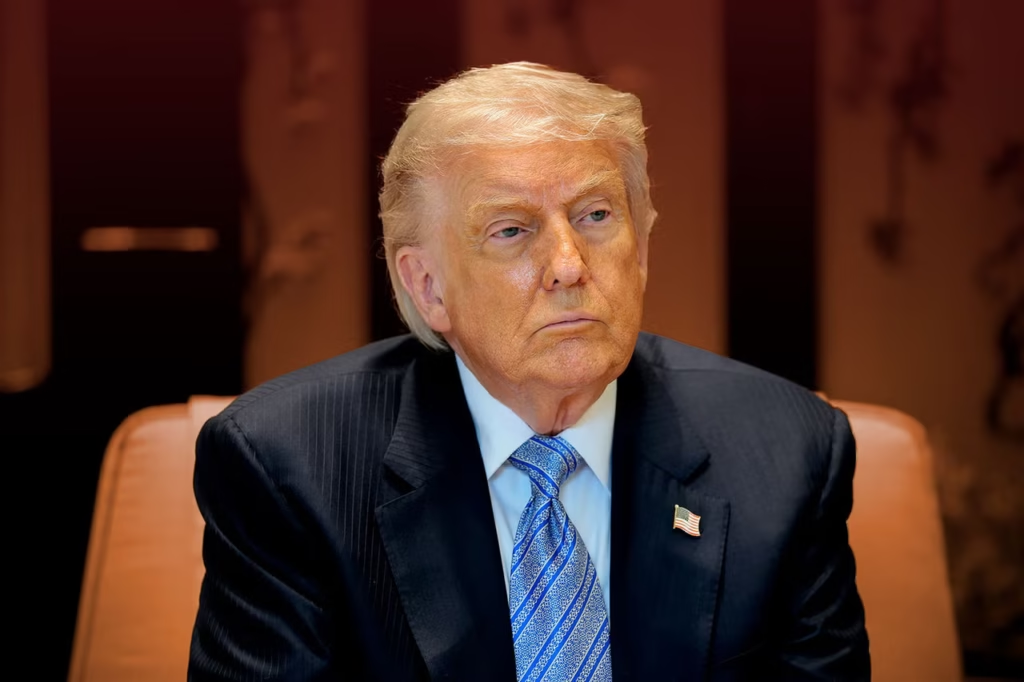
Trump’s second-term tariff strategy is running simultaneous pressure campaigns against major allies — Japan, South Korea, and the European Union — with a documented pattern: announce large tariffs; allow tension to build; reach a deal at the deadline; claim victory. The Canada two-hours-before-implementation deal (ONYX August 20 Section A Story 3) is one entry in this pattern. Japan, South Korea, and the EU are each at different points in the same cycle. According to NPR’s analysis, the pattern’s core question is whether the deals reached are producing genuine structural changes in trade relationships or whether they are largely ceremonial agreements that relieve bilateral tension without addressing the underlying trade imbalances Trump claims to be correcting.
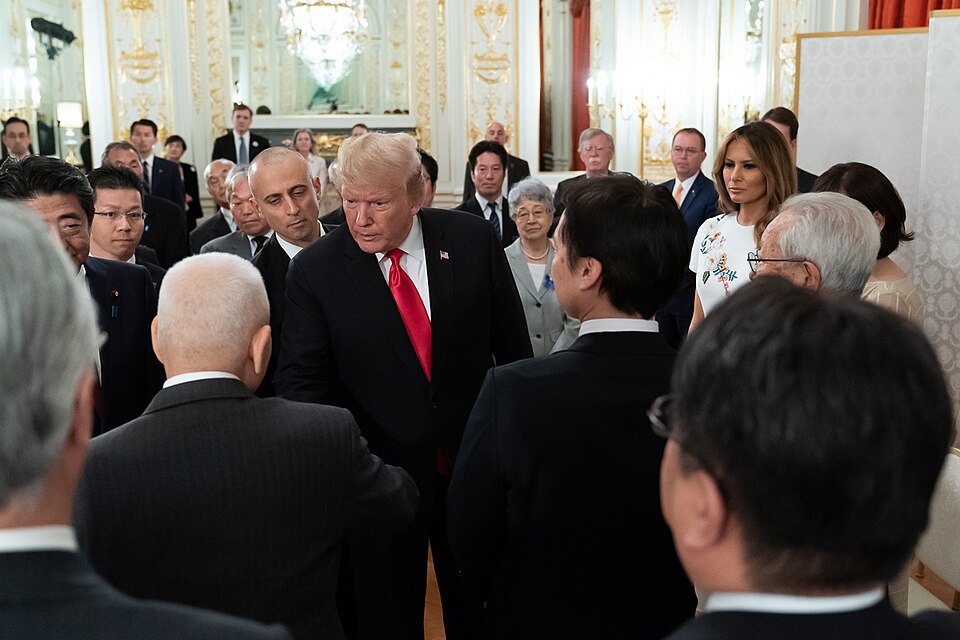
THE THREE SIMULTANEOUS TRACKS
Each major economy is at a different point in the tariff pressure cycle:
▸ Japan: tariff threat active; Japan’s trade surplus with the US — approximately $70 billion annually — is the specific target; Japan is offering increased US agricultural and energy purchases as concessions; a deal framework is in late-stage negotiation
▸ South Korea: tariff threat active in the context of the broader alliance stress (drill reduction, August 18 coverage); South Korea’s President Lee’s ‘baffled and concerned’ statement (August 19) adds a political dimension that complicates the trade negotiation
▸ European Union: a 20% tariff remains in place on EU goods; the EU has offered retaliatory countermeasures that have not been implemented pending negotiation; a deal framework is being discussed at the technical level without a political breakthrough
THE CANADA PRECEDENT — WHAT THE PLAYBOOK PRODUCES
ONYX’s August 20 Canada coverage established the specific pattern: two hours before implementation, a deal is reached. The specific terms of that Canada deal — what Canada conceded and what the US received — are the standard against which the Japan, South Korea, and EU deals should be measured. A deal that produces a press conference and relieves tension without structural change is not the same as a deal that actually modifies the trade relationship.
The specific criticism that NPR’s analysis raises: if every tariff threat produces a last-minute deal that claims victory, the tariffs function primarily as political theater rather than as trade policy instruments. The bilateral trade deficits that motivate the tariff threats — Japan’s $70 billion, South Korea’s $45 billion, the EU’s $200+ billion — are structural features of the respective economies that cannot be corrected by bilateral deals. Changing them requires either US manufacturing expansion or foreign consumer preference shifts that no tariff deal produces.
THE SOUTH KOREA ALLIANCE COMPLICATION
South Korea’s tariff negotiation is uniquely complicated by the simultaneous alliance stress from the drill reduction. President Lee cannot accept trade concessions that look like capitulation in the same week he is publicly expressing bafflement about the drill reduction. His domestic political position requires him to be seen as resisting US pressure on both dimensions — trade and security — simultaneously. The tariff negotiation and the alliance tension are being processed by the same set of Korean political actors who must manage both.
The same playbook, running simultaneously on Japan, South Korea, and the EU. Announce tariff. Build tension. Last-minute deal. Claim victory. The question is whether the deals are producing anything different from the claims.
THE EU’S SPECIFIC VULNERABILITY
The EU’s trade relationship with the US is qualitatively different from the Japan and South Korea relationships: the EU is not a military treaty ally with the same dependence on US security guarantees. This gives the EU more freedom to retaliate without the same political cost. However, the EU’s internal divisions — between export-dependent Germany, which favors a deal, and France, which favors retaliation, and smaller states with different trade exposures — have historically prevented the EU from presenting a unified negotiating position.
WHAT HAPPENS NEXT
▸ Japan deal timing — appears closest to resolution; watch for a framework announcement
▸ South Korea — tariff negotiation entangled with alliance stress; Lee’s domestic political constraints are the limiting factor
▸ EU — whether French retaliation pressure or German deal-seeking wins the internal EU debate
▸ Pattern assessment — the actual terms of each deal, when announced, will determine whether the playbook is producing structural change or ceremonial agreements
| CONFIDENCE: HIGH | Simultaneous tariff tracks on Japan, South Korea, and EU and NPR analysis of the pattern are from confirmed NPR reporting. Specific deficit figures (Japan ~$70B, South Korea ~$45B, EU $200B+) are from established trade data. South Korea alliance complication is from ONYX August 18-19 documentation. |
| ⚖️ BIAS CHECK — WHO IS SAYING WHAT | |
| Trump Administration | Claims each deal as a victory; the pattern requires the deal to look good domestically regardless of structural content |
| Japan | Offering agricultural and energy purchase commitments that improve the headline numbers without structural change; has long experience navigating US trade pressure |
| South Korea | Navigating simultaneous trade and alliance pressure in a political context where both must be managed; Lee’s domestic position constrains his flexibility |
| European Union | Most internally divided; Germany and France want different outcomes; internal division weakens the EU’s negotiating position |
| Trade Economists | Largely skeptical that bilateral deals correct structural trade imbalances; the pattern analysis is consistent with their assessment |
SOURCES
▸ NPR — Trump tariff pattern analysis, Japan, South Korea, EU tracks, August 23, 2026
▸ ONYX August 20 Section A Story 3 — Canada tariff two-hour deal context
Q: Can bilateral deals actually fix trade deficits?
A: Trade economists generally say no. Trade deficits reflect macroeconomic factors — the relative saving and investment rates of the two countries, exchange rates, and comparative advantage — rather than unfair trade practices that tariffs can correct. A bilateral deal that gets Japan to buy more US soybeans doesn’t change the structural factors producing the deficit. The academic consensus is that bilateral trade deficits are not the right metric for assessing trade relationships.
Q: What has South Korea specifically been asked to concede?
A: Not detailed in available reporting. The South Korea tariff negotiation involves general demands for reduced trade barriers and increased US import purchasing, similar to the Japan track. The specific asks and South Korea’s specific responses are in technical-level negotiations not yet publicly disclosed.