
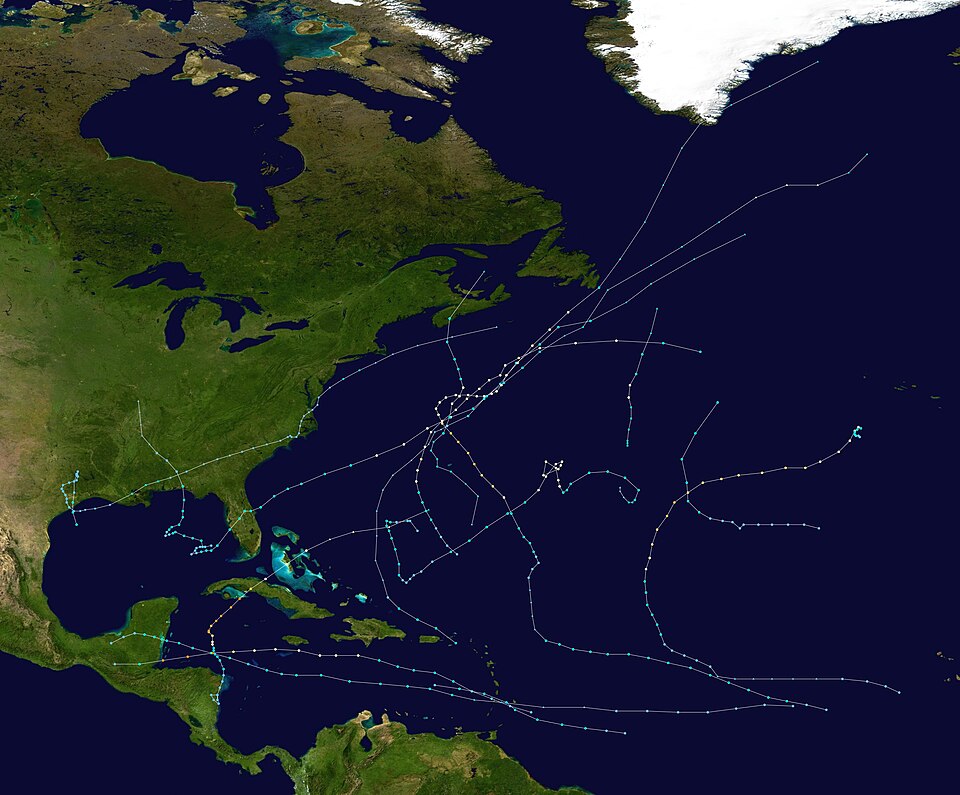
The Atlantic hurricane season reaches its statistical peak around September 10 — approximately 18 days from today. In 2026, the peak arrives in a specific context that makes it more consequential than an average peak: FEMA’s Disaster Relief Fund is already depleted (documented in ONYX August 15 coverage); multiple simultaneous disaster responses are ongoing (Indiana flooding, Hawaii’s Tropical Storm Lala, and Colombia’s earthquake have all drawn on emergency resources); and the pre-season forecasts called for an above-normal hurricane season. ONYX covers what makes this peak period specifically concerning.
THE FEMA FUND DIMENSION
ONYX documented on August 15 that FEMA’s Disaster Relief Fund was depleted following Hurricane Helene’s demands from the prior year. The fund has been partially replenished through Congressional supplemental appropriations, but at levels below what an above-normal hurricane season requires. The specific concern: if a major hurricane — Category 3 or higher — makes landfall in a densely populated coastal area during the September peak, FEMA’s individual assistance program may face funding constraints that limit its ability to respond at the scale needed.
The simultaneous disasters context: Indiana’s flooding and Hawaii’s storm have both drawn on FEMA resources. Colombia’s earthquake has drawn on international humanitarian resources. The resource pool available for a major hurricane response is smaller than it would be in a year without simultaneous major disasters.
THE 2026 SEASON’S ABOVE-NORMAL FORECAST
Pre-season forecasts for 2026 from NOAA and Colorado State University called for an above-normal Atlantic hurricane season. The specific factors driving the above-normal forecast:
▸ Sea surface temperatures: the Atlantic’s main development region has been running at above-average temperatures, providing the thermal energy that fuels tropical development
▸ La Niña conditions: La Niña reduces Atlantic wind shear — the vertical wind difference that tears apart developing storms — making it easier for tropical systems to intensify
▸ Reduced African dust: Saharan dust that typically inhibits Atlantic tropical development has been reduced in 2026, creating cleaner atmospheric conditions for storm development
THE MOST VULNERABLE COASTLINES
Peak hurricane season activity concentrates along specific geographic tracks that most commonly produce landfalls:
▸ Gulf Coast: Texas, Louisiana, Mississippi, Alabama, and the Florida panhandle face the highest landfall probability during peak season
▸ Florida Atlantic coast: the Cape Canaveral-to-Miami corridor is exposed to classical Cape Verde storms tracking across the Atlantic
▸ Carolinas and Mid-Atlantic: major hurricanes can track northward along the Atlantic coast, as Florence (2018) and Dorian (2019) demonstrated
▸ New England: rare but not unprecedented; late-season storms can track northward
THE IRAN WAR INDIRECT CONNECTION
The Iran war has an indirect connection to hurricane season response capacity: the war’s economic costs depleted FEMA’s DRF (through the Congressional spending that funded war operations while domestic disaster funding competed for the same appropriations); the National Guard deployments that support hurricane response include units that were involved in Iran war-related homeland security operations; and the $40 trillion debt (ONYX August 21) means any emergency supplemental appropriation for hurricane disaster response adds to an already-strained fiscal situation. The connection is indirect but documented.
The peak is 18 days away. FEMA’s fund is depleted. The forecast is above normal. Three facts that are individually familiar but together describe a specific risk that 2026’s hurricane season has not resolved.
WHAT HAPPENS NEXT
▸ September 10 statistical peak — 18 days away; the highest-probability period for major hurricane development and landfall
▸ NOAA active storm monitoring — any tropical development in the Atlantic maintrack will be tracked by the National Hurricane Center
▸ Congressional emergency appropriation — if a major hurricane requires FEMA resources beyond current DRF capacity, Congress will need to act; given the debt ceiling context, this creates a legislative complication
▸ ONYX will cover any major tropical development as it occurs
| CONFIDENCE: HIGH | Above-normal 2026 hurricane season forecast is from NOAA and Colorado State University (established pre-season). FEMA DRF depletion is from ONYX August 15 documentation. September 10 peak date is from NOAA established climatology. Sea surface temperatures, La Niña, and reduced African dust are from established meteorological documentation. |
| ⚖️ BIAS CHECK — WHO IS SAYING WHAT | |
| NOAA / NHC | Providing objective meteorological forecasting; their above-normal forecast is based on established climatological factors |
| FEMA | Managing response capacity with a depleted DRF; will not publicly characterize its capacity as inadequate to avoid undermining public confidence |
| Coastal State Governments | Watching the above-normal forecast and FEMA capacity with specific concern; their evacuation planning depends on federal resource availability |
| Congress | Will face pressure for emergency appropriations if a major hurricane strikes; debt ceiling and deficit concerns create political friction |
SOURCES
▸ NOAA — 2026 Atlantic hurricane season forecast and September 10 peak climatology
▸ Colorado State University — seasonal hurricane forecast (established)
▸ ONYX August 15 — FEMA DRF depletion documentation
Q: How does September 10 work as the “peak”?
A: The Atlantic hurricane season runs from June 1 to November 30. Activity is measured by the number and intensity of named storms over the long historical record. September 10 is the date with the highest historical probability of an active named storm being present somewhere in the Atlantic basin. Activity remains elevated through mid-October.
Q: What would a major landfall cost FEMA?
A: A major hurricane affecting a densely populated area typically requires FEMA individual assistance payouts in the range of $10-50 billion depending on the population affected, the storm intensity, and the extent of flooding. Hurricane Katrina cost approximately $125 billion in total damages. The current DRF is not sized to handle a Katrina-scale event.