King Harald V of Norway died Friday at 89 at Oslo’s National Hospital, according to the Associated Press. He was Europe’s oldest reigning monarch. His death triggered the immediate, automatic succession of his son as King Haakon VIII. Norwegian Prime Minister Jonas Gahr Støre said ‘a whole nation is in mourning,’ crediting Harald with helping Norwegians ‘see the best in ourselves — and in one another’ across more than three decades on the throne.
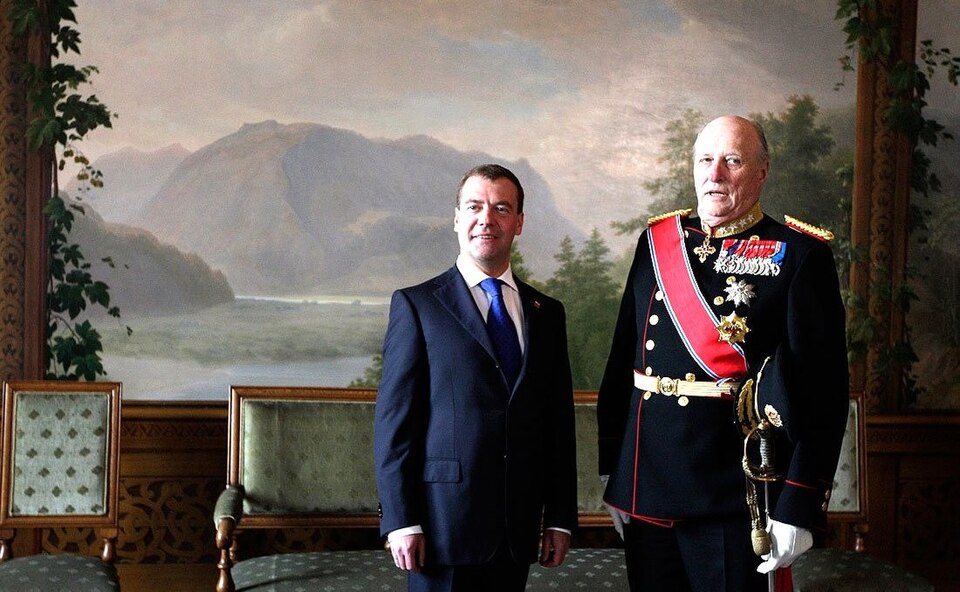
THE LIFE — FROM EXILE TO THRONE
The specific arc of Harald V’s life deserves its full telling:
▸ Born February 21, 1937 in Oslo — the first Norwegian-born prince since 1370
▸ Age 3: Nazi Germany occupied Norway on April 9, 1940; Harald fled with his mother, Princess Märtha, into exile in the United States
▸ During the war years: the Norwegian royal family’s American exile included extended stays as guests at the White House; President Roosevelt and the royal family developed a close wartime relationship
▸ Age 6: performed his first official royal duty — christening Norwegian warplanes at a base in Canada
▸ June 1945: the family returned to a liberated Norway; Harald was 8 years old
▸ The marriage decision: Harald refused a string of eligible European noblewomen and waited nine years to be allowed to marry Sonja Haraldsen, a commoner — the woman he loved
▸ January 17, 1991: became King of Norway on the death of his father, King Olav V
▸ 35 years on the throne: oversaw Norway’s transformation from a prosperous nation to one of the wealthiest per capita in the world, driven by North Sea oil and gas
▸ August 29, 2026: died at 89 in Oslo
THE NAZI EXILE — WHY IT MATTERS
Harald’s childhood exile is the biographical fact that most directly connects his personal life to the 20th century’s central event. A 3-year-old Norwegian prince fleeing Nazi occupation; years as a wartime guest at the White House; a father (Crown Prince Olav) who worked with Allied forces from London while the family was in Washington; and a return home at age 8 to a country rebuilding from occupation. The king who died at 89 was the same child who christened warplanes in Canada at 6.
THE MARRIAGE — THE MODERNIZING BREAK
Harald’s decision to wait nine years rather than accept a ‘suitable’ royal or aristocratic match — and ultimately to marry Sonja Haraldsen, the daughter of a clothing merchant, as a commoner — was the specific personal act that modernized the Norwegian monarchy’s public identity. When the Norwegian Parliament finally approved the marriage in 1968, it was a specific, documented cultural shift in how Norwegians related to their royal house. He was 31 when they married; he had waited since his early 20s.
THE THREE-DECADE REIGN
Harald’s reign from 1991 to 2026 coincided with Norway’s North Sea oil wealth transforming the country from a prosperous Scandinavian economy into one of the world’s highest per-capita-income nations and the possessor of the world’s largest sovereign wealth fund. He presided over a country that grew dramatically in global economic standing while largely avoiding the political turbulence that characterized the same period in most Western democracies. The constitutional monarch’s specific role — symbolic, unifying, politically neutral — was particularly suited to overseeing prosperity without controversy.
“A whole nation is in mourning.”
— Norwegian Prime Minister Jonas Gahr Støre
THE SUCCESSION
King Harald’s death triggered immediate, automatic succession under Norwegian constitutional law: his son, formerly Crown Prince Haakon, became King Haakon VIII at the moment of his father’s death. No ceremony is required to establish the legal succession; the constitution provides continuity without interruption. Haakon, 53, has been the Crown Prince since 1991 and has taken on an increasing share of official duties as his father’s health declined.
WHAT HAPPENS NEXT
▸ State funeral — Norway will hold a formal state funeral; the specific date and format are to be announced
▸ Palace Square mourning — flowers and flags are accumulating at the Royal Palace in Oslo; public mourning is documented
▸ King Haakon VIII’s transition — the new king assumes his father’s official duties immediately; no formal coronation is required
▸ International condolences — European royal families and heads of state are offering formal condolences
| CONFIDENCE: HIGH | King Harald V death Friday at 89, Oslo National Hospital, Europe’s oldest reigning monarch, PM Støre quote, immediate succession of son as King Haakon VIII, are from Associated Press confirmed reporting. Biographical details (1937 birth, 1940 exile, White House, 1991 succession) are from AP obituary confirmed documentation. |
| ⚖️ BIAS CHECK — WHO IS SAYING WHAT | |
| Norwegian Prime Minister Støre | Expressing national mourning; his characterization reflects the genuine public response documented in Oslo |
| Norwegian Public | Laying flowers at Palace Square; the public mourning is documented through AP photography and reporting |
| Associated Press | Obituary coverage is AP’s primary genre strength; the biographical detail on Harald’s life is AP-confirmed and thorough |
| ONYX | Covering the death at the full historical weight the life requires; the Nazi exile and White House years are the editorial center because they connect the personal life to historical events of global significance |
SOURCES
▸ Associated Press — King Harald V death, succession, biography, August 29, 2026
Q: How old is Norway’s monarchy?
A: The Norwegian monarchy traces its origins to the Viking Age. The modern constitutional monarchy was reestablished in 1905 when Norway peacefully separated from Sweden after a 91-year union, and the Danish Prince Carl was elected King of Norway by referendum, taking the name Haakon VII. Harald V was the third king of the modern Norwegian monarchy.
Q: Who is King Haakon VIII?
A: King Haakon VIII (born 1973) is Harald V’s son and the new King of Norway. Like his father, he married a commoner — Métte-Marit Tørn, who had a child from a previous relationship, in a marriage that was itself considered a modernizing break for the Norwegian royal house. He has served as Crown Prince since 1991, when his father became king.
Q: What is the Norwegian monarch’s role?
A: Norway is a constitutional monarchy; the king’s role is primarily ceremonial and symbolic. Governing power rests entirely with the elected Storting (parliament) and the prime minister. The king formally appoints the government and reads the annual Speech from the Throne, but cannot exercise independent political authority. His constitutional role is to represent national unity and continuity.