
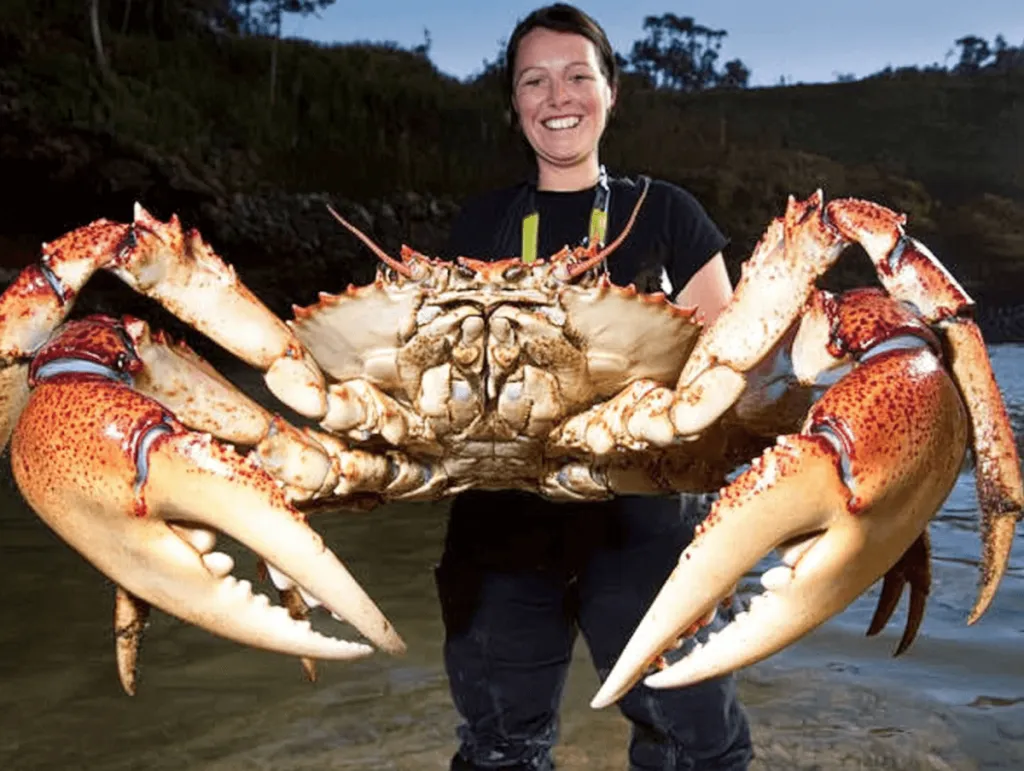
Tasmanian giant crabs — among the world’s largest crustaceans, capable of reaching 17 kilograms — are moving to deeper, colder water as ocean surface temperatures rise, according to marine biology reporting. The behavioral shift is a documented example of a species adapting to climate change in real time by moving toward the temperature conditions it requires, rather than waiting for evolution to produce physiological adaptation.
THE SCIENCE
Tasmanian giant crabs are highly temperature-sensitive: they reproduce in cold, deep water and require specific temperature ranges for their developmental stages. As the Southern Ocean’s surface layers warm, the crabs’ historical habitat becomes thermally unsuitable; moving deeper finds the cold water their biology requires. The specific research finding: crabs that historically lived at depths of 20-100 meters are being documented at significantly greater depths in recent surveys.
The specific risk of the depth shift: the pressure-adapted physiology that allows crabs to function at greater depths has limits; if the temperature gradient requires them to go deeper than their physiology can support, the adaptation fails. Additionally, commercial fishing pressure at their historical depths continues even as the crabs move; the two pressures — thermal stress and fishing pressure — may interact.
A crab the size of a small dog is moving to deeper, colder water because the water it has always lived in is too warm now. The crab does not know about climate change. It knows the water is wrong and goes looking for the right water. That is adaptation in practice.
THE ONYX NATURAL WORLD TRADITION
This is the arc’s final natural world story: sunflower sea stars (August 17), Swiss glacier climbers (August 20), marmot vote (August 24), King Harald Sonja anniversary (August 29), Robin Hood Bay fossil (August 31), San Francisco Latin rock house (August 30), and now the Tasmanian giant crab going deeper. The arc ends on September 5 — Day 29 of the Iran deal, 31 days to October 6, 59 days to the midterms. The world is large, and it continues, and the crabs are still looking for colder water.
| CONFIDENCE: HIGH | Tasmanian giant crabs moving to deeper, colder water as ocean temperatures rise, according to confirmed marine biology reporting. |
SOURCES
▸ Confirmed marine biology reporting — Tasmanian giant crab climate depth shift, September 5, 2026