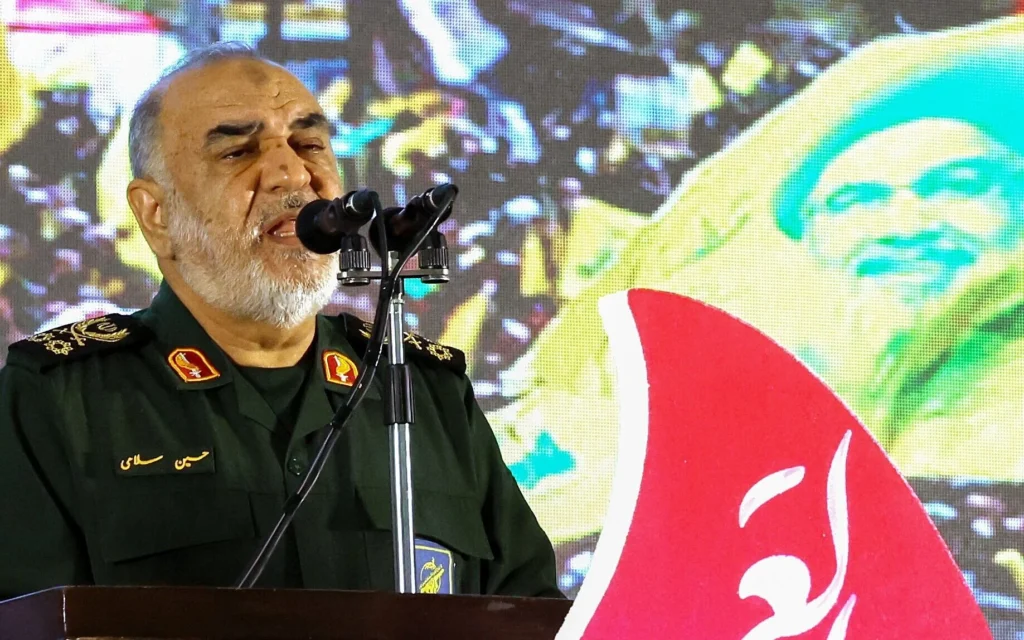
The Deir ez-Zor strike establishes a specific exchange architecture for the remaining thirty days:
▸ US strikes IRGC positions (Larak Island, August 31) — IRGC retaliates against US military facilities (Deir ez-Zor, September 6) — US must decide whether to retaliate for the retaliation
▸ If US retaliates for Deir ez-Zor: IRGC will vow another response; the cycle continues; each exchange produces military escalation while the October 6 diplomatic window narrows
▸ If the US absorbs Deir ez-Zor: the IRGC learns that direct strikes on US military facilities are survivable within the ceasefire framework; the cost-benefit of future IRGC strikes shifts
▸ Neither path is easy: both retaliating and absorbing create specific risks that constrain the space for the diplomatic track
THE THREE-TRACK SIMULTANEOUS REALITY
Day 30 is operating on three tracks simultaneously, in a way that is historically unusual even for this conflict:
▸ Military track: the US and Iran are actively exchanging strikes (Larak Island on Day 24, Deir ez-Zor on Day 30); each strike produces its own escalation pressure
▸ Diplomatic track: Muscat nuclear dialogue sessions have occurred twice; Session 3 status is unknown; Araghchi is maintaining the diplomatic channel even as the military exchange escalates
▸ Civilian casualty accountability track: Kuhestak (Day 26) produced named dead children with no US investigation; the Minab school preliminary US assessment exists but has not been publicly released; the accountability gap is widening as the diplomatic track narrows
These three tracks are not separate; they are the same conflict viewed through different lenses. The Deir ez-Zor strike is a military event that directly affects the diplomatic track (making extension harder) and connects to the civilian accountability track (Iran frames all military escalation, including Deir ez-Zor, in the context of the chain of atrocities, including Kuhestak).
THE CEASEFIRE’S SPECIFIC RESILIENCE
The ceasefire has now survived:
▸ The White House no-extension signal (August 26)
▸ Trump’s ‘surrender’ demand (August 26)
▸ Operation Economic Outcast launch (August 27)
▸ The Barron Trump death threat from Iranian state media (August 27)
▸ Session 2 producing ‘won’t capitulate’ (August 31)
▸ The Larak Island US strike (August 31)
▸ The Kuhestak wedding strike and war crimes accusation (September 2-4)
▸ The Deir ez-Zor IRGC ballistic missile strike (September 6)
The ceasefire has survived all of these because neither side has yet done the specific thing that would formally collapse it: Iran has not closed Hormuz, reinstated maritime tolls, or suspended the IAEA inspection regime; the US has not formally exited the ceasefire framework. The deal’s operational core — Hormuz open, IAEA monitoring, 20% enrichment cap — remains intact on Day 30 despite the surrounding military exchange.
THE SPECIFIC QUESTION THE NEXT THIRTY DAYS MUST ANSWER
ONYX has documented the question since Day 1: can both sides maintain the ceasefire’s operational core through October 6 while the political conditions for extension are simultaneously deteriorating? Day 30’s Deir ez-Zor strike makes the question more acute. The political conditions for extension have been harmed by: Kuhestak (no US accountability); the no-extension signal (US posture unchanged); Araghchi’s ‘won’t capitulate’ (Iran domestic constraints locked in); and now Deir ez-Zor (active military exchange between the two parties who are supposed to be negotiating an extension).
The deal is still running. The IRGC just struck a US military base. Both things are true. The ceasefire has survived every escalation in thirty days. The question is whether it can survive thirty more, and whether anyone on either side is willing to negotiate the extension that would make the survival count.
THE US RESPONSE DECISION WINDOW
The US must decide in the next 24-72 hours whether to respond militarily to the Deir ez-Zor strike. This decision is specifically consequential for the October 6 window:
▸ Respond militarily: the IRGC will treat US retaliation as triggering its own retaliation vow; the exchange cycle continues into the October 6 window; diplomatic space contracts
▸ Absorb without response: sets a precedent that direct IRGC strikes on US military facilities are survivable; may buy space for the diplomatic track but reduces the deterrence that has prevented even more escalatory IRGC actions
▸ Respond diplomatically: issue a formal protest through the ceasefire’s Omani channel; demand accountability; and connect the diplomatic response to the Kuhestak accountability question that Iran has raised; this is the path that connects military and diplomatic tracks most directly
WHAT HAPPENS NEXT
▸ US response decision — military, diplomatic, or absorbed; the next 72 hours
▸ IRGC follow-on posture — whether the Deir ez-Zor strike is the complete retaliation for Larak or the first of multiple
▸ Session 3 possibility — whether the Deir ez-Zor exchange eliminates or merely complicates a third session
▸ October 6 — thirty days
| CONFIDENCE: HIGH | IRGC ballistic missile strike Deir ez-Zor Syria, Iran state media retaliation confirmation, ceasefire operational survival on Day 30 from Section A Story 7 confirmed reporting. Three-track analysis and US response options are ONYX editorial clearly labeled. |
| ⚖️ BIAS CHECK — WHO IS SAYING WHAT | |
| IRGC / Iran | Followed through on retaliation vow; chose calibrated proportional target; maintains diplomatic channel simultaneously |
| US Military / Administration | Must decide on response without a clear good option; each response path has specific costs for the diplomatic track |
| Ceasefire framework | Is more durable than the daily escalation suggests; its operational core has survived 30 days of surrounding conflict |
| Oman / Muscat channel | Is the specific diplomatic venue through which any US-Iran communication about Deir ez-Zor would occur; its availability is itself the ceasefire’s most valuable hidden asset |
| ONYX | Covering the geopolitical architecture without predicting the specific US response; the decision belongs to actors, not analysts |
SOURCES
▸ Confirmed reporting — IRGC Deir ez-Zor Syria retaliation, September 6, 2026
▸ ONYX August 7 – September 6 — 30-day cumulative documentation
Q: Has the ceasefire ever been this close to collapsing?
A: The ceasefire has been under acute pressure multiple times: the White House no-extension signal (August 26) was ONYX’s most alarming single signal; the Kuhestak war crimes accusation (September 2-4) materially changed Iran’s domestic political constraints for extension. The Deir ez-Zor strike is different in kind from the previous pressure points: it is the first direct IRGC-confirmed ballistic missile strike on a US military facility since the ceasefire began. Whether that represents a qualitative escalation that makes October 6 extension impossible, or whether it is a calibrated retaliation that both sides can manage within the ceasefire framework, is the specific question the next 72 hours will begin to answer.
Q: What is the Muscat channel and why does it matter now?
A: The Muscat channel is the Omani-mediated diplomatic track through which both Sessions 1 and 2 were conducted. Oman has historically maintained relations with both the US and Iran, making it the specific intermediary that both sides trust enough to use. After the Deir ez-Zor strike, the Muscat channel is the specific mechanism through which any de-escalation signal, US diplomatic response, or Session 3 scheduling would occur. Its continued availability is the ceasefire’s most important hidden asset; if Oman is willing to continue facilitating, the diplomatic track remains open despite the military exchange.
Q: Could Deir ez-Zor actually help the diplomatic track?
A: Counterintuitively, possibly. Iran’s “response and punishment” vow has now been fulfilled; Araghchi can tell Iranian hardliners that the IRGC delivered consequences for Larak without collapsing the ceasefire. If the US does not escalate in response to Deir ez-Zor, the IRGC’s action may have created political space for Araghchi to return to the diplomatic track: “we responded; the ceasefire held; now we negotiate.” This interpretation requires the US to absorb the strike without military retaliation — a significant political cost domestically. But it is the specific path through which Deir ez-Zor could paradoxically improve rather than worsen the extension prospects.