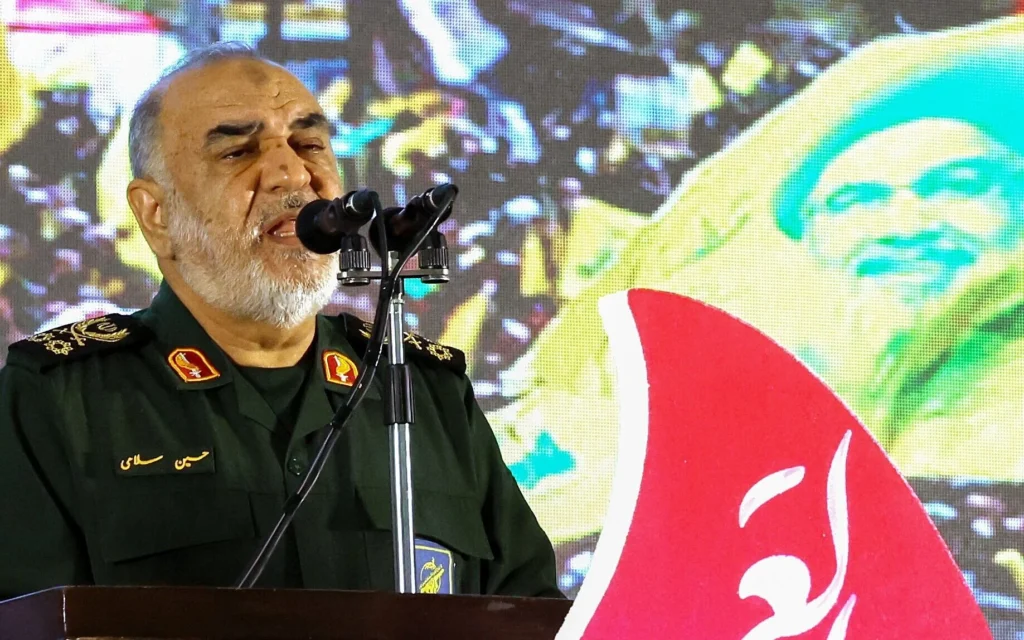
AP photography from Bandar Abbas, Iran shows a swimmer in the water near shore as a motorboat passes, with commercial vessels anchored in the Strait of Hormuz visible behind them. The image was taken this week — the same week Iran and the US traded strikes, Iran fired on Kuwait, and the IRGC launched ballistic missiles at a US military base in Syria. The people in the water are not generals or diplomats. They are people who live in Bandar Abbas.
WHAT BANDAR ABBAS IS
Bandar Abbas is the capital of Hormozgan Province in southern Iran, on the northern coast of the Strait of Hormuz. It is a port city of approximately 500,000-600,000 people. It is the headquarters of Iran’s Islamic Revolutionary Guard Corps Navy — the specific IRGC branch that controls Hormuz, that has placed sea mines, that fired on commercial vessels, and that the US has struck at Larak Island and other positions.
The people of Bandar Abbas live in a city whose governing military force is at the center of an active war. They also swim in the strait their city borders. Both things are true simultaneously.
WHAT THE IMAGE CONTAINS
The specific elements that make the AP photograph analytically significant:
▸ A swimmer: a human being in water, in a bathing posture, engaging in leisure
▸ A motorboat: an ordinary small craft, civilian, passing
▸ Commercial vessels: the large ships anchored in the background are commercial cargo vessels — the specific type of shipping that the Hormuz ceasefire was designed to protect; 70-80 of them transit the strait every day the deal holds
▸ The water: the Strait of Hormuz itself — the water that is simultaneously a swimming spot for Bandar Abbas residents and one of the most contested waterways on Earth
THE HUMAN GEOGRAPHY OF THIS WAR
ONYX has covered the Iran war primarily from the strategic, diplomatic, and military dimensions: fail modes, enrichment percentages, session counts, ballistic missile trajectories. The AP photograph from Bandar Abbas is a different kind of evidence about the same conflict: it is evidence that the people who live on the edge of the Strait of Hormuz are not abstractions in a war that strategists discuss.
The swimmer in the photograph is not choosing to live through a war. She lives in a city on a strait. The war came to her city’s strait. She swims there anyway. That specific quotidian courage — or necessity, or normalcy, or all three — is the dimension of the war that strategic analysis does not capture.
THE KUHESTAK CONNECTION
Bandar Abbas is in Hormozgan Province. Kuhestak — where Amir Ali Karimi (4) and Mohammad Malahi (16) were killed at a wedding on September 2 — is also in Hormozgan Province. The swimmer in the AP photograph and the wedding in Kuhestak are from the same province, the same people, the same geography. ONYX names this connection because it is a connection: the swimmer is not abstract any more than the children at Kuhestak were abstract.
A swimmer in the Strait of Hormuz. Commercial ships behind her. The IRGC Navy is based in her city. The US has struck positions near her city. A wedding in her province was struck last week and two children died. She is swimming anyway. That is what it means to live in Bandar Abbas in September 2026.
WHAT HAPPENS NEXT
▸ AP continued photography — the ground-level documentation of civilian life in the war zone
▸ Bandar Abbas security — whether civilian populations near IRGC facilities face risk from US counter-strikes
▸ Hormuz civilian life — the specific people for whom the Hormuz framework is not strategic abstraction but the water they swim in
| CONFIDENCE: HIGH | AP photography from Bandar Abbas Iran swimmer commercial vessels Hormuz, this week confirmed. Bandar Abbas geography and IRGC Navy headquarters from established factual record. Kuhestak Hormozgan Province connection is accurate geographic fact. |
| ⚖️ BIAS CHECK — WHO IS SAYING WHAT | |
| AP | Documenting civilian life in conflict zones; their Bandar Abbas photography provides evidence that the war’s geography contains people, not only military assets |
| ONYX | Covering the AP photograph as a specific analytical document about the war’s human geography; connecting it to Kuhestak because the geographic and human connection is accurate and belongs in the arc |
SOURCES
▸ AP — Bandar Abbas Iran swimmer Hormuz commercial vessels photograph, September 7, 2026