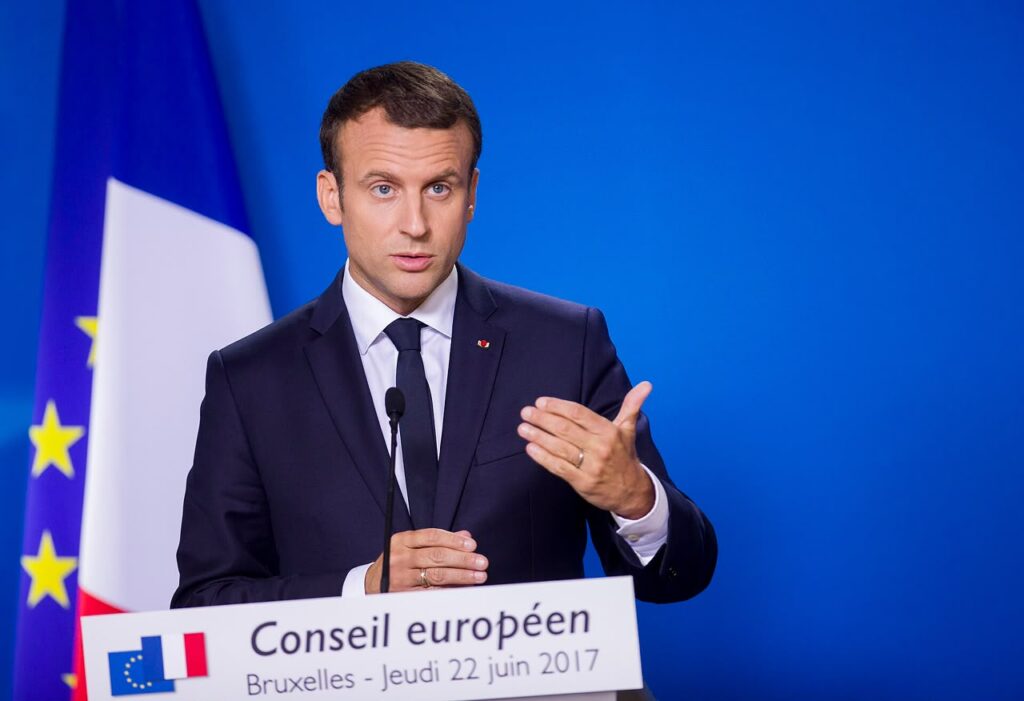
European Commission President Ursula von der Leyen traveled to Nuuk, Greenland for a two-day visit this week and unveiled €200 million in fresh EU investment for the territory. She stated directly and publicly: ‘Greenland’s future is for the people of Greenland and Denmark to decide, no one else… territorial integrity, sovereignty, the inviolability of borders — these are fundamental principles of international law.’
Simultaneously, 11 NATO countries launched ‘Arctic Shield’ military exercises involving approximately 400 personnel in Greenland, explicitly excluding US troops. Von der Leyen also proposed more than doubling long-term EU funding for Greenland to €530 million through 2034.
WHAT VON DER LEYEN’S STATEMENT MEANS
The specific diplomatic significance of the von der Leyen statement: the European Commission President did not say ‘Greenland should remain part of Denmark’ or ‘the EU supports Greenland’s current status.’ She said territorial integrity, sovereignty, and the inviolability of borders are fundamental principles of international law. This is language from the UN Charter and international law’s foundational documents. Applied to Greenland, it means: no country — including the United States — can acquire another country’s territory through coercion, purchase offers, or political pressure.
The specific target of this language requires no specification in the statement. Trump has repeatedly stated his desire to acquire Greenland. The European Commission President traveled to Greenland to state, in international law’s strongest available terms, that this is not how the world works.
THE ARCTIC SHIELD EXERCISES
The concurrent Arctic Shield military exercises are the military dimension of the EU and NATO allies’ Greenland solidarity signal. Eleven NATO countries. Approximately 400 personnel. Special forces training in Arctic conditions. No US troops. The exclusion of US troops from Arctic exercises on a NATO ally’s territory is not an oversight; it is a deliberate signal that NATO allies are conducting Arctic security cooperation in Greenland independent of Washington’s territorial ambitions over the same island.
THE INVESTMENT DIMENSIONS
The €200 million in immediate investment and the proposal to more than double the 2024-2034 EU funding commitment to €530 million represent a specific European strategy for Greenland: make Greenland economically invested in the European relationship before any formal political status change is negotiated. Greenland’s own independence aspirations — Greenland has home rule and has expressed interest in eventual full independence from Denmark — make the EU’s strategy specific: position the EU as Greenland’s economic partner for independence, not a subordinating entity keeping it in European dependency.
THE WORKING GROUP DIMENSION
A working group of US, Danish, and Greenlandic representatives continues meeting on what AP describes as ‘the way forward.’ The simultaneous existence of: von der Leyen’s sovereignty declaration; Arctic Shield exercises excluding the US; and a US-Danish-Greenlandic working group is the specific diplomatic complexity of the Greenland situation in September 2026. Allies are simultaneously conducting military exercises without the US, making sovereignty declarations against US policy, and meeting with the US to discuss future arrangements.
The European Commission President flew to Greenland and said sovereignty is non-negotiable under international law. Eleven NATO allies launched Arctic military exercises without US troops on the same island. The EU pledged €530 million. A working group with the US is still meeting. All of that is happening simultaneously.
GREENLAND’S STRATEGIC VALUE
Understanding why Greenland has become a 2026 geopolitical flashpoint requires understanding what Greenland is:
▸ Geographic position: Greenland sits in the Arctic between North America and Europe; its northern tip is approximately 600 miles from the North Pole; it controls the approaches to the Northwest Passage
▸ Mineral resources: Greenland has documented deposits of rare earth elements, uranium, and other critical minerals; melting ice sheets are making extraction increasingly practical
▸ Strategic military value: Thule Air Base (now Pituffik Space Base) in northwestern Greenland is a critical US Space Force installation; radar systems there provide early warning of ballistic missile launches
▸ Population and politics: 56,000 people, mostly Indigenous Greenlandic, many of whom support independence from Denmark; their self-determination right is the specific legal and moral complication for any external acquisition proposal
WHAT HAPPENS NEXT
▸ Working group outcomes — what the US-Danish-Greenlandic working group produces
▸ Trump administration response — whether von der Leyen’s sovereignty declaration produces US countermeasures
▸ EU-Greenland formalization — whether the €530 million proposal is formally adopted
▸ Greenlandic self-determination — whether Greenland’s own government moves toward independence amid the intensified international attention
| CONFIDENCE: HIGH | Von der Leyen €200 million Greenland investment, Nuuk visit, sovereignty territorial integrity statement, Arctic Shield 11 NATO countries 400 personnel no US troops, €530 million 2024-2034 proposal, working group US Danish Greenlandic are from AP and ABC News confirmed reporting. |
| ⚖️ BIAS CHECK — WHO IS SAYING WHAT | |
| EU / von der Leyen | Conducting a direct, high-profile rebuttal of US Greenland ambitions using international law language; the EU has strategic interests in Greenland’s minerals and Arctic routes that align with its sovereignty defense |
| Trump administration | Has stated desire to acquire Greenland repeatedly; the EU visit is a direct counter to that stated desire; the US has not formally responded to the von der Leyen statement |
| Denmark | Maintaining a dual track: welcoming EU solidarity while also wanting to preserve the US security relationship; the Danish FM’s simultaneous desire to work with the US on defense is genuine, not contradictory |
| Greenlandic government | The specific beneficiary and the specific people whose self-determination is at stake; their interests are not simply those of Denmark or the EU |
| ONYX | Covering the Greenland sovereignty story at its full geopolitical weight; this is the arc’s first comprehensive treatment of the Greenland dimension |
SOURCES
▸ AP — EU von der Leyen Greenland €200 million sovereignty Arctic Shield, September 8, 2026
Q: What is Greenland’s legal status?
A: Greenland is an autonomous territory within the Kingdom of Denmark. It has had home rule since 1979 and “self-rule” since 2009, giving it control over most of its domestic affairs. However, Denmark retains control over foreign policy and defense. The Act on Greenland Self-Government provides that Greenland can become fully independent if its people vote for independence and if the economic viability of an independent Greenland is established. Greenland’s government (Naalakkersuisut) has expressed interest in independence, but the economic dependence on Danish subsidies (approximately $500 million annually) complicates the timeline.
Q: Can the US purchase Greenland?
A: No, under current international law and Greenlandic self-governance rights. The US previously purchased Denmark’s Virgin Islands in 1917 from a Denmark that had full sovereignty over those islands. Greenland’s situation is different: Greenland has home rule and self-determination rights under international law; any change in Greenland’s status requires the consent of Greenland’s own government and people. Denmark cannot sell Greenland without Greenland’s consent; the US cannot purchase what Denmark cannot sell. Trump’s acquisition proposals bypass this legal reality, which is why von der Leyens language about territorial integrity and sovereignty is specifically responsive to the US position.
Q: What is Pituffik Space Base (formerly Thule Air Base)?
A: Pituffik Space Base is the US military’s northernmost installation, located in northwestern Greenland approximately 750 miles north of the Arctic Circle. It hosts US Space Force radar and space surveillance assets that provide early warning of ballistic missile launches over the polar trajectory — the shortest flight path between Russia and North America. The base operates under a 1951 defense agreement between the US and Denmark. Its strategic value is specific and significant: it is the US military’s Arctic anchor, and its continued operation is independent of any change in Greenland’s political status, as the agreement runs with Denmark regardless of Greenland’s sovereignty status.