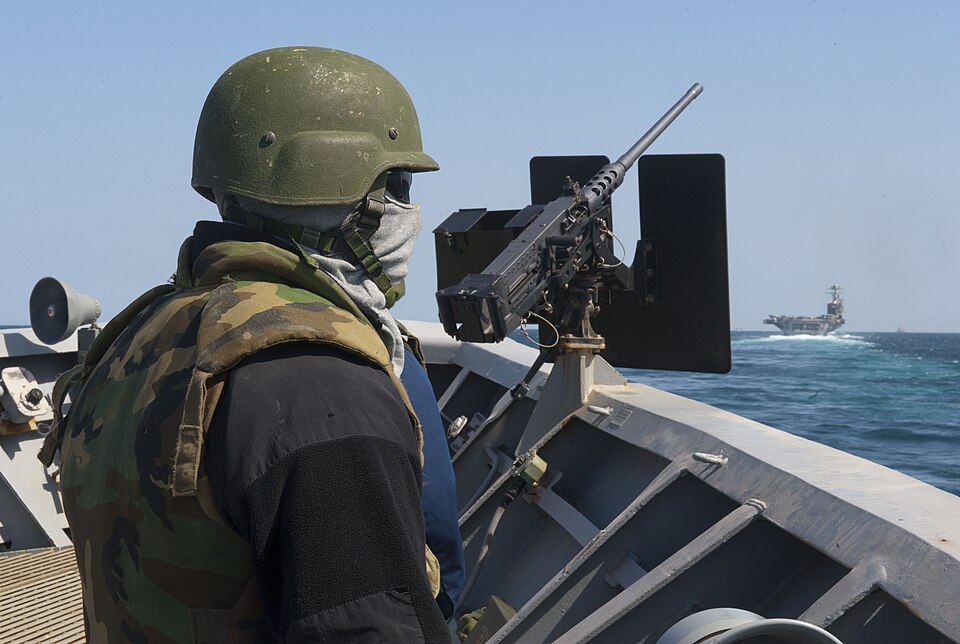
On September 11, 2026, Iran stated it attacked 10 vessels near the Strait of Hormuz, according to Reuters. The UK Maritime Trade Operations confirmed that several merchant vessels in the northern Gulf and Gulf of Oman were hit by disabling fire overnight. UKMTO confirmed a vessel sighted listing at anchor 24 nautical miles from Port Rashid in the UAE, possibly taking on water. UKMTO could not confirm casualties or environmental impact as of the latest update.
Defense trackers now describe this as a general assault on merchant shipping. Not a targeted exchange against specific military-linked vessels. An attack on commercial shipping broadly.
THE QUALITATIVE SHIFT
The previous escalation framework was the Rubio tanker doctrine: the US destroys Iranian tankers in response to Iranian attempts to hit commercial vessels. Eight Iranian tankers in four days. Then five more. The exchange rate was tanker-for-tanker.
Ten merchant ships in a single wave is categorically different. It is not a tanker-for-tanker exchange. It is a mass simultaneous assault on commercial shipping. The defense trackers’ characterization of ‘general assault’ is the specific language that names the escalation’s qualitative shift: from targeted retaliation to broad commercial disruption.
THE CEASEFIRE FRAMEWORK QUESTION
The Iran ceasefire framework signed August 7 governs commercial transit through the Strait of Hormuz. The ceasefire’s most tangible benefit has been approximately 70-80 commercial vessels per day transiting Hormuz without incident. A mass assault on ten merchant vessels in the northern Gulf and Gulf of Oman represents the most significant challenge to the ceasefire’s commercial transit framework in 35 days.
▸ Narrow interpretation: the framework applies to the Strait itself; attacks in adjacent waters are not covered
▸ Broad interpretation: the framework’s commercial transit benefit extends to the approaches; attacking ships approaching or departing Hormuz attacks the framework’s benefit
▸ US position on which interpretation applies: from confirmed reporting as it develops
THE FIVE FAILURE MODES UPDATED
Post-ten-ship assault, Day 35, 25 days to October 6:
▸ Israeli unilateral strike: SIGNIFICANTLY REDUCED — unchanged
▸ Iran enrichment violation: ELEVATED WATCH — unchanged; IRGC Navy action, not enrichment-related
▸ Iranian domestic collapse: ELEVATED — the ten-ship assault signals IRGC confidence, not collapse
▸ Gulf proxy incident: SIGNIFICANTLY ELEVATED — ten merchant ships in a single wave; vessel listing near UAE; this is a direct commercial shipping assault
▸ 60-day cliff: 25 DAYS — the ten-ship assault makes extension less likely; Pezeshkian signal unanswered for four days while IRGC attacks ten ships
THE SEPTEMBER 11 DATE
Iran attacked ten merchant ships on September 11, 2026. ONYX names the date without asserting Iranian strategic intent to exploit the anniversary. Whether the date was chosen deliberately or is incidental to the military operation is from Iranian military decision-making, not available to ONYX. What is documented: on the 25th anniversary of the attacks that started the arc of US-Middle East conflict, Iran conducted the largest single shipping assault of the current war.
Ten merchant ships. A single wave. The largest shipping assault of the war. One vessel listing near UAE waters. The ceasefire is 25 days from expiration. Session 3 is unscheduled. The IRGC just attacked ten ships on September 11.
WHAT HAPPENS NEXT
▸ UKMTO updates — casualty and environmental impact confirmation
▸ US response — whether this produces a military or diplomatic response
▸ Ceasefire interpretation — whether the US characterizes this as a ceasefire violation
▸ Oil markets — immediate price movement
▸ Session 3 — whether the assault accelerates or eliminates the diplomatic track
▸ 25 days to October 6
| CONFIDENCE: HIGH | Iran stating attack on 10 vessels near Hormuz; Reuters, UKMTO confirmation multiple vessels hit in the northern Gulf of Oman; disabling fire, vessel listing 24 nautical miles from Port Rashid, UAE; defense trackers general assault characterization from Reuters and UKMTO confirmed reporting. |
SOURCES
▸ Reuters — Iran attacks ten ships Hormuz September 11, 2026
▸ UKMTO — merchant vessels northern Gulf Gulf Oman vessel listing September 11 2026
Q: What is UKMTO and why does its confirmation matter?
A: The United Kingdom Maritime Trade Operations is a Royal Navy organization based in Dubai that provides maritime security advisory services to commercial shipping in the Indian Ocean and Gulf region. UKMTO monitors, tracks, and reports on maritime incidents. A UKMTO confirmation that multiple vessels were hit and one is listing near UAE waters is the specific evidentiary standard ONYX applies: UKMTO does not exaggerate or politicize its reports; they are operational advisories for commercial shipping companies and insurers.
Q: Under the Rubio doctrine, does ten ships imply ten Iranian tankers destroyed in response?
A: The Rubio doctrine stated September 9: every time Iran attacks a commercial vessel, the US destroys an Iranian tanker. Ten commercial ships attacked in a single wave implies, under that doctrine, a ten-tanker response. Whether the US modifies the exchange rate for a mass assault, applies the doctrine differently to a general shipping assault, or responds differently is from confirmed US government response as it develops. The doctrine was stated for individual exchanges; its application to a mass assault is the specific new question.