
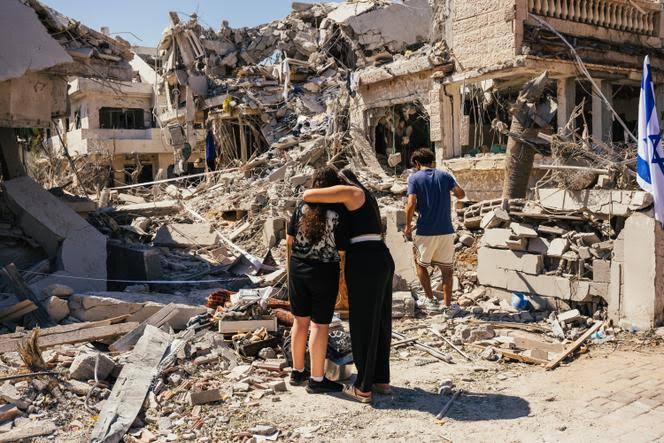
Documented casualty tracking confirms Iran’s cluster munitions use has directly caused 24 Israeli civilian deaths. Nearly half of the approximately 300 missiles Iran fired at Israel by the war’s tenth day carried cluster submunitions. The pattern has continued across six months. The deadliest single incident: Beit Shemesh, March 1, nine civilians killed in a residential neighborhood.
WHAT CLUSTER MUNITIONS DO
▸ Area effect: they disperse submunitions over areas significantly larger than the intended target; civilians receive the same impact as the target
▸ Dud rate: a significant percentage fail to explode on impact and remain as de facto landmines, killing civilians days and months later
▸ Population density: in populated areas, the combination of area effect and dud rate produces civilian casualties disproportionate to military objectives
THE TREATY STATUS
The Convention on Cluster Munitions (2008, in force 2010) prohibits production, stockpiling, transfer, and use. More than 100 countries have signed. Iran, Israel, and the United States have not. The legal framework is customary international humanitarian law’s prohibition on weapons that are indiscriminate against civilian populations.
Nearly half of Iran’s first 300 missiles carried cluster munitions. 24 Israeli civilians are dead from those munitions specifically. The Convention exists precisely because of this pattern of civilian harm. Iran did not sign it. 24 civilians are dead.
WHAT HAPPENS NEXT
▸ Ongoing documentation — cumulative cluster munition casualties
▸ Dud clearance — the ongoing threat from unexploded submunitions
▸ IHL accountability — whether any international body formally documents the pattern
| CONFIDENCE: HIGH | 24 Israeli civilian deaths from cluster munitions, nearly half of the first 300 Iranian missiles carrying submunitions, Beit Shemesh, March 1; nine killed from confirmed casualty tracking. |
SOURCES
▸ Confirmed casualty tracking — Iran cluster munitions Israeli deaths September 11 2026