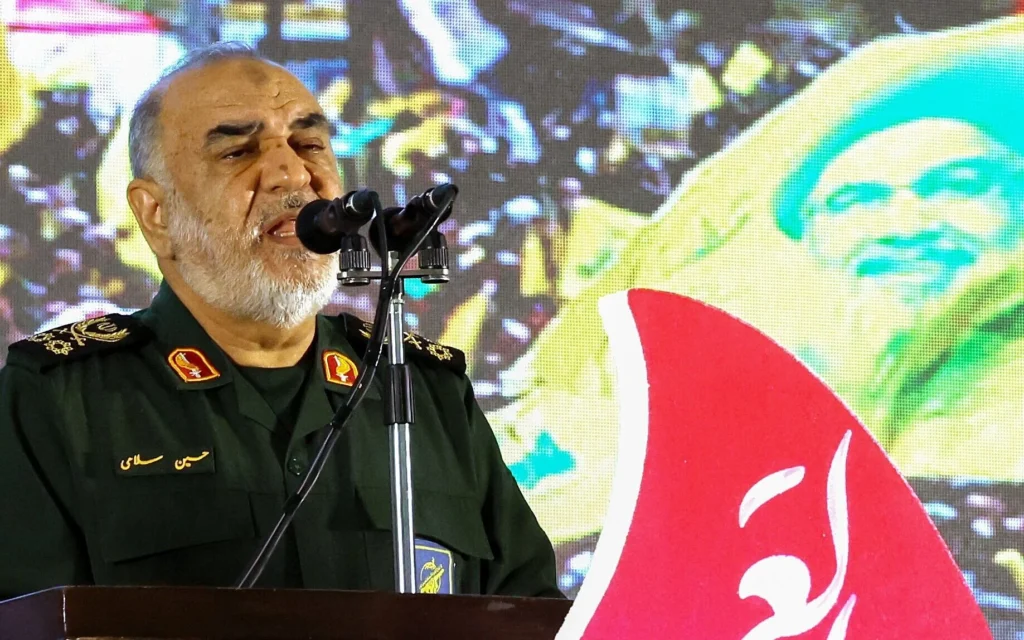
President Donald J. Trump announced on Friday that the United States would lift its naval blockade of the Strait of Hormuz after senior officials said mediators secured an agreement in principle with Iran on a memorandum of understanding. The announcement, posted on the social platform Truth Social following a White House Situation Room meeting, comes after nearly three months of maritime confrontation that disrupted global energy flows.
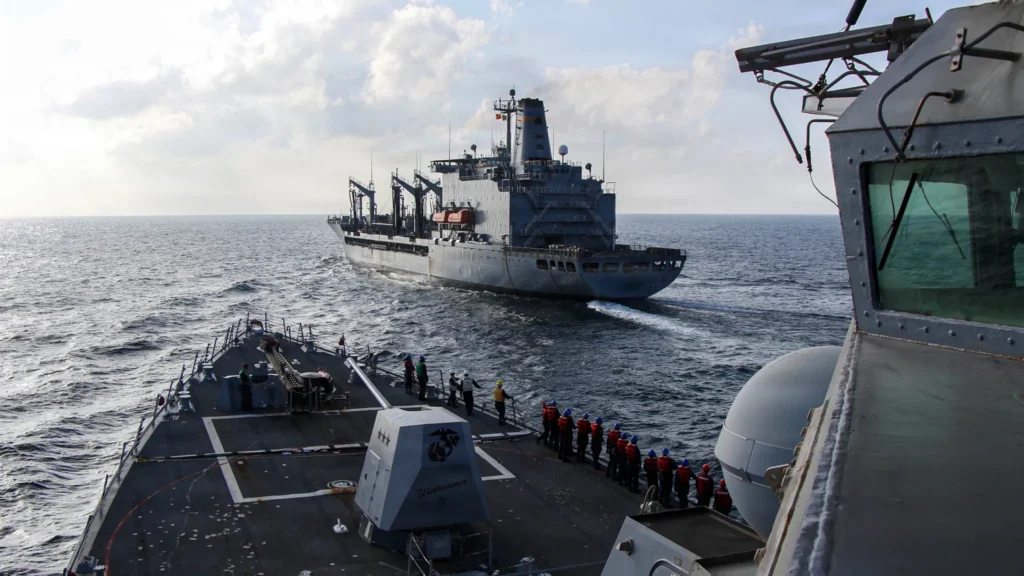
The USS Frank E. Petersen Jr. sails alongside fleet replenishment oiler USNS Henry J. Kaiser, during a replenishment-at-sea in the Arabian Sea, Feb. 18, 2026. Navy photo by Mass Communication Specialist 2nd Class Christian Kibler.
Verified core reporting
- According to a White House statement issued Friday, Trump convened senior national security officials and made a “final determination” to end the blockade contingent on Iran meeting specific terms of a framework reached during mediated talks.
- U.S. officials said the memorandum requires Iran to renounce nuclear weapons, immediately reopen the Strait of Hormuz without imposing transit fees, and neutralize sea mines placed in the waterway. Vice President J.D. Vance told reporters Thursday that negotiations were “very close” but cautioned that the deal was not yet fully finalized.
- U.S. officials told reporters the framework calls for cooperation with the International Atomic Energy Agency (IAEA) to extract and destroy Iran’s stockpile of highly enriched uranium, which U.S. assessments estimate at over 400 kilograms of near-weapons-grade material. Reuters and other outlets reported similar figures; exact amounts and timelines remain subject to verification by international inspectors.
- The administration has stated that frozen Iranian assets will not be released as part of the initial phase of the agreement. Officials said the blockade would be reduced proportionally as pre-blockade shipping traffic is restored and as Iranian mine-clearing permits safe navigation assessments.
- Reporting from international wire services describes the framework as unfolding in three phases: formally concluding the maritime confrontation, addressing immediate Strait of Hormuz safety and transit, and initiating broader negotiations on remaining disputes within an approximate 60-day window.
Broader context
The Strait of Hormuz is a strategic chokepoint through which a substantial share of global oil and liquefied natural gas transits. The U.S.-ordered blockade, implemented in April after prior diplomatic efforts collapsed, significantly curtailed Iranian oil exports and contributed to elevated global energy prices. Analysts and industry data have linked the disruption to higher fuel costs for consumers and volatile markets for crude and refined products.
The memorandum does not, in its publicly described terms, resolve Iran’s missile program or fully end uranium enrichment activities; both issues are reportedly deferred to subsequent negotiation rounds. International inspectors’ access and verification capacities will be central to determining whether Iran meets the framework’s nuclear-related commitments.
Multiple perspectives
- U.S. administration officials framed the framework as a conditional, phased path to de-escalation that preserves economic leverage until verification steps are completed.
- Iranian state media and official spokespeople have not released a comprehensive public text of the memorandum; Iranian authorities’ formal confirmation and full terms remain pending. State statements cited by regional outlets said Tehran welcomed mediation efforts but emphasized national sovereignty and security prerogatives.
- International organizations, including the IAEA, which would play a role in verification, have not released formal assessments tied to this framework; their engagement will be decisive in confirming nuclear-material handling and destruction steps.
- Regional and global market actors — oil producers, shipping firms, and insurers — have been monitoring developments closely; some firms indicated they would await independent safety assessments before resuming normal operations through the strait.
Implications and significance
If implemented and verified, the framework could alleviate a major disruption to global energy supply chains and reduce upward pressure on oil prices. The phased approach preserves U.S. leverage by conditioning economic relief on verifiable nuclear-material actions, but it also means full normalization could take weeks or months.
Security implications remain significant. The memorandum focuses on immediate maritime safety and nuclear-material controls but leaves other contentious issues, such as missile capabilities and broader regional security arrangements, for future talks. That creates a window for renewed diplomatic engagement but also a risk that unresolved issues could reignite tensions if verification stalls or parties disagree on implementation.
Closing summary
President Trump announced the lifting of the U.S. naval blockade of the Strait of Hormuz following a mediated framework that, according to U.S. officials, requires Iran to renounce nuclear weapons, clear mines, and cooperate with the IAEA on destroying a stockpile of highly enriched uranium. The agreement is described as phased and conditional; key details and Iranian formal confirmation remain pending, and verification by international inspectors will be essential to its implementation.
Sources: White House statement, Reuters, Associated Press — May 29, 2026
Content Disclaimer: This report covers developing events and includes claims or statements from multiple parties whose accounts may differ. Readers are encouraged to consult primary sources and multiple verified outlets for full context.