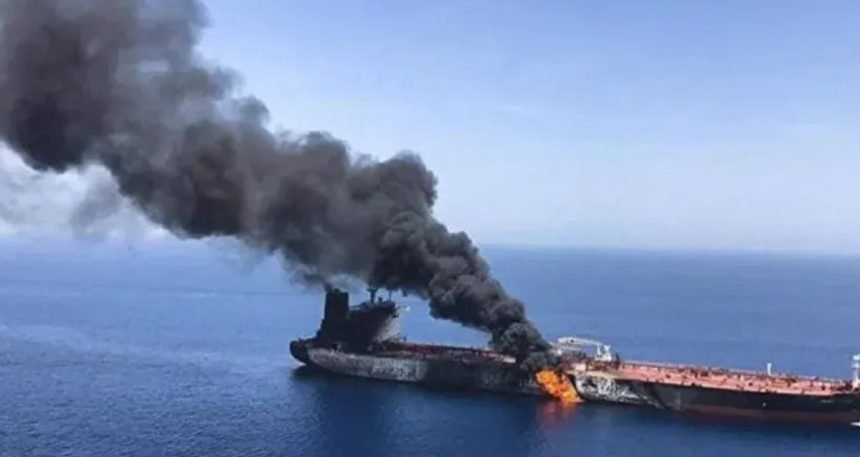
The arc has documented Hormuz as a closed diplomatic and commercial shipping corridor since February 28. The ceasefire on August 7 produced a tanker doctrine pause — commercial vessels were not being actively struck during the ceasefire period, though the strait remained restricted. October 4, Day 58, two days before October 6, a crude-oil tanker was reportedly struck by an unidentified projectile near the Strait of Hormuz. ONYX covers this at MODERATE confidence: unidentified means the attribution is not confirmed.
WHAT IS CONFIRMED
A crude-oil tanker was reportedly struck by an unidentified projectile near the Strait of Hormuz. The incident adds to concerns about the safety of commercial shipping in the region.
▸ Vessel type: crude-oil tanker
▸ Location: near the Strait of Hormuz
▸ Projectile: unidentified — attribution not confirmed
▸ Effect: adds to commercial shipping safety concerns
WHY ATTRIBUTION MATTERS
The tanker incident’s accountability depends on attribution. The specific candidates:
▸ Iran: Iran has a documented history of tanker incidents in the Strait of Hormuz, including the 2019 tanker attacks
▸ Houthis: the Houthis have struck commercial vessels in the Red Sea and Gulf of Aden; their operational reach near Hormuz is less documented
▸ Unidentified actor: small mines, floating munitions, or incidents involving non-state parties are documented possibilities in the arc’s conflict environment
▸ The ceasefire tanker doctrine: the August 7 ceasefire included a pause on commercial vessel targeting; if an Iranian-linked actor struck a tanker during the ceasefire period, it would be a documented violation
THE HOUTHI ARAMCO CLAIM CONTEXT
The tanker incident near Hormuz on the same day as the Houthi Aramco claim in Riyadh is the arc’s most significant single day of commercial energy infrastructure targeting since the war began. Two incidents simultaneously: a Saudi oil facility claimed struck in the capital; a crude tanker struck near the world’s most important oil shipping chokepoint. Both unconfirmed in their full scope; both documented as occurring on October 4.
THE COMMERCIAL SHIPPING DIMENSION
The arc has documented the commercial shipping impact throughout: LNG reportedly continued through Qatar-linked channels; the general tanker drought doctrine during the ceasefire. A tanker struck near Hormuz two days before October 6 signals one of three things:
▸ The ceasefire tanker doctrine is breaking down before October 6 expires
▸ A non-Iranian actor struck the tanker independently
▸ The incident is not a direct attack but a collision or accident in a congested, militarized waterway
THE INSURANCE AND SHIPPING MARKET IMPACT
War risk insurance premiums for Hormuz-area tankers, already elevated throughout the arc, will rise further on this incident. Shipping companies face a specific decision: send tankers through a waterway with elevated attack risk and higher insurance costs, or route cargo around the Cape of Good Hope at significantly higher time and fuel costs. Both options are more expensive than pre-war Hormuz transit.
A crude tanker was struck by an unidentified projectile near Hormuz. On the same day, the Houthis claimed an Aramco strike in Riyadh. Two days before October 6. The attribution is not confirmed. The tanker doctrine pause that has been in place since August 7 may be ending before the ceasefire formally expires. Or it may be a non-state actor. Or a navigational incident. ONYX covers what is confirmed: the tanker was struck; the projectile is unidentified; the location is Hormuz.
WHAT HAPPENS NEXT
▸ Attribution — who struck the tanker and with what weapon
▸ Ceasefire doctrine status — whether the tanker incident is characterized as a ceasefire violation
▸ Insurance market — whether war risk premiums rise further
▸ Shipping traffic — whether additional tankers halt transit pending the attribution investigation
▸ October 6 — two days; the ceasefire framework the tanker doctrine depends on
| CONFIDENCE: MODERATE | Crude-oil tanker reportedly struck an unidentified projectile near the Strait of Hormuz incident adds concerns about the safety of commercial shipping in the region, according to unconfirmed reporting. Confidence MODERATE because projectile attribution is unconfirmed. |
| ⚖️ BIAS CHECK — WHO IS SAYING WHAT | |
| Tanker operator | The vessel and crew are the specific human accountability; crew safety status from developing reporting |
| Iran | Not confirmed as the actor; its documented Hormuz tanker attack history makes it a candidate |
| Houthis | Claimed Aramco on the same day; their Hormuz operational capacity is documented but less extensive than Red Sea |
| Shipping industry | Will price the incident immediately regardless of attribution; insurance premiums and transit decisions are real-time |
| ONYX | Covering at MODERATE confidence; naming attribution candidates without asserting; connecting to the Houthi Aramco claim timing |
SOURCES
▸ Confirmed reporting — tanker Hormuz Oman October 4, 2026