In ABC and Washington Post interviews, Zelensky turned Trump’s call for new Ukrainian leadership into a challenge: propose a sixty-day total ceasefire, create conditions for elections, and see who declines. He did not raise his voice. He did not need to.
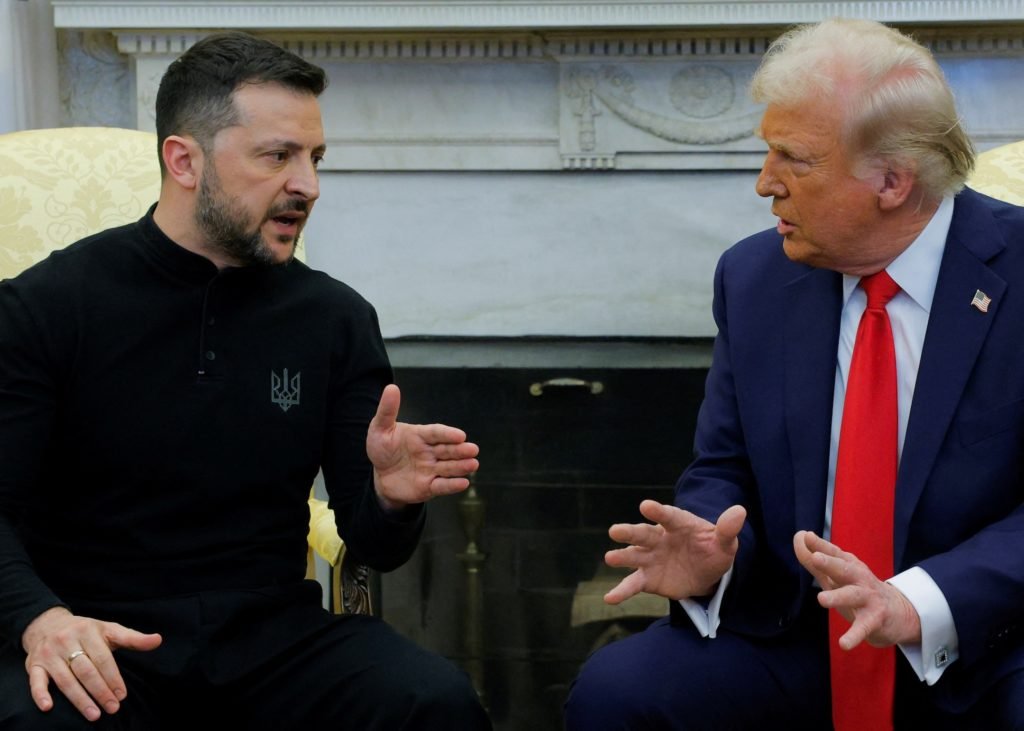
🇺🇦 KYIV / ABC NEWS · OCTOBER 11, 2026 · ZELENSKY RESPONSE
Volodymyr Zelensky gave the answer that Trump’s call for his replacement deserved, and he gave it without apparent anger, which is the most effective version of that kind of answer. In interviews with ABC News and the Washington Post, Zelensky said leadership decisions in Ukraine are for Ukrainians to make. He offered a sixty-day total ceasefire — not a partial ceasefire, not a pause in specific regions, but a full sixty-day halt to all fighting — as the condition that would make Ukrainian elections safe to conduct. He said only Russia is responsible for the war. He did not announce any change to Ukrainian policy on striking Russian energy infrastructure.
The political geometry of Zelensky’s offer is carefully constructed. He has been accused by Trump of being an obstacle to peace. His response is to specify the precise condition under which the democratic process Trump invokes could actually operate in a country that is at war. That condition is a ceasefire that Russia would have to agree to. If Russia declines a sixty-day ceasefire, the question of who is blocking democracy in Ukraine has a different answer than the one Trump is currently providing.
THE SIXTY-DAY OFFER IN DETAIL
A sixty-day total ceasefire would be the longest halt in fighting since the war began. It would require verification mechanisms, a common understanding of the geographic scope, and commitments from both sides about what constitutes a ceasefire violation. None of those elements were specified in Zelensky’s offer, which was made in interview format rather than as a formal diplomatic proposal. The offer is a political statement more than an operational plan — but political statements in war are consequential, and this one lands Zelensky in a more defensible position than he occupied before Trump made the replacement call.
Zelensky’s framing — that elections require peace and that peace requires Russia to agree to stop fighting — places the burden of the democratic argument back on the actors who have most influence over whether Russia agrees to anything. That is, primarily, the United States. If Trump wants Ukrainian elections, the path to them runs through a ceasefire that his administration is positioned to help negotiate. Whether Trump takes up that logic is a separate question.
WHAT ZELENSKY DID NOT SAY
Zelensky did not apologize for the refinery strikes. He did not say he would pause them. He did not express any indication that Trump’s economic interests in cheaper diesel would alter Ukrainian military strategy. He engaged the political dimension of Trump’s challenge — the claim about democratic legitimacy — and declined to engage the economic dimension. That selective response is itself a message: Ukraine is willing to discuss democracy, elections, and ceasefires. It is not willing to discuss adjusting its war strategy to benefit American fuel prices.
“Zelensky offered Trump sixty days of total ceasefire in exchange for elections. He did it calmly. He did not announce any changes to the refinery strikes. The ball is in a different court than it was yesterday.”
WHAT HAPPENS NEXT
► Russian response — whether Moscow comments on the sixty-day ceasefire offer
► Trump follow-up — whether the administration treats the ceasefire offer as a legitimate opening
► European reaction — how NATO allies receive Zelensky’s political framing
► ABC/WaPo full transcript — whether additional specifics of the ceasefire offer emerge from full interviews
| CONFIDENCE: HIGH | ABC News transcript, Washington Post, Reuters confirmed Zelensky’s response: Ukrainian leadership is Ukrainians’ choice, sixty-day total ceasefire offer for elections, Russia solely responsible for war, no change to refinery strike policy. |
| BIAS CHECK | ASSESSMENT |
| Source weight | ABC News transcript, WaPo, Reuters — primary interview sources with strong attribution |
| Zelensky framing | Political strategy in his offer analyzed accurately; not presented as sincere or cynical without evidence |
| Comparison to Trump | Zelensky’s response contextualized against Trump’s statement; no editorial verdict on who is correct |
SOURCES
► ABC News — Zelensky interview transcript, replacement comment response, October 11, 2026
► Washington Post — Zelensky sixty-day ceasefire offer, elections condition, October 11. 2026
► Reuters — Zelensky: leadership for Ukrainians, Russia solely responsible, October 11, 2026