A Delhi court freed Cockroach Janata Party founder Abhijeet Dipke and others detained ahead of protests over voter-list revisions. The release came with a condition: no breach of peace for twelve months. The movement called it a victory. The condition is doing a lot of work.
🇮🇳 NEW DELHI · OCTOBER 11, 2026 · COCKROACH JANATA
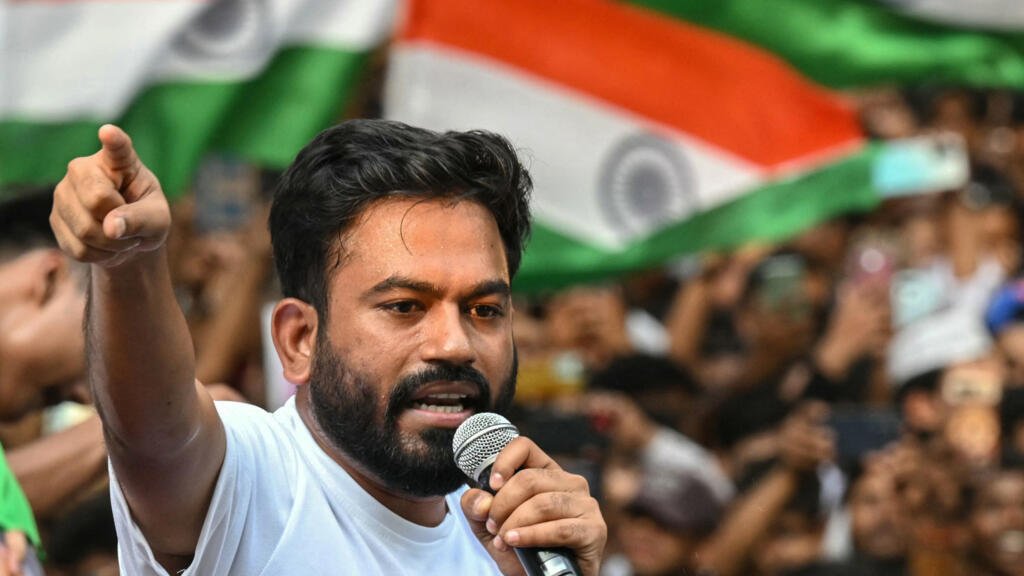
Abhijeet Dipke, the founder of India’s Cockroach Janata Party — the Gen Z protest movement that took the insult its critics applied to it and made it a name — was released from detention by a Delhi court on Saturday along with other party leaders. They had been held ahead of planned protests against the Election Commission of India over controversial voter-list revisions that the movement says have systematically removed names from rolls in ways that disadvantage younger and urban voters.
The release came with a condition: Dipke and the released leaders must not breach the peace for one year. In the context of a movement whose primary activity is organizing demonstrations, that condition is worth reading carefully. A court order requiring that a protest movement’s leaders not engage in conduct that might be characterized as “breach of peace” does not prohibit protest — Indian law protects the right to peaceful assembly. But it does create a legal constraint that could be invoked selectively if demonstrations turn confrontational, and it places the leaders in a position where every rally carries a legal tripwire.
THE MOVEMENT’S CONTEXT
The Cockroach Janata Party began as a mockery — opponents of the movement’s criticism of incumbent political structures called its members cockroaches, and the movement adopted the name rather than resisting it. The choice is characteristic of a certain kind of Gen Z political aesthetics: taking the insult seriously, building identity around it, and using the absurdity of the origin story as recruitment material. The movement’s substantive grievance — that voter-list revisions are being used to disenfranchise the demographic that is most likely to vote against incumbent parties — is a serious political claim that Indian independent electoral analysts have engaged with.
Thousands of movement members and sympathizers were detained in the broader crackdown that preceded the planned protests. That number — thousands — is the scale of the government response, and it is the metric that international observers of Indian civil liberties have noted. Preventive detention at that scale, ahead of protests that had not yet occurred, is a significant use of executive authority against a political opposition movement, whatever one thinks of the movement’s specific claims.
WHAT THE CONDITION MEANS
The AFP reporting, carried through multiple outlets, characterized the release and the condition without editorializing on whether the condition is legally proportionate. What it represents operationally is a legal sword over the movement’s founders at a moment when the electoral calendar that motivated the protests continues to proceed. Voter-list revisions that the movement wants to challenge are not paused because its founder has been released. The twelve months of required peaceful conduct extend through whatever electoral events the movement was organizing around.
“India freed the cockroach movement’s leader. The condition: behave for twelve months. The voter-list disputes that put him in jail in the first place are still unresolved.”
WHAT HAPPENS NEXT
► Voter-list dispute — whether Indian courts or the Election Commission address the substantive revisions
► Protest compliance — whether Cockroach Janata continues organizing within the court’s constraints
► Detained members — status of the thousands of rank-and-file members held in the broader crackdown
► International attention — whether G20 or Commonwealth human rights bodies comment on the detention scale
| CONFIDENCE: HIGH | AFP via multiple outlets, Reuters-linked reports, NYT confirmed Dipke and Cockroach Janata leaders released by Delhi court, one-year no-breach-of-peace condition, context of voter-list protest crackdown. |
| BIAS CHECK | ASSESSMENT |
| Source weight | AFP via multiple outlets, Reuters-linked, NYT — strong multi-wire confirmation |
| Political framing | Voter-list claims characterized as substantive political claim; not endorsed or dismissed without evidence |
| Court condition | Twelve-month condition characterized accurately; legal implications analyzed, not editorialized |
SOURCES
► AFP via multiple outlets — Cockroach Janata leaders released, October 11, 2026
► Reuters-linked reports — Delhi court, one-year condition, October 11, 2026
► New York Times — Cockroach Janata movement coverage and protest context, October 11, 2026