The European Union adopted nearly 1,600 new sanctions listings against Russia in a single batch — the largest since the full-scale invasion of Ukraine began — concentrating heavily on Russia’s military-industrial complex, specifically the supply chains feeding missile production. EU foreign policy chief Kaja Kallas announced the package.
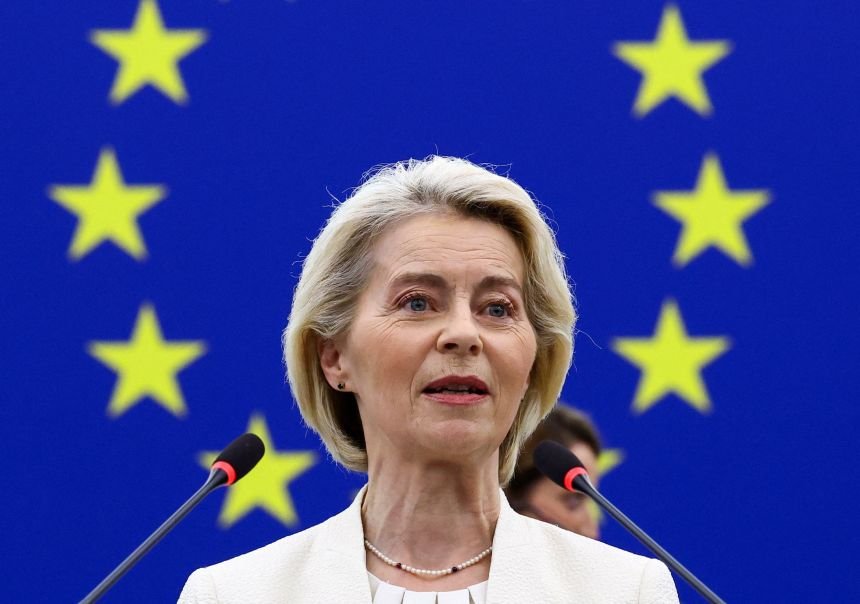
🇪🇺 BRUSSELS · OCTOBER 12, 2026 · EU RUSSIA SANCTIONS
The European Union adopted nearly 1,600 new sanctions listings against Russia — the largest single-batch addition since the February 2022 full-scale invasion. EU foreign policy chief Kaja Kallas announced the package, which concentrated its targeting heavily on Russia’s military-industrial complex. The specific focus was the supply chains feeding Russian missile production: the companies, individuals, intermediaries, and subsidiary networks through which components and funding move from their origins to the missiles that Russia fires at Ukrainian cities and infrastructure.
The scale of the package is significant. EU sanctions listings accumulate through a political negotiation among member states that has, at various points, been complicated by the divergent interests of countries with closer economic ties to Russia, countries with larger diaspora communities from affected regions, and countries whose domestic politics are more sympathetic to Russian arguments. A near-1,600-listing package passed as a single batch represents a political consensus among EU member states that, in the current environment, took effort to build.
THE MISSILE PRODUCTION FOCUS
The targeting of Russia’s missile production supply chains is a strategic choice, not merely a punitive one. Russian missile strikes on Ukrainian civilian infrastructure — the power plants, the heating systems, the water treatment facilities — have been the primary instrument of Russian pressure on Ukrainian civilian morale and survival conditions through the winters of the war. The EU’s decision to direct its largest sanctions package at the supply chains feeding those missiles is an explicit attempt to degrade the production capacity behind those strikes.
Whether sanctions can meaningfully constrain Russian missile production at this stage of the war is a question that experts disagree on. Russia has spent two and a half years adapting its military-industrial economy to the sanctions environment: building domestic substitutes, developing alternative supply chains through third countries, and exploiting gaps in enforcement. The near-1,600-listing package is large enough to impose genuine costs; it is not large enough, on its own, to stop Russian missile production.
KALLAS AND THE EU’S UKRAINE POSTURE
Kaja Kallas, the former Estonian Prime Minister who became EU High Representative for Foreign Affairs and Security Policy, has been one of the EU’s most consistent voices for strong support of Ukraine and maximum pressure on Russia. Her announcement of the sanctions package is consistent with the posture she has maintained throughout her tenure: that European security requires Ukrainian survival, and that the EU’s most effective instrument for Ukrainian survival is sustained economic pressure on Russia’s war capacity. Whether that posture can be maintained as the war enters its fourth year and European political dynamics shift remains an open question.
“The EU sanctioned nearly 1,600 more Russian entities and individuals in one package. The target was Russia’s missile supply chains. The message is that European patience with Russian missile strikes on Ukrainian cities has not run out.”
WHAT HAPPENS NEXT
► Sanctions enforcement — how member states implement the new listings and coordinate asset freezing
► Third-country pressure — whether the EU formally requests partner countries close sanctions loopholes
► Russian response — Moscow’s characterization of and response to the new package
► Next package — EU timeline for additional sanctions tranches
| CONFIDENCE: HIGH | Reuters, EU statements confirmed adoption of nearly 1,600 Russia sanctions listings, the largest single batch since the invasion, with a focus on the military-industrial complex and missile production chains, announced by Kaja Kallas. |
| BIAS CHECK | ASSESSMENT |
| Source weight | Reuters, EU official statements — primary source and wire confirmation |
| Sanctions effectiveness | Effectiveness debate noted accurately; neither optimistic nor pessimistic position attributed to ONYX |
| Kallas framing | Characterized by her own public record; not used to editorialize about EU-Russia policy |
SOURCES
► Reuters — EU Russia sanctions 1,600 listings, military-industrial focus, October 12, 2026
► EU official statements — Sanctions package announcement, Kaja Kallas, October 12, 2026