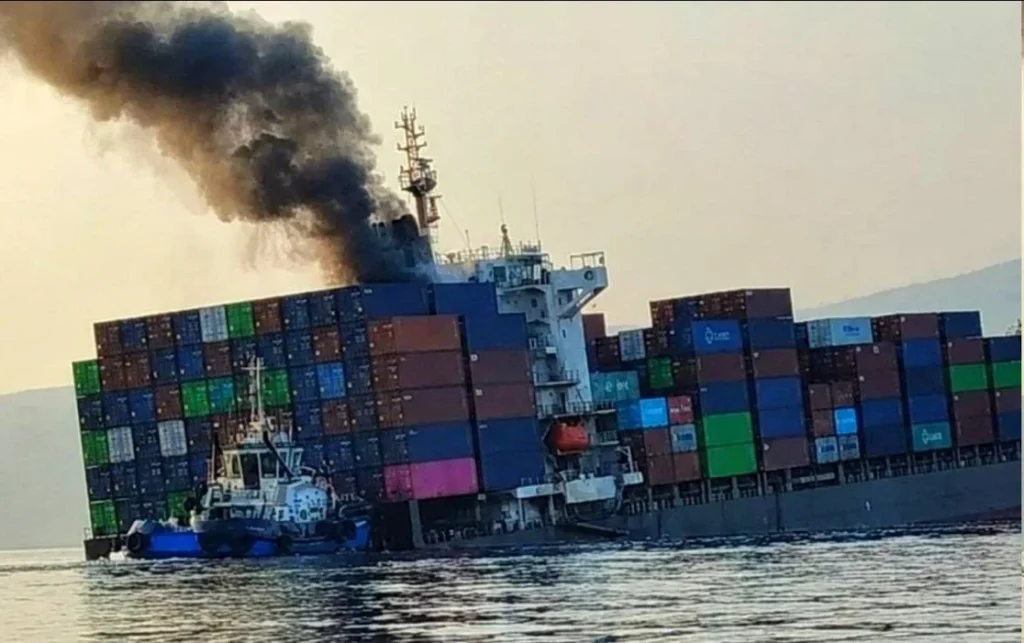
US and allied officials described Iran as employing new and adjusted offensive tactics in the Strait of Hormuz — and acknowledged for the first time that a cargo ship sank after striking a mine, the first confirmed mine sinking of the conflict. Officials characterized the Iranian campaign as designed in part to keep oil prices elevated ahead of American midterm elections, providing economic pressure on the incumbent administration.
🌊 STRAIT OF HORMUZ · OCTOBER 14, 2026 · MINE SINKING / IRAN TACTICS
Reuters, AP, and NYT reported Tuesday that US and allied officials described Iran as shifting and adapting its offensive tactics in the Strait of Hormuz. The same reporting confirmed that a cargo ship sank after striking a mine — described as the first confirmed mine sinking of the current conflict. The vessel details, including flag state, cargo, crew status, and operator, were not fully detailed in initial reporting. Officials characterized the Iranian Hormuz campaign as deliberately calibrated to keep oil prices elevated in the period leading up to American midterm elections.
The mine sinking is a significant escalation marker. Naval mines are indiscriminate weapons — they do not distinguish between military and commercial vessels, between allied and neutral flags. They are legally controversial under the laws of armed conflict when deployed in international waterways used by commercial shipping. A cargo ship sinking in Hormuz from a mine strike represents the most serious commercial maritime casualty of the current conflict and will drive an immediate and significant response from insurance markets, shipping companies, and maritime security organizations. The Lloyd of London and related markets will react within hours.
THE MIDTERM CALCULATION
US officials characterizing the Iranian campaign as designed to influence American midterm elections is a significant public assessment. The logic is straightforward: elevated oil prices drive up gasoline prices in America; elevated gasoline prices produce negative consumer sentiment about economic conditions; negative economic sentiment tends to disadvantage the incumbent party. Iran, by sustaining and escalating attacks that keep Gulf crude prices high, can impose economic pressure on the Trump administration without engaging in a direct confrontation with American forces. It is economic warfare conducted through market mechanisms, with the midterms as the delivery mechanism.
Whether this assessment is accurate — whether Iran is consciously calibrating its Hormuz tactics to the American electoral calendar — is a different question from whether the effect is real. The effect is measurable: Gulf conflict and oil prices are correlated, oil prices and gasoline prices are correlated, gasoline prices and September CPI are documented. The September CPI print released Tuesday morning shows gasoline up 9.1 percent. Whether Iran planned for that outcome or simply benefits from it is the difference between a sophisticated adversary and a lucky one. US officials are describing the former.
THE TACTICS SHIFT
Officials describing Iran as employing new and adjusted tactics suggests that Iranian forces have adapted their methods in response to US and allied countermeasures. This is the standard adaptation pattern in asymmetric conflicts: each side adjusts based on what the other deploys. The US Navy and allied forces have been conducting mine-clearing operations and providing escort to commercial shipping in the Gulf. Iran has been adjusting the combination of weapons — mines, drone boats, anti-ship missiles, projectile strikes — to find the gaps in that coverage. A successful mine sinking suggests they found one.
“Iran sank a cargo ship with a mine — the first confirmed mine sinking of the war. US officials say it is part of a deliberate campaign to keep oil prices high before the midterms. The September CPI report came out the same morning.”
WHAT HAPPENS NEXT
► Vessel details — flag, cargo, crew status of the sunken cargo ship
► Mine provenance — US Navy assessment of the mine type and deployment method
► Insurance response — Lloyd of London and marine market reaction to the first mine sinking
► Shipping routing — commercial operator decisions on Hormuz transit following mine casualty
► US military response — whether the mine sinking triggers additional naval escort or mine-clearing operations
| CONFIDENCE: HIGH | Reuters, AP, NYT confirmed cargo ship sank after mine strike in Hormuz — first confirmed mine sinking of conflict. Officials characterized Iranian tactics as calibrated to keep oil prices elevated ahead of midterms. |
| BIAS CHECK | ASSESSMENT |
| Source weight | Reuters, AP, NYT — tier-one wire and print confirmation |
| Mine sinking | Characterized as first confirmed mine sinking; vessel details noted as incomplete at filing time |
| Midterm characterization | Officials described as making midterm-calibration assessment; editorial did not independently assert Iranian intent |
| Oil price connection | Correlation chain cited as market mechanism; causation between Iranian intent and price outcomes characterized as official assessment |
SOURCES
► Reuters — Iran Hormuz tactics adjusted, cargo ship sinks mine, October 14, 2026
► AP — First mine sinking in Hormuz conflict, Iran maritime escalation, October 14, 2026
► NYT — Iran keeping oil prices high midterms, Hormuz mine tactics, October 14, 2026