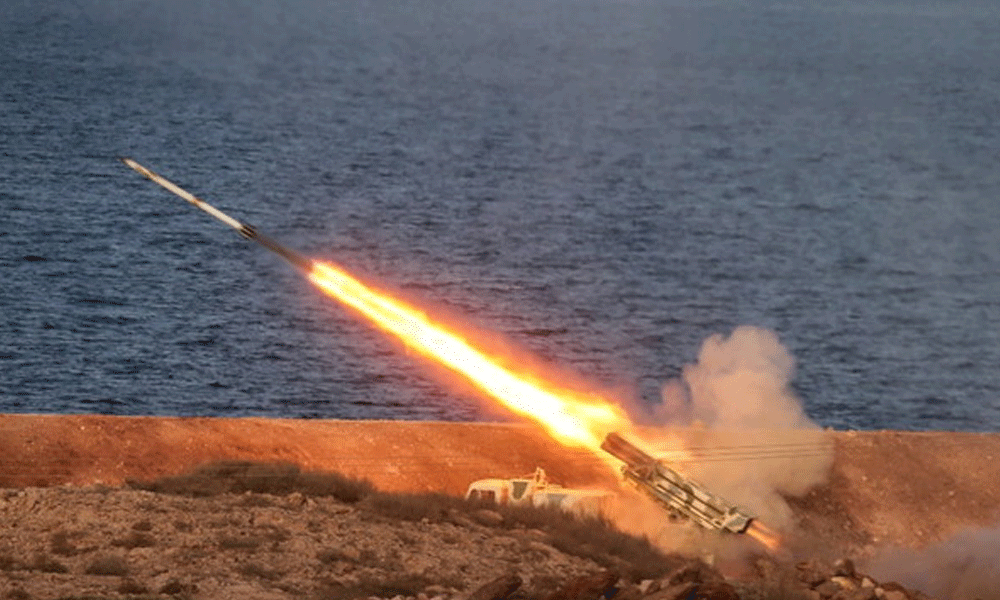
The Saudi-led coalition shot down Houthi ballistic missiles and drones targeting Khamis Mushait and Riyadh on Saturday. Riyadh being targeted is not new, but the frequency is escalating. Every intercept that succeeds is also a reminder that one failure reaches a populated city.
BREAKING · SAUDI ARABIA · HOUTHIS · MISSILES · INTERCEPTS
RIYADH — The Saudi-led coalition reported successfully intercepting Houthi ballistic missiles and drone attacks directed at Khamis Mushait and Riyadh on Saturday, according to Al Jazeera summaries. The interceptions were conducted using coalition air defense systems, including Patriot batteries deployed by Saudi Arabia with U.S. support. No impacts in Saudi population centers were reported from the attacks that were intercepted.
Khamis Mushait, a major city in the Asir region of southwestern Saudi Arabia, has been a recurring Houthi target throughout the conflict due to its proximity to the Yemeni border and its role as a major military aviation hub. King Khalid Air Base, located near Khamis Mushait, is a primary Saudi Air Force base. Riyadh, the capital, is targeted for political and symbolic effect — a successful strike on the capital would be a major Houthi propaganda victory.
The Intercept Record and Its Limits
Saudi air defense has maintained a high interception rate against Houthi missiles and drones throughout the conflict, but the rate is not 100 percent. Several successful Houthi strikes on Saudi territory — including at Abha International Airport and infrastructure facilities — have demonstrated that the air defense network has gaps. The question is less whether the Saudi system can intercept most attacks and more whether it can intercept all of them, consistently, as the Houthis refine their tactics and mix ballistic missiles, cruise missiles, and drone swarms to saturate defenses.
The simultaneous escalation of Houthi attacks on Saudi Arabia, Houthi Aden strikes against the Yemeni government, Houthi activity in the Red Sea shipping lanes, and the Houthi-claimed drone pressure on Israel constitutes a multi-front operational tempo that regional analysts describe as unprecedented in the conflict’s history.
“The coalition successfully intercepted the hostile missiles and drones before they reached their targets. We will continue to defend the Kingdom with full force.” — Saudi-led coalition spokesperson, via Al Jazeera
WHAT HAPPENS NEXT
► Coalition air defense on continuous high alert — no stand-down anticipated.
► Saudi Air Force conducting counter-battery and launch-site strikes in Yemen in response.
► Khamis Mushait and Riyadh civilian population on alert notification protocols.
► U.S. support for Saudi Patriot systems being reviewed for additional ammunition resupply needs.
► Houthi multi-front operational tempo being assessed by regional analysts as potentially unsustainable.
| CONFIDENCE: HIGH | Interceptions confirmed by Saudi-led coalition official statement via Al Jazeera. Targets identified as Riyadh and Khamis Mushait confirmed. No impacts in population centers confirmed by coalition. Khamis Mushait has military significance based on established military geography data. |
| Bias Check | ||
| Left-Lean | Center | Right-Lean |
| Notes ongoing Saudi-led coalition strikes on Yemen as context for Houthi attacks. | Reports the intercepts, the targets, and the coalition statement as confirmed. | Celebrates Saudi air defense effectiveness; limited critical context on root cause. |
| Assessment | ONYX presents confirmed intercept data and the air defense context. Multi-front Houthi escalation noted as a documented pattern. | |
SOURCES
► Al Jazeera summaries — Coalition interception reports and spokesperson statement