Militants affiliated with the Islamic State killed 48 people in a village attack in Mali over the weekend. The Sahel jihadist insurgency is one of the fastest-growing security crises in the world. French forces left. Russian Wagner forces replaced them. The violence has not improved — in most metrics, it has gotten worse. Mali is one of multiple Sahel countries experiencing accelerating militant violence with diminishing international capacity to respond.
BREAKING · MALI · ISIS · SAHEL · VILLAGE ATTACK · JIHADIST
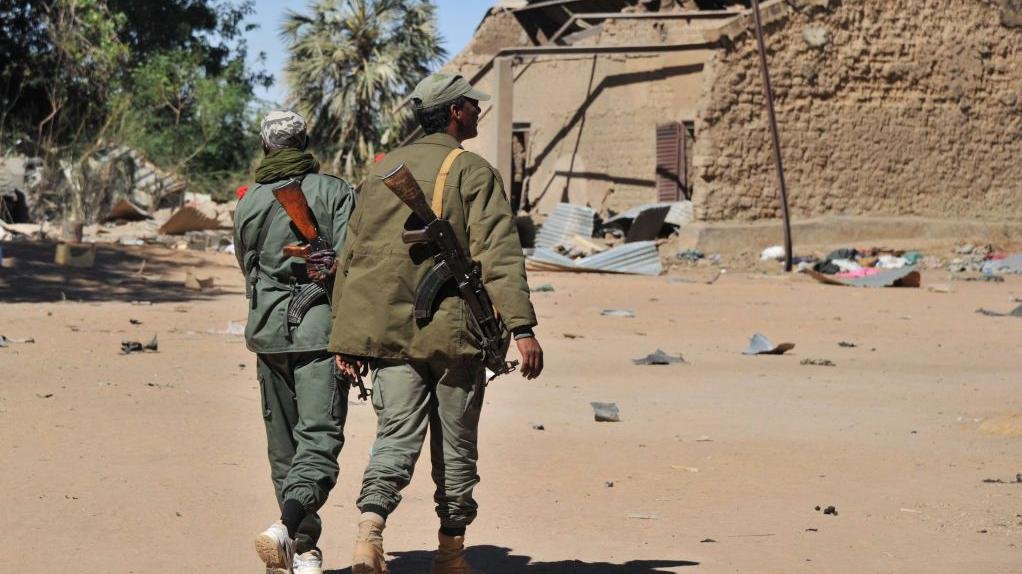
BAMAKO, MALI — Islamic State-affiliated militants killed approximately 48 people in a village attack in Mali over the weekend, according to AP. The attack is the latest in a series of escalating militant strikes against rural communities in Mali and the broader Sahel region, where jihadist groups affiliated with both the Islamic State and al-Qaeda have been expanding their territory and operational capacity over the past several years. The specific location of the attack was not confirmed in the initial AP reporting, but West and Central Mali have been the primary theaters of militant activity in the country.
Mali has undergone significant political and security changes in recent years. The French military mission that had been conducting counter-terrorism operations in the Sahel — Operation Barkhane — was ended and French forces withdrew following a deteriorating relationship with the Malian junta that came to power in a 2021 coup. The junta subsequently invited the Russian Wagner Group to provide security support. International security assessments of the Sahel since the French withdrawal and Wagner arrival have generally found that violence has increased rather than decreased — including attacks of the kind reported on Monday.
The Sahel Security Context
The Sahel jihadist insurgency is among the fastest-growing security threats in Africa. Multiple countries — Mali, Burkina Faso, Niger, Chad — are experiencing accelerating militant activity. The governments of these countries, several of which are led by military juntas that came to power after civilian governments failed to manage the insurgency, are struggling to contain the violence with limited resources and, in some cases, with Russian Wagner forces that have not produced the security improvements promised. The humanitarian consequences — displacement, destruction of agricultural communities, civilian casualties — are severe and underreported relative to their scale.
The ISIS-affiliated group active in Mali is known as the Islamic State in the Greater Sahara (ISGS), which operates primarily in the tri-border area of Mali, Burkina Faso, and Niger. It is distinct from Jama’at Nusrat al-Islam wal-Muslimin (JNIM), the al-Qaeda affiliated group that is generally considered the dominant jihadist force in Mali. Both groups are conducting attacks against civilian communities and government forces, and the two groups have at times been in conflict with each other as well as with Malian government forces.
“The village was attacked at night. They killed men, women, and elders. This is the face of the insurgency that the international community has largely abandoned.” — Human Rights Monitor, background comment to AP
WHAT HAPPENS NEXT
► Malian government response — security forces assessing and pursuing the attackers.
► Wagner forces in Mali — whether their deployment in the region responds to the attack being monitored.
► UN Security Council — Sahel briefing scheduled; this attack will be referenced.
► Neighboring countries Burkina Faso and Niger experiencing similar attacks — regional crisis deepening.
► Humanitarian organizations in Mali assessing the survivor situation in the attacked village.
| CONFIDENCE: HIGH | 48 killed in village attack confirmed by AP. ISIS affiliation confirmed. Weekend timing confirmed. Specific village location not confirmed — flagged. Sahel jihadist context, ISGS identification, and Wagner deployment context from established security and conflict reporting. |
| Bias Check | ||
| Left-Lean | Center | Right-Lean |
| Focuses on Western policy failure — French withdrawal, Wagner failure — as cause of escalation. | Reports the attack, the death toll, and the Sahel security context as confirmed. | Some coverage frames the attack as evidence of global jihadist expansion requiring military response. |
| Assessment | ONYX presents the confirmed attack and the security context. Both the Wagner failure narrative and the military response narrative are documented positions; neither is adopted as the ONYX framing. | |
SOURCES
► AP — Mali village attack, death toll, and ISIS affiliation