South Korea withdrew additional embassy personnel from Kyiv following a dispute with Ukraine over the handling of captured North Korean soldiers. North Korean troops have been fighting alongside Russian forces — that much is established. What happens to prisoners of war from a country that denies their presence is a genuinely complicated legal and diplomatic question, and Seoul and Kyiv are not on the same page about the answer.
DIPLOMACY · SOUTH KOREA · UKRAINE · NORTH KOREA · POW · EMBASSY
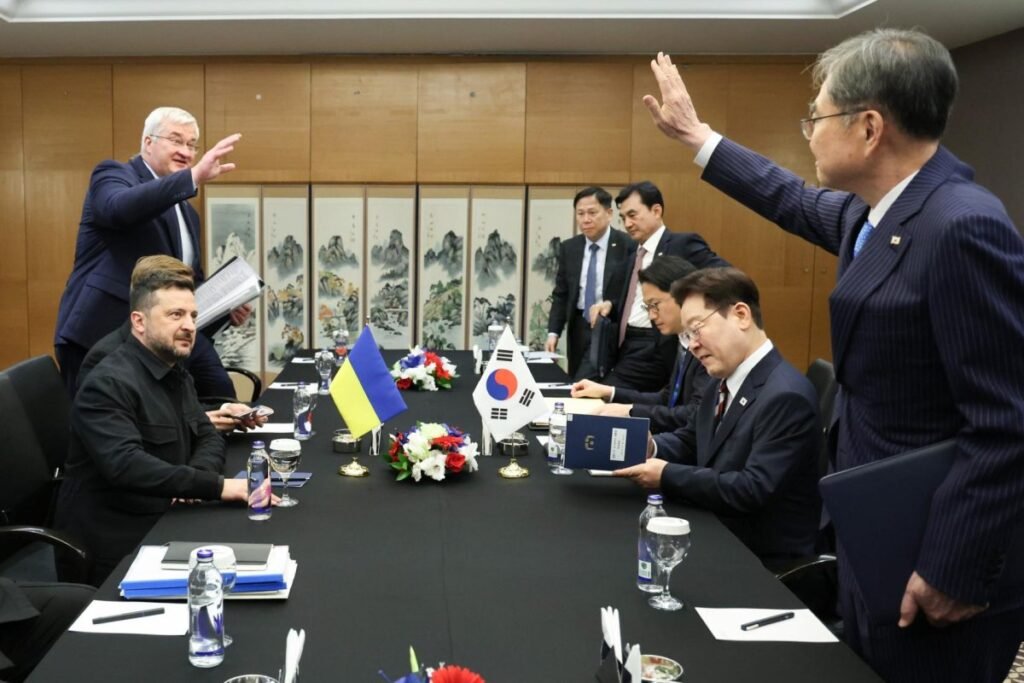
SEOUL / KYIV — South Korea withdrew additional embassy staff from Ukraine following a diplomatic dispute over the treatment and disposition of captured North Korean soldiers who had been fighting alongside Russian forces, according to AFP via RFI. The withdrawal follows earlier tensions between Seoul and Kyiv on the same issue and represents an escalation in what has become an increasingly complicated triangular relationship between South Korea, Ukraine, and the question of North Korean military involvement in the Russia-Ukraine war. North Korea has denied that its soldiers are fighting in Ukraine despite extensive documentation from multiple intelligence services and battlefield reporting.
The North Korean troop deployment to support Russian forces represents a significant development in the war — a formal military alliance between Moscow and Pyongyang expressed in blood on a European battlefield. For South Korea, the presence of North Korean soldiers in Ukraine creates both an intelligence opportunity and a diplomatic complication. Seoul has a strong interest in learning about North Korean military capabilities, training, and equipment from captured soldiers. Ukraine has its own interests in how those prisoners are handled, which may not align with South Korean priorities.
The POW Disposition Problem
The disposition of North Korean prisoners of war is genuinely legally and diplomatically complex. North Korea denies the soldiers exist. South Korea has legal and humanitarian interests in their fate. Ukraine has tactical and political interests. Russia has strategic interests in ensuring the soldiers are either repatriated or not publicly exploited in ways that embarrass Moscow. International humanitarian law governing POW treatment applies, but the normal mechanisms assume that the prisoner country acknowledges the prisoners, which Pyongyang does not.
The Seoul-Kyiv dispute over this question reflects a real divergence of interest, not a simple misunderstanding. South Korea wants intelligence access and potentially eventual repatriation through South Korean channels. Ukraine wants to use the captured soldiers as evidence of Russian war crimes and as leverage. These are not the same objective, and the embassy staff withdrawal signals that the gap has not been bridged.
“The soldiers are there. They have been captured. What we do with them now says something about what this war is and who we are. Seoul and Kyiv need to agree.” — diplomatic source, background comment to AFP
WHAT HAPPENS NEXT
► Seoul-Kyiv diplomatic channel — both sides expected to attempt resolution of the prisoner dispute.
► Remaining South Korean embassy staff monitoring — further withdrawals possible if dispute deepens.
► North Korean prisoner intelligence value — South Korean services seeking access to captured soldiers.
► International humanitarian law review — legal framework for stateless or denied POWs being assessed.
► Russian response to the Seoul-Kyiv dispute being monitored — Moscow has interests in the outcome.
| CONFIDENCE: HIGH | Staff withdrawal confirmed by AFP via RFI. Dispute over North Korean captured soldiers confirmed. North Korean troop deployment to Russia confirmed by multiple prior reports. Specific number of withdrawn staff not confirmed in available reporting — flagged. POW disposition complexity from established diplomatic and humanitarian law analysis. |
| Bias Check | ||
| Left-Lean | Center | Right-Lean |
| Focuses on North Korean troop deployment as a Russian war crime requiring accountability. | Reports the embassy withdrawal and the POW dispute context as confirmed. | Some coverage frames the withdrawal as Seoul protecting intelligence interests from Ukrainian exploitation. |
| Assessment | ONYX presents confirmed withdrawal and the genuine complexity of the POW disposition question. Both Seoul and Kyiv interests are documented and in tension. | |
SOURCES
► AFP via RFI — South Korea embassy withdrawal and North Korean soldier dispute